Peabody Energy Corporation (NYSE: BTU) has terminated its $2.32 billion planned acquisition of Anglo American Plc’s premium hard coking coal assets in Australia, citing a Material Adverse Change (MAC) related to a March 2025 ignition event at the Moranbah North Mine. The deal, first announced in November 2024, was expected to significantly expand Peabody’s seaborne metallurgical coal footprint. However, nearly five months after the mine disruption, no revised terms were agreed to compensate Peabody for the long-term operational uncertainty, leading to the formal cancellation of the transaction on August 19, 2025.
The decision not only reshapes Peabody’s near-term portfolio strategy but also sets the stage for a legal confrontation, with Anglo American preparing for arbitration to contest what it deems a wrongful termination.
Why did Peabody terminate the $2.32 billion coal asset acquisition with Anglo American?
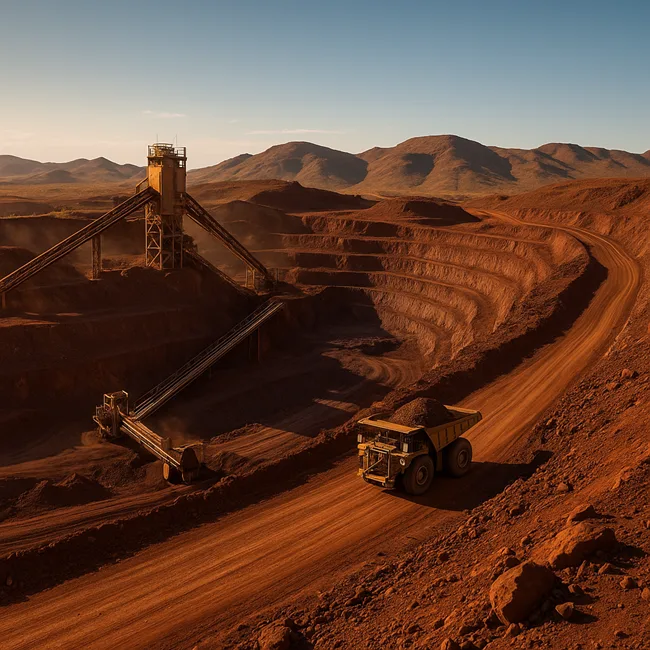
At the heart of the dispute is the longwall production halt at Moranbah North—an underground mine considered the crown jewel of the acquisition. The March 31 ignition event forced a production standstill, with no clear timeline for restart. While no physical damage was reported to the mine or equipment, Peabody contends the lack of operational clarity constituted a material adverse change under the purchase agreement, which entitled it to walk away without penalty.
Peabody President and Chief Executive Officer Jim Grech stated that the companies were unable to reach a revised agreement that “compensated Peabody for the material and long-term impacts of the MAC.” He emphasized that the incident impacted the “most significant mine in the planned acquisition,” making the deal untenable under its current structure.
The original agreement included $1.695 billion in upfront cash, $625 million in time-deferred cash, and up to $1 billion in contingent pricing payments based on coal benchmarks.
How is Anglo American responding to Peabody’s termination of the Moranbah North deal?
Anglo American rejected the MAC claim outright, asserting that the March event did not materially impact the long-term value of its steelmaking coal portfolio. Duncan Wanblad, CEO of Anglo American, noted that the mine suffered no structural or equipment damage and that the company had made substantial progress toward regulatory sign-off for restarting operations.
In the week preceding Peabody’s announcement, Anglo received workforce sign-off on its risk assessments and was progressing with restart protocols. Wanblad characterized the termination as disappointing and stated that Anglo had “invested significant effort and shown great flexibility,” including offering amended terms and technical workarounds.
Anglo American now intends to initiate arbitration, confident in its legal position, and will pursue damages for what it claims is a wrongful termination. The miner also indicated it would reinitiate a competitive sales process, buoyed by renewed inbound interest in its steelmaking coal business, which includes the Moranbah North, Grosvenor, Aquila, and Capcoal mines.
What was the strategic rationale behind Peabody’s original acquisition of Anglo American’s assets?
When the acquisition was announced in November 2024, it was described as transformative for Peabody’s shift from thermal coal to metallurgical coal. The deal would have positioned Peabody as one of the largest seaborne producers of premium hard coking coal, with pro forma production expected to reach 21.9 million short tons by 2026.
Peabody had earmarked four mines—Moranbah North, Grosvenor, Aquila, and Capcoal—all of which are located in Queensland and geared toward high-margin export to Asian steelmakers. The assets boasted reserves exceeding 300 million tons and targeted long mine lives ranging from 8 to 31 years.
The strategic shift was consistent with Peabody’s stated objective to reduce its reliance on U.S. thermal coal and increase its exposure to seaborne metallurgical markets. It had already announced plans to cut thermal volumes by 20–40 million tons by 2035, and viewed the acquisition as key to accelerating that transition.
How does Peabody plan to create shareholder value post-termination?
Despite the collapsed deal, Peabody maintains that its global portfolio remains strong. The company cited its newly launched Centurion Mine in Queensland, which has a 25-year mine life and is now seen as the flagship of its seaborne metallurgical coal strategy.
Peabody reiterated its four-pillar value strategy, which focuses on maintaining safe, productive, and environmentally responsible operations; returning 65–100% of available free cash flow to shareholders, primarily through buybacks; leveraging its global asset base to drive organic growth; and preserving balance sheet resilience through disciplined capital deployment.
The miner is also continuing investments in alternative energy projects. These include R3 Renewables—a JV developing over 5 GW of solar and battery capacity on former coal sites—as well as Scope 1 and 2 emission reductions, where it has already exceeded its 15% target by achieving a 35% cut versus 2018 levels.
Peabody has also pledged to include Scope 3 emission estimates in its 2026 Sustainability Report and supports carbon capture R&D to eventually target net-zero emissions by 2050.
What are the legal and financial implications of a possible Anglo–Peabody arbitration?
With Anglo preparing to initiate arbitration, the financial and reputational implications could be significant. Anglo American continues to incur an estimated $45 million per month in holding costs at Moranbah North, with no clear resumption of forecasted production volumes. Peabody, on the other hand, will have to demonstrate that the event constitutes a valid MAC under the contract—typically a high legal bar.
While the precise clauses are not public, MAC provisions generally require the change to be durationally significant and materially impact the acquired business’s long-term value. Anglo appears to believe that Peabody is using the event as a negotiating tactic rather than a legitimate basis to walk away.
Depending on the arbitration outcome, Peabody could face financial penalties or reputational risk in future M&A deals. Conversely, if Anglo’s case fails, it could be forced to restart the sales process from scratch under market conditions that have evolved materially since 2024.
How is the market reacting to the termination and what’s the investor sentiment around Peabody’s position?
As of the last trading session before the announcement, Peabody Energy’s stock (NYSE: BTU) had been trading within a relatively stable band, reflecting a balanced institutional outlook on its strategic pivot and cash return framework. Analysts broadly viewed the original acquisition as accretive, but also noted that Peabody had the balance sheet strength to withstand its cancellation.
The miner’s commitment to returning up to 100% of free cash flow via buybacks is expected to cushion investor reaction in the short term. Still, analysts are closely watching for signs of whether Peabody might pursue alternative met coal acquisitions or double down on existing assets like Centurion to maintain its long-term growth momentum.
Meanwhile, Anglo American may face more scrutiny over its ability to close deals involving complex regulatory conditions, especially given its emphasis on environmental stewardship and labor engagement in Queensland.
What’s next for Anglo American’s steelmaking coal divestment strategy?
Anglo’s CEO Duncan Wanblad signaled the company’s intent to resume the sale of its Australian metallurgical coal assets, citing renewed unsolicited interest. The miner sees the assets’ high quality and market positioning—especially proximity to Asian demand—as a competitive advantage.
However, after a failed deal of this scale, any future sale may face increased buyer caution, particularly regarding operational risks and regulatory compliance. If arbitration drags out or public filings reveal deeper concerns, valuations could be revised downward unless operational confidence is quickly restored at Moranbah North.
Still, Anglo remains confident in the portfolio’s long-term value, indicating that it will “successfully conclude an alternative sales process for value in due course.”
Share this:
Discover more from Business-News-Today.com
Subscribe to get the latest posts sent to your email.