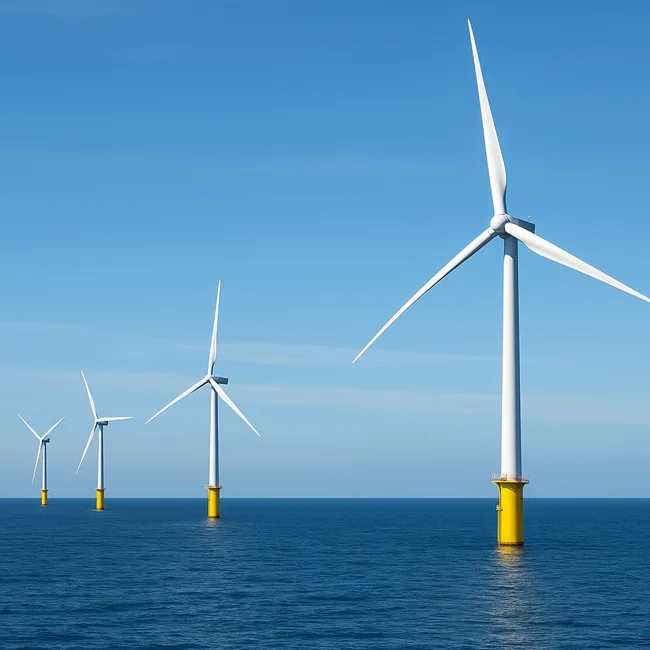
Equinor ASA (NYSE: EQNR) is moving steadily toward reinforcing its position as a top global offshore wind player, with the multi-phase Dogger Bank project in the UK reaching critical construction and grid connection milestones. As the world’s largest offshore wind farm, Dogger Bank is expected to have a total installed capacity of 3.6 GW across its A, B, and C phases once fully operational, providing power to over six million UK homes.
For Equinor, the Dogger Bank development is more than a flagship renewables project—it is a showcase for engineering scale, financing innovation, and a strategic anchor for its European wind portfolio. Analysts and institutional investors see it as a high-visibility example of Equinor’s disciplined approach to energy transition projects, contrasting with the volatility faced in U.S. offshore wind markets.
How does Dogger Bank fit into Equinor’s broader offshore wind strategy?
Dogger Bank represents the cornerstone of Equinor’s European offshore wind ambitions, offering a combination of size, technology advancement, and policy support that is rare in the global market. The project is being developed in partnership with SSE Renewables and Vårgrønn, giving Equinor a 40 percent stake and operatorship during the operations phase.
The multi-phase development is strategically staggered, allowing Equinor to integrate lessons learned from earlier phases into later stages. Dogger Bank A began generating power in late 2023, with Dogger Bank B and C scheduled to follow in 2025 and 2026. This phased rollout not only spreads capital expenditure but also reduces execution risk—a key concern for institutional investors.
What makes Dogger Bank different from other large-scale offshore wind farms?
One of Dogger Bank’s defining features is its use of GE Vernova’s Haliade-X 13 MW and 14 MW turbines, among the most powerful in commercial operation. By maximizing energy yield per turbine, Equinor and its partners are able to reduce the number of units required, lowering installation and maintenance costs.
The project also benefits from a strong UK regulatory environment, including Contracts for Difference (CfD) agreements that guarantee a fixed revenue per megawatt-hour for the initial years of operation. This revenue certainty is a significant draw for investors, especially at a time when offshore wind developers in the U.S. are struggling with cost inflation and unstable subsidy frameworks.
Institutional sentiment reflects this distinction, with analysts frequently citing Dogger Bank as an example of how offshore wind projects can deliver bankable returns when developed in supportive policy jurisdictions.
How does Dogger Bank strengthen Equinor’s competitive position in the offshore wind market?
Upon completion, Dogger Bank will elevate Equinor’s share of global installed offshore wind capacity significantly, cementing its status as one of the leading non-Chinese players in the sector. This is strategically important as competition intensifies from companies like Ørsted, RWE, and Iberdrola.
Equinor’s portfolio approach—anchoring in large-scale European projects while selectively participating in higher-risk international developments—offers a balance that investors find appealing. While the U.S. offshore wind market has presented challenges, Dogger Bank’s progress underscores Equinor’s capability to deliver mega-projects on time and within expected cost parameters.
What role will Dogger Bank play in Equinor’s financial and ESG profile?
For Equinor, Dogger Bank is both a revenue generator and a proof point for its low-carbon strategy. Once fully operational, the project will make a meaningful contribution to renewable generation earnings while enhancing the company’s ESG credentials.
The project also fits well within Equinor’s capital discipline framework, with long-term contracted revenues and low operating costs per MWh compared to smaller, less efficient offshore wind farms. This combination of scale, revenue certainty, and cost efficiency is a key reason why Dogger Bank is viewed favorably by both equity and debt investors.
What is the outlook for Dogger Bank and Equinor’s European wind leadership?
Looking ahead, Dogger Bank’s full commissioning by 2026 will set a benchmark for Equinor’s future offshore wind projects. The lessons learned here are likely to inform other European developments, including the Bałtyk 2 and 3 projects in Poland, where Equinor has already secured financial close.
Institutional investors expect that maintaining leadership in European offshore wind will give Equinor more leverage in securing future CfD contracts, influencing policy discussions, and setting competitive standards in the sector. If executed flawlessly, Dogger Bank could become a template for balancing shareholder returns with scalable, profitable renewable investments.
Discover more from Business-News-Today.com
Subscribe to get the latest posts sent to your email.