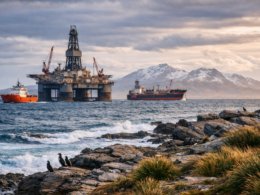
Aker BP ASA has formally approved a final investment decision (FID) to develop the Gråsel oil field in the Norwegian Sea, with planned spending of NOK 1.2 billion—approximately $140 million—set to fund the next stage of expansion in the Skarv area. The move comes as part of a broader effort to enhance recovery from existing offshore infrastructure, leveraging synergies with ongoing projects and FPSO capacity.
Gråsel, originally discovered in 1998, lies within the production license area approximately 210 kilometers west of Sandnessjøen, and falls under the operational stewardship of Aker BP, which holds the largest equity share and serves as operator. Joint venture partners Equinor ASA, Wintershall Dea Norge AS, and PGNiG Upstream Norway AS will co-develop the asset.
Why is Aker BP investing in the Gråsel oil field despite its small reserves?
The Gråsel oil field holds an estimated 13 million barrels of oil equivalent (boe), a relatively modest volume compared to standalone offshore projects. However, Aker BP’s decision to proceed with development is grounded in the strategic value of integrating Gråsel with the existing production systems at the Skarv field. The Skarv FPSO (floating production, storage, and offloading unit) already serves as the primary production hub in the area and has remaining processing and storage capacity, enabling cost-efficient development of satellite accumulations like Gråsel.
By utilizing existing well slots and subsea infrastructure, the Norwegian oil and gas producer is targeting high return-on-investment ratios for smaller discoveries—an approach that aligns with the Norwegian Petroleum Directorate’s push for maximizing resource recovery and extending field life in mature offshore areas.
How is the Gråsel project being technically implemented to optimize cost and timing?
Aker BP confirms that the development plan involves drilling a new production well from an existing slot at the Skarv field. This efficient approach avoids the need for new subsea templates or significant topside modifications. Injection support will be provided through a shared injector well, servicing both the Gråsel reservoir and the Tilje formation, which helps maintain reservoir pressure and optimize recovery.
The operator has targeted first oil from the Gråsel project in the fourth quarter of 2021. This start-up is strategically timed to coincide with the scheduled production launch of Ærfugl Phase 2—another key satellite project in the Skarv area. According to senior vice president of operations and asset development Ine Dolve, this parallel deployment marks a milestone for Aker BP, symbolizing the firm’s growing capability to deliver multiple subsea tie-ins within a single calendar year.
What does the Gråsel project signal about Aker BP’s long-term offshore strategy?
Aker BP continues to pursue a field development philosophy that prioritizes capital discipline, fast-track execution, and alliance-based collaboration with service providers. The company is positioning Gråsel as a model for future satellite tiebacks, especially in areas where existing infrastructure allows smaller reserves to be commercialized more efficiently.
“The successful early-phase work with the Gråsel project will be used as a model for future developments of smaller discoveries,” the company stated in a release, underlining its ambition to unlock value from near-field resources through modular, replicable development templates.
By opting to drill Gråsel from pre-approved slots, Aker BP reduces environmental impact and avoids prolonged lead times associated with traditional field expansions. This cost-effective approach reflects the evolving economics of the North Sea and Norwegian Sea basins, where the emphasis is increasingly on brownfield enhancements rather than greenfield megaprojects.
How will the Gråsel development extend the operational life of the Skarv FPSO?
With the addition of production from Gråsel and Ærfugl Phase 2, Aker BP and its partners expect to enhance the utilization of the Skarv FPSO and extend its economic viability. Originally commissioned in 2012, the FPSO has been central to regional output and represents a core asset in the operator’s Northern operations.
Extending the life of the FPSO not only reduces decommissioning liabilities in the near term but also strengthens the case for future tie-ins. As the resource base within reach of the Skarv hub expands, the facility is expected to become a linchpin for multiple satellite projects well into the 2030s.
Institutional investors and analysts following the European oil and gas sector have noted that Aker BP’s Skarv-led strategy allows it to generate robust free cash flow from low-cost barrels, especially amid volatile oil prices. Moreover, the operator’s ability to tap adjacent reserves with minimal capex aligns with investor demands for capital efficiency and operational discipline during a period of global energy transition.
What role does supplier collaboration play in delivering the Gråsel and Ærfugl projects?
Aker BP credits its alliance-based supplier model as a key driver of execution speed and cost control. The development of both Gråsel and Ærfugl Phase 2 involves close collaboration with multiple contractors under the company’s strategic partnerships framework, including subsea equipment providers, drilling service firms, and engineering contractors.
“This will be the first time Aker BP links two projects to the same field center in the same year,” said Ine Dolve. “It also showcases how the excellent alliance collaboration with our suppliers contributes to safe and efficient project implementation.”
The firm’s alliance model, introduced in recent years, is intended to break away from traditional fragmented procurement methods and foster early-phase alignment across project stakeholders. As a result, development cycles are shortened, costs are more predictable, and risk-sharing is improved.
What does the Gråsel project reveal about Norwegian offshore exploration and development priorities?
The development of Gråsel underscores the growing importance of small-scale tiebacks in Norway’s offshore oil strategy. The Norwegian Ministry of Petroleum and Energy has repeatedly emphasized the need to exploit existing infrastructure to prolong the country’s petroleum production window, particularly as large-scale discoveries become less frequent.
The Petroleum Directorate has estimated that a significant volume of undiscovered and underdeveloped resources lies near existing platforms and FPSOs, and Gråsel’s approval strengthens the case for monetizing these accumulations through streamlined development models.
Moreover, the project aligns with Norway’s climate and energy transition policies, which favor reduced emissions per barrel. By reusing infrastructure, the project avoids additional carbon-intensive fabrication or construction, indirectly supporting the government’s objectives for sustainable resource management.
Is the Gråsel oil field a stepping stone to future offshore optimization strategies?
With Gråsel, Aker BP and its partners are demonstrating a blueprint for what the next decade of North Sea and Norwegian Sea development could look like: smaller, faster, and smarter. By investing $140 million into a field discovered over two decades ago and connecting it through a lean tieback to existing infrastructure, the consortium is maximizing resource utilization while minimizing capex and environmental disruption.
As the energy landscape continues to shift, projects like Gråsel—modular, collaborative, and cost-efficient—offer a compelling path forward for mid-sized energy firms aiming to maintain profitability and operational relevance in a transitioning global oil market.
Discover more from Business-News-Today.com
Subscribe to get the latest posts sent to your email.