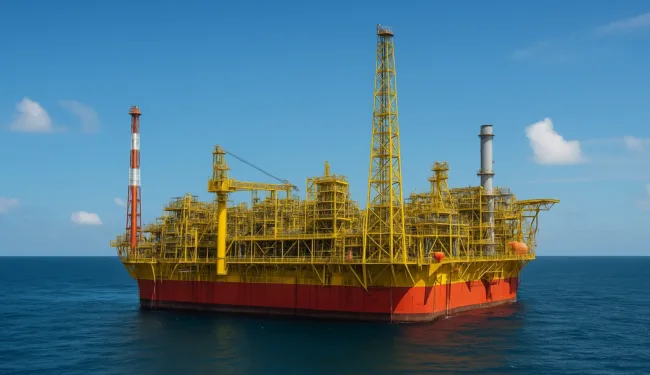
bp p.l.c. (NYSE: BP) has commenced production from the Argos Southwest Extension project, a deepwater development in the U.S. Gulf of America that is expected to add 20,000 barrels of oil equivalent per day (boe/d) in gross peak annualized production. The project, which went live seven months ahead of schedule, marks the British energy major’s fifth global upstream project startup in 2025 and its first major extension of the Argos platform, launched just two years ago.
Located roughly 190 miles south of New Orleans, the Argos platform now serves as a linchpin in bp’s long-term plans to produce more than 400,000 boe/d from its Gulf of America portfolio by the end of this decade. With a gross production capacity of up to 140,000 barrels per day, the Argos platform has become emblematic of bp’s sharpened focus on offshore oil production as a driver of shareholder value, amid growing pressures to balance traditional energy investments with low-carbon ambitions.

Why is bp scaling up deepwater production from the Gulf of America now?
The Argos Southwest Extension was developed as a three-well subsea tieback located about five miles from the original Argos facility. It extends the reach of the Mad Dog field, a prolific basin discovered in 1998 and producing since 2005, which is estimated to hold over 5 billion barrels of oil equivalent. This particular expansion sets a new benchmark for bp in terms of delivery speed—it took just 25 months from appraisal to first oil, a timeline the company claims reflects best-in-class project execution.
According to Andy Krieger, senior vice president for bp’s Gulf of America and Canada business, the extension reaffirms bp’s confidence in the region as a core production hub. Krieger noted that the project not only strengthens domestic energy supply but also demonstrates how efficient, modular offshore development can generate secure returns.
Gordon Birrell, executive vice president of production and operations at bp, emphasized that the fast-tracked timeline highlights the company’s strategic focus on moving from resource discovery to commercial output swiftly—a key metric for institutional investors seeking faster capital turnover in large-scale energy projects.
What role does the Argos platform play in bp’s broader upstream strategy?
Argos is the latest deepwater production platform operated by bp in the region, joining a fleet that includes Thunder Horse, Mad Dog, Na Kika, and Atlantis. Together, these assets form the cornerstone of bp’s U.S. offshore strategy, which aims to boost output at a time when shale growth is slowing and onshore costs are rising. Beyond its operated hubs, bp also holds stakes in non-operated facilities such as Mars, Olympus, and Ursa.
Institutional sentiment around the Argos project has generally been positive, especially after bp’s successful ramp-up in 2023. The platform supports around 250 permanent jobs and operates in water depths of 4,500 feet, making it one of the more advanced deepwater production assets in the Gulf. Analysts have noted that Argos, as a brownfield expansion hub, offers attractive economics due to its reliance on existing infrastructure and faster time-to-market compared to greenfield developments.
How do future bp projects in the Gulf of America expand on the Argos model?
Following the Argos Southwest Extension, bp is set to launch two more major projects in the Gulf of America by 2027. The Atlantis Drill Center 1 Expansion is projected to add around 15,000 boe/d in gross peak production and is scheduled to begin operations in 2026. In 2027, the Atlantis Major Facility Expansion will further enhance output from the same field, leveraging existing subsea and topside infrastructure.
Looking beyond existing hubs, bp is advancing development on its sixth platform in the region, Kaskida, which represents a strategic bet on the Paleogene—a deep geological layer about 250 miles southwest of New Orleans. Kaskida, with an expected production capacity of 80,000 barrels per day, is positioned to unlock as much as 10 billion barrels of discovered resources. First oil from Kaskida is anticipated by 2029.
bp is also targeting a final investment decision in 2025 on the Tiber-Guadalupe development, another Paleogene discovery that could add meaningful volumes toward the end of the decade.
How does this align with bp’s global upstream ambitions and energy outlook?
The Argos Southwest Extension is part of a wider upstream growth plan that includes 10 major project startups by 2027, positioning bp to regain momentum in conventional oil and gas after a period of portfolio rationalization. While bp has scaled back some of its more aggressive renewables targets in response to investor feedback and macroeconomic realities, the Gulf of America remains central to its strategy of “resilient hydrocarbons”—a concept that prioritizes high-margin, low-breakeven assets to fund energy transition goals.
Energy security concerns—particularly in light of supply disruptions, geopolitical instability, and inflationary cost pressures—have reignited interest in domestic oil production. For bp, the Gulf of America offers a politically stable, technically mature, and infrastructure-rich environment to deploy capital efficiently. Its focus on brownfield expansions, such as Argos and Atlantis, offers the ability to boost production without incurring the full cost burden of new platform builds.
Who are the partners behind Argos and what are their respective stakes?
bp holds a 60.5% working interest in the Argos project and operates the platform. Its co-owners include Woodside Energy, which holds a 23.9% stake, and Union Oil Company of California (an affiliate of Chevron U.S.A. Inc.), which owns the remaining 15.6%. This joint venture structure allows bp to share technical risk and capital expenditure while maintaining operational leadership.
Both Woodside and Chevron have also indicated ongoing interest in expanding their upstream Gulf portfolios, which could lead to further collaboration on upcoming tiebacks or Paleogene ventures. However, bp remains the primary driver of development schedules and technical design for the current wave of projects.
What can investors expect from bp’s upstream segment in the next few years?
Analysts tracking bp’s upstream division see the successful early delivery of the Argos Southwest Extension as a meaningful signal that the company can execute complex offshore projects on accelerated timelines. With oil prices stabilizing above USD 70 per barrel and refining margins holding steady, upstream profitability remains resilient. If bp continues to hit or exceed delivery targets in the Gulf, investor confidence could be reinforced in the face of ongoing scrutiny over its energy transition path.
Institutional sentiment has improved following this announcement, with many viewing the Argos Extension as a key milestone within bp’s post-pandemic upstream reset. The company’s performance in the Gulf is likely to become even more pivotal as it rebalances its energy mix and seeks to optimize capital efficiency across fossil and low-carbon assets.
Share this:
Discover more from Business-News-Today.com
Subscribe to get the latest posts sent to your email.