



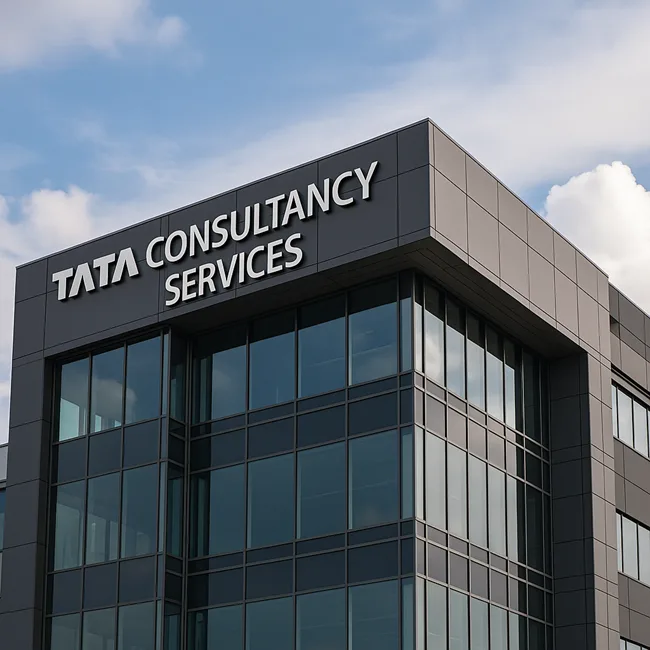
Tata Consultancy Services has confirmed plans to reduce its workforce by more than 12,000 employees globally, accounting for approximately 2 percent of its total headcount. The decision—announced in late July 2025—marks one of the largest layoffs ever in the Indian IT services industry and has sent ripples across clients, employees, and institutional investors alike.
As of March 2025, Tata Consultancy Services employed over 613,000 professionals. The upcoming reductions will target non-billable resources and employees facing redeployment delays, especially in middle and senior management. The Indian IT services provider framed the move as a strategic workforce realignment to remain competitive in a landscape increasingly defined by artificial intelligence, automation, and lean digital delivery models.
While industry leaders have previously undertaken modest workforce optimization efforts, this large-scale downsizing from Tata Consultancy Services is viewed as a structural shift rather than a cyclical adjustment.
Why is Tata Consultancy Services initiating the largest workforce reduction in its history in 2025?
Executives at Tata Consultancy Services emphasized that the job cuts are not merely a cost-cutting measure but a decisive step toward creating a “future-ready organization.” According to CEO K. Krithivasan, the decision reflects deployment constraints arising from skill mismatches rather than underperformance or redundancy alone.
The Indian IT services firm has invested significantly in reskilling employees, especially in AI and digital technologies. However, Krithivasan noted that many senior associates have not been able to transition effectively into new-age roles. The result: large bench pools that are difficult to redeploy amid increasingly client-specific, tech-intensive project demands.
Tata Consultancy Services stated that affected employees would receive fair severance, career counselling, and outplacement support. However, the announcement sparked immediate criticism from employee groups and industry observers who pointed to the paradox of rising executive compensation and delayed onboarding of new recruits.
Unions representing IT employees, particularly in India’s southern states, urged staff not to resign under pressure. Some associations have approached the Union Labour Minister, demanding a halt to terminations and reinstatement of those whose onboarding was stalled.
How are analysts and institutional investors interpreting the TCS layoffs in terms of long-term competitiveness?
While workforce rationalization often boosts investor sentiment when seen as a margin expansion lever, the reaction to Tata Consultancy Services’ announcement has been cautious. Shares of the IT major fell nearly 1.7 percent in the trading session following the announcement, reflecting investor anxiety about deeper structural issues.
Institutional sentiment indicates that this move could be interpreted as a canary in the coal mine, signaling broader weakness in demand across key sectors such as banking, financial services, insurance (BFSI), retail, and energy. These verticals contribute significantly to Tata Consultancy Services’ revenue, and delays in discretionary IT spending have already hurt margins in recent quarters.
Some market observers highlighted that headcount rationalization was expected eventually, but the scale and tone of the cuts point to execution pressures and slower-than-expected deal conversions.
Although the Indian IT services provider still boasts one of the largest global delivery networks and client rosters, analysts have flagged attrition risks and employee morale as emerging challenges. These could affect its ability to scale projects, especially in geographies where nearshore support and cultural proximity matter.
How does this workforce move align with industry trends around AI, automation, and cost efficiency in 2025?
Tata Consultancy Services’ 12,000-job reduction comes amid a global transformation in IT services delivery, where artificial intelligence is not only augmenting software development and testing but also driving productivity in cloud migration, business process services, and customer support.
With platforms such as GitHub Copilot, Google Gemini Code Assist, and enterprise-specific GenAI models reducing manual work in development and operations, IT firms are recalibrating their resourcing models. Mid-level roles focused on documentation, maintenance, and repetitive support are now at risk of obsolescence.
Former Tech Mahindra CEO C.P. Gurnani indirectly commented on the shift, describing it as the “end of the Sholay-era metrics” of the Indian IT industry, where headcount size was considered a competitive advantage. He added that firms will increasingly be measured on outcome efficiency rather than FTE (full-time equivalent) count.
This realignment is further supported by global clients seeking more from fewer resources—high billability, cross-skilling, automation readiness, and AI-augmented deliverables. Tata Consultancy Services, like peers Infosys and Wipro, has been expanding AI-driven platforms, but investor scrutiny is now focused on whether such transformation will yield bottom-line impact in the next 2–3 quarters.
What is the historical context behind TCS’s headcount model and how does this move compare to previous cycles?
Historically, Tata Consultancy Services and its peers followed a linear headcount-revenue model, where onboarding large numbers of engineering graduates helped meet the volume-driven needs of offshored projects. Bench strength, or the pool of unallocated staff, was considered a strategic cushion to meet sudden demand surges.
However, over the past decade, that model has gradually become inefficient as clients embraced Agile, DevOps, and shorter project cycles. During the post-COVID tech boom in 2021–2022, Tata Consultancy Services hired aggressively, anticipating sustained demand across digital transformation projects. But the global economic slowdown in 2023–2024, coupled with geopolitical uncertainty and tightening IT budgets, led to a surplus of underutilized talent.
The current reduction of 12,000 roles exceeds prior rightsizing efforts seen in 2008 or even 2020, underlining the depth of structural recalibration taking place in 2025.
What are the implications for the broader Indian IT sector and job seekers entering the tech market?
Analysts warn that this move could set a precedent for other Tier I IT firms, especially if they face similar margin pressures or execution slowdowns. While no major Indian IT services player has announced cuts at this scale, there is growing speculation that Infosys, HCLTech, and Wipro may intensify their workforce optimization efforts—either through automation, internal redeployments, or early retirements.
For fresh graduates and lateral hires, the message is clear: AI literacy, cross-functional adaptability, and domain-specific skills are now prerequisites. Traditional coding and support roles may no longer be viable entry points into the IT industry without value-added digital proficiencies.
Talent acquisition experts suggest that firms will prioritize candidates with cloud certifications, AI/ML project experience, low-code platform exposure, and strong client-facing communication skills. Conversely, legacy skillsets tied to on-premise infrastructure or waterfall delivery models are seeing rapid depreciation in employability.
What is the forward-looking outlook for Tata Consultancy Services post-layoffs?
Despite near-term reputational and morale challenges, analysts believe Tata Consultancy Services has room to rebound in 2026 if it can demonstrate margin recovery, better utilization rates, and successful AI-led transformation in its service delivery. The firm’s healthy balance sheet, diversified client base, and global presence offer some insulation from market turbulence.
However, institutional investors are expected to closely monitor Q2 and Q3 FY26 results for clarity on revenue visibility, attrition stabilization, and productivity metrics post-layoff. If the company can maintain momentum in large deal wins and digital transformation partnerships, especially in the U.S. and Europe, it may regain investor confidence by early 2026.
For now, Tata Consultancy Services finds itself at the center of a high-stakes recalibration—one that could define not just its own path but that of the entire Indian IT services sector in the AI-first era.
Discover more from Business-News-Today.com
Subscribe to get the latest posts sent to your email.