





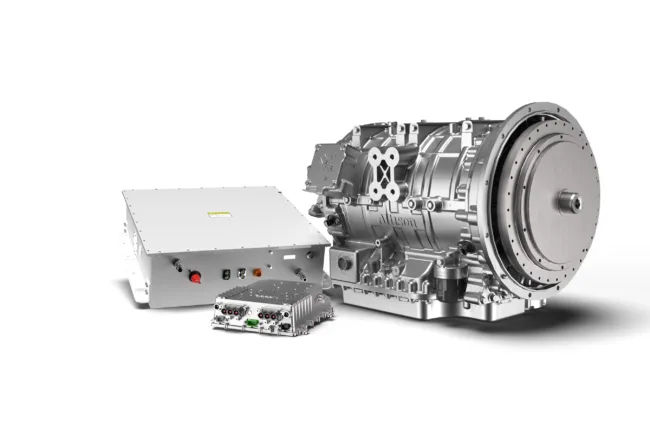
Allison Transmission Holdings Inc. (NYSE: ALSN) has taken another step toward consolidating its position in sustainable transit by securing a deal with the Maryland Department of Transportation Maryland Transit Administration (MDOT MTA). Announced on July 14, 2025, the agreement will see 40-foot New Flyer buses equipped with the Allison eGen Flex electric-hybrid propulsion system deployed across the Baltimore metropolitan region later this year.
The Indianapolis-based propulsion systems manufacturer continues to attract attention from institutional investors tracking electrification strategies in public transportation. Allison Transmission’s stock recently closed at $90.69, down 0.94%, but analysts remain broadly positive on its hybrid and electric technology roadmap. In FY2024, the company reported $3.23 billion in revenue, a 6.3% year-over-year increase, and $731 million in net earnings, reflecting strong profitability with gross margins of approximately 48%.
How are institutional investors assessing Allison Transmission’s ability to expand hybrid propulsion contracts in the U.S. public transit market after the Baltimore deal?
Institutional sentiment around Allison Transmission has been moderately optimistic, with the Baltimore contract viewed as a strategic endorsement of its hybrid propulsion technology. Analysts tracking transit electrification believe that municipal fleet upgrades will drive recurring revenue opportunities for the commercial vehicle propulsion solutions provider.
The eGen Flex platform, introduced commercially in 2022, has been highlighted for its geofencing capability that enables up to 50% engine-off operation during routes and delivers fuel economy improvements of up to 25% compared to diesel buses. While the company trades at a forward price-to-earnings ratio of about 11x, which is below some fully electric competitors, its stable gross margin profile and growing municipal contract base are considered supportive of long-term investor confidence.
How does the Baltimore eGen Flex deployment demonstrate technological improvements over Allison Transmission’s earlier hybrid bus projects?
The Baltimore fleet deployment is a significant technological leap from the H-series hybrid systems Allison Transmission supplied in the early 2000s. Unlike its earlier diesel-electric hybrids, the eGen Flex integrates remote-enabled geofencing, allowing smoother transitions between electric and combustion modes. This improvement makes the system more compliant with stringent municipal emission targets and operational noise restrictions.
Industry watchers suggest that Baltimore’s adoption could become a benchmark for other transit authorities considering hybrid fleets as an interim solution before full battery-electric adoption. New Flyer’s involvement also broadens Allison Transmission’s exposure, as the bus manufacturer remains a primary supplier to North American transit agencies.
What impact could the Baltimore hybrid bus deal have on Allison Transmission’s revenue, margins, and mid-term sales guidance for 2025?
While no financial terms have been disclosed, institutional analysts expect only a modest near-term revenue contribution, given Allison Transmission’s multi-billion-dollar sales base. However, hybrid propulsion systems are regarded as high-margin products, offering incremental profit potential relative to conventional transmissions.
The deal could also strengthen Allison Transmission’s pipeline for future municipal contracts. Successful execution in Baltimore is likely to influence other U.S. cities evaluating hybrid-electric options. The company has maintained its FY2025 guidance of $3.2–3.3 billion in net sales and $735–785 million in net income, with institutional investors projecting a 12-month price target between $99 and $104.
What competitive and regulatory challenges could limit Allison Transmission’s hybrid and electric transit market growth despite this agreement?
Growth in hybrid propulsion adoption could be tempered by competitive pressures from fully electric powertrain providers that are increasingly favored by long-term sustainability policies. Municipal budget constraints and shifting federal transit funding priorities could further slow the pace of hybrid fleet expansions.
However, hybrid systems like eGen Flex present a lower infrastructure barrier, making them attractive for mid-sized urban transit agencies not yet prepared for full electrification. Analysts consider this transitional value a key advantage for Allison Transmission in the medium term.
What are analysts expecting next for Allison Transmission, and can the eGen Flex platform secure more hybrid bus contracts across other U.S. cities?
Allison Transmission is expected to leverage the Baltimore project as a demonstration of its hybrid technology’s operational benefits. Market observers anticipate further contract wins in regions where electrification infrastructure remains underdeveloped, especially in the Midwest and Southeast U.S.
The propulsion systems manufacturer is also projected to expand its hybrid product line to include enhanced telematics integration and potential full-electric variants of the eGen Flex platform. If executed effectively, these moves could sustain investor confidence and help the stock approach the $99–$104 target range set by institutional forecasts.
Discover more from Business-News-Today.com
Subscribe to get the latest posts sent to your email.
