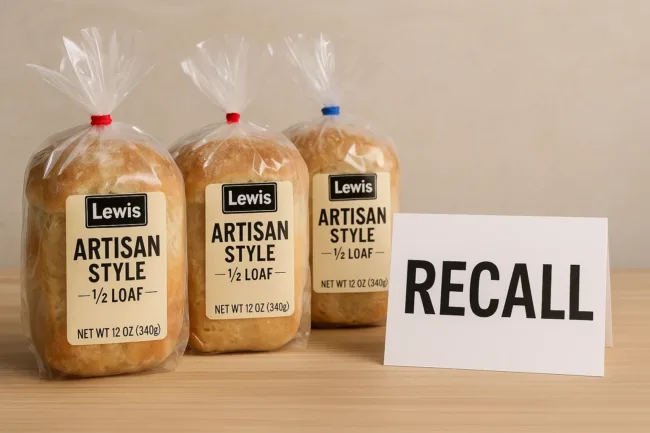
Hartford Bakery, Inc., a regional bread manufacturer based in Evansville, Indiana, has issued a voluntary recall of multiple production lots of its “Lewis Bake Shop Artisan Style 1/2 Loaf” following the discovery of undeclared hazelnuts in several packages. This recall affects twelve specific lot codes and spans multiple U.S. states where the product was distributed, including through major retailers such as Kroger and Walmart.
The recall was formally announced on July 13, 2025, correcting an earlier July 10 notice that inaccurately listed affected lot codes. The bread in question, typically labeled as white bread, was found to contain visible hazelnuts—posing a serious health risk for individuals with nut allergies. Analysts tracking consumer product safety incidents have highlighted the potential reputational and regulatory implications of allergen mislabeling in packaged foods, especially given the strict labeling standards mandated by the U.S. Food and Drug Administration (FDA).
Why did Hartford Bakery recall the Lewis Bake Shop 1/2 Loaf and how did undeclared hazelnuts end up in the product?
The American baked goods manufacturer initiated the recall after discovering that approximately 883 loaves from six production batches were mistakenly packed using the packaging intended for a non-nut product. The original packaging did not explicitly state the presence of hazelnuts, although it included a general warning that the product “may contain tree nuts.” An internal investigation by Hartford Bakery revealed the error occurred during a packaging switch involving a hazelnut-containing bread product.
The manufacturer acted quickly to issue the correction and update the lot code information in the public domain. This latest recall affects 12 lot codes labeled “T10” and “TH10,” all of which share a common expiration date of July 13, 2025. Each package weighs 12 oz (340g) and carries the UPC code 24126018152. These lot codes are printed on the front panel of the packaging and have been sold across several Midwestern and Southern states.

Which geographic markets and retailers are impacted by the Lewis Bake Shop hazelnut contamination?
The recalled bread products were widely distributed across a 12-state region that includes Michigan, Wisconsin, Illinois, Indiana, Ohio, Kentucky, Tennessee, Georgia, Arkansas, Missouri, Alabama, and Mississippi. Major national chains such as Kroger and Walmart have stocked the affected products, increasing the exposure and urgency of the recall.
Given the scale of distribution and the nature of allergen-related recalls, institutional food safety observers note that even small-scale packaging errors can prompt broad regional recalls when distributed through major retailers. Analysts have flagged the importance of rapid traceability and recall execution, especially for allergen-sensitive products where liability exposure is high.
How has Hartford Bakery responded to the potential health risks from this packaging error?
Hartford Bakery has responded by urging all consumers who purchased the affected “Lewis Bake Shop Artisan Style 1/2 Loaf” to return the bread to the point of purchase for a full refund. The company has opened a dedicated customer service line available Monday through Friday, from 8:00 a.m. to 3:00 p.m. CST, excluding holidays.
While no hospitalizations or serious adverse reactions have been reported, the bakery acknowledged receiving one consumer complaint involving digestive discomfort. Additional complaints were submitted by customers who noticed visible hazelnuts in their bread prior to consumption. Institutional safety consultants note that even in the absence of major injuries, voluntary recalls help companies maintain regulatory compliance and reduce the risk of litigation under U.S. food labeling laws.
What is the broader food safety and institutional response to undeclared allergen recalls in 2025?
The recall comes amid heightened regulatory vigilance around allergen labeling and food traceability. In recent years, both the FDA and consumer advocacy groups have stressed the importance of clear, explicit allergen warnings on packaged goods, especially for high-risk ingredients like tree nuts, peanuts, dairy, and gluten. Under current U.S. regulations, failure to disclose known allergens can result in significant penalties, mandatory recalls, and long-term reputational damage.
In the food manufacturing industry, there is an increased reliance on automated packaging line audits, allergen sensors, and traceability systems. Industry observers say the Hartford Bakery incident underscores the persistent risk of human or mechanical error in food production, especially in mid-size regional operations that may still rely on semi-automated labeling systems. Analysts have emphasized the need for stronger internal protocols to prevent similar packaging mismatches in future production runs.
What are analysts and food safety experts projecting for Hartford Bakery’s operational recovery and brand trust?
While Hartford Bakery is not publicly listed, the recall has attracted attention from institutional investors focused on the food manufacturing supply chain. Analysts indicate that early and transparent communication, combined with decisive recall management, could help mitigate long-term reputational risks. The voluntary nature of the recall and absence of severe allergic incidents suggest that the bakery’s response may be viewed favorably in terms of risk containment.
Moving forward, experts expect Hartford Bakery to reinforce quality control measures and update its packaging change protocols. Institutional stakeholders may also push for greater investment in allergen detection systems and production-line auditing tools to reduce the likelihood of future recalls.
In regional markets, consumer trust could be temporarily impacted, particularly in areas where allergen sensitivity is a key factor in household purchasing behavior. However, food industry analysts believe that unless repeated incidents occur, the bakery’s long-standing presence and retail partnerships are likely to support a gradual reputational rebound.
How does the Lewis Bake Shop incident reflect industry-wide concerns about allergen mislabeling and regulatory compliance?
This episode reflects broader industry concerns about undeclared allergen risks—an area where the U.S. food sector continues to face recurring compliance challenges. Despite improved labeling standards and the rise of allergen-free certifications, accidental contamination and mislabeling events remain among the top causes of FDA-issued food recalls.
In the U.S. alone, food recalls due to allergen mislabeling increased by nearly 20% between 2023 and 2024, according to food safety watchdogs. As a result, both large-scale manufacturers and regional bakeries are under increased pressure to adopt comprehensive food safety programs, integrate allergen management training, and implement redundant checks during packaging transitions.
Hartford Bakery’s prompt and detailed correction, including the revised July 13 lot code list, reflects a growing industry trend toward transparency in error disclosure and recall response. Analysts suggest that this trend could continue as retailers demand stronger food safety assurances from their supply chain partners.
Discover more from Business-News-Today.com
Subscribe to get the latest posts sent to your email.