




Why is Vår Energi partnering with TechnipFMC for integrated subsea development in the Gjøa area of the North Sea?
Vår Energi ASA (OSE:VAR), one of Norway’s leading independent oil and gas producers, has announced a strategic collaboration agreement with TechnipFMC Norge AS focused on subsea development projects in the Gjøa area of the North Sea. Signed on July 8, 2025, in Sandnes, the agreement covers future engineering, procurement, construction, and installation (EPCI) scopes related to the Gjøa Nord, Cerisa, and Ofelia discoveries, with a specific emphasis on integrated delivery of both Subsea Production Systems (SPS) and Subsea Umbilicals, Risers, and Flowlines (SURF).
The scope of the agreement is to jointly mature and eventually execute the Gjøa cluster developments through a coordinated and cost-effective subsea strategy. Vår Energi is acting on behalf of a consortium of license holders, and the collaboration is designed to deliver operational and economic synergies across engineering, drilling, installation, and procurement. The initial term of the agreement spans five years, with the option for future extensions depending on project progression and mutual performance outcomes.

What strategic and operational synergies are being unlocked by coordinating the Gjøa Nord, Cerisa, and Ofelia developments?
The three discoveries—Gjøa Nord (PL153), Cerisa (PL636), and Ofelia (PL929)—collectively contain an estimated 110 million barrels of oil equivalent (boe) in gross recoverable resources. Institutional investors and industry experts note that coordinating development of all three fields through a unified subsea infrastructure significantly increases project viability and long-term returns.
Instead of standalone field tiebacks with duplicated infrastructure and timelines, Vår Energi and its partners are pursuing a model that optimizes engineering and logistical workflows. The project plan envisions a synchronized subsea development that will be tied back to the existing Gjøa production platform, thereby reducing capital expenditure, compressing time to first oil, and improving lifecycle efficiency.
TechnipFMC, through its integrated EPCI model, brings advanced engineering capabilities and strong execution history across the Norwegian Continental Shelf (NCS), with previous projects demonstrating reliable delivery of subsea systems in similar high-pressure, high-complexity environments.
How are the joint license holders for each discovery expected to contribute to project coordination and execution?
Each of the three licenses features a mix of Norwegian and international oil and gas operators, many of whom have previously collaborated on offshore projects.
In the Gjøa/Gjøa Nord license (PL153), Vår Energi operates with a 30 percent stake, alongside Petoro (30 percent), Harbour Energy Norge AS (28 percent), and OKEA ASA (12 percent). The Ofelia license (PL929) includes Vår Energi as operator with 40 percent, joined by Harbour Energy Norge AS (20 percent), Pandion Energy (20 percent), DNO ASA (10 percent), and Aker BP ASA (10 percent). Meanwhile, the Cerisa (PL636) partnership includes Vår Energi (30 percent), ORLEN Group (30 percent), INPEX Idemitsu (30 percent), and Sval Energi (10 percent).
This diverse ownership structure underscores the importance of alignment and shared incentives in the project’s commercial model. Industry observers suggest that Vår Energi’s leadership role, combined with TechnipFMC’s single-source integration approach, will streamline governance and minimize interface risk between partners and contractors.
What are the financial and resource implications of a coordinated subsea tieback to the Gjøa platform?
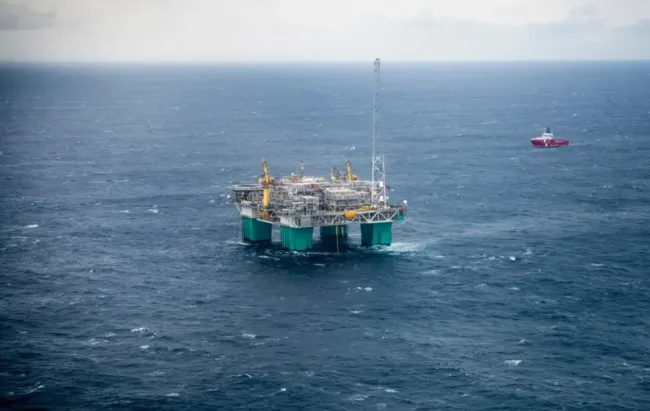
By leveraging existing infrastructure at the Gjøa platform—a semi-submersible production facility operated by Neptune Energy and powered by hydroelectricity—Vår Energi and its partners can avoid the need to build new host platforms, potentially saving hundreds of millions of dollars in capital expenditure.
The Gjøa facility is well-positioned in the North Sea with existing pipeline access to the FLAGS and Vesterled systems, providing efficient evacuation routes for both gas and oil. Subsea tiebacks to Gjøa have historically delivered competitive breakeven economics, and with 110 million boe in view, analysts suggest that a coordinated project could achieve full-cycle breakeven below USD 35 per barrel, depending on final development concept and drilling success.
As the industry transitions to more cost-sensitive and environmentally aware operations, maximizing recovery from known fields through infrastructure-led exploration and development is becoming a standard operating model in Norway and beyond.
What does the collaboration reveal about Vår Energi’s long-term North Sea strategy and portfolio optimization?
Vår Energi has consistently positioned the Gjøa area as one of its strategic hubs for production growth on the NCS. The company’s long-term strategy involves leveraging its portfolio of discoveries and licenses to drive volume-led growth through low-carbon infrastructure and modular development solutions.
Chief Operating Officer Torger Rød remarked that the agreement with TechnipFMC reflects the energy producer’s commitment to accelerating development timelines while reducing execution risk and cost. By choosing a strategic partner early in the development process, Vår Energi aims to finalize concept selection, mature subsurface models, and reach a final investment decision (FID) by 2026.
Institutional sentiment appears cautiously optimistic. With the company targeting production of 350,000 barrels of oil equivalent per day (boepd) by the late 2020s, the Gjøa tiebacks could play a meaningful role in bridging medium-term output targets while lowering emissions intensity through electrification and shared infrastructure.
How does TechnipFMC’s integrated commercial model support project delivery efficiency and cost competitiveness?
TechnipFMC’s integrated EPCI model has emerged as a preferred contracting structure for subsea developments, especially in mature basins like the North Sea. By unifying engineering, procurement, and installation services under one contract, the model simplifies coordination and reduces handover errors between project phases.
For the Gjøa developments, TechnipFMC’s delivery scope spans both SPS and SURF, giving it comprehensive control over subsea hardware design, manufacturing, deployment, and connection to the host facility. The model is expected to yield higher productivity and predictability by shortening procurement cycles and reducing engineering rework.
In prior North Sea developments, TechnipFMC’s integrated execution model has been credited with cutting delivery times by up to 20 percent and trimming total project costs by 10–15 percent relative to conventional multi-vendor approaches. Analysts believe such efficiencies will be critical in ensuring the economic viability of marginal and mid-sized discoveries like Ofelia and Cerisa.
What timeline and future investment decisions are expected for the Gjøa subsea cluster?
The collaboration agreement lays the groundwork for a final investment decision in 2026, subject to the completion of subsurface evaluations, concept selection, and detailed FEED (Front-End Engineering and Design) studies. Once sanctioned, the projects would move into execution in 2027 with potential first oil and gas by 2029–2030.
Vår Energi has made clear that further investments are contingent on optimizing the development solution across the three licenses. With energy markets favoring low-cost, quick-cycle assets, the Gjøa subsea tiebacks fit institutional preferences for capital-efficient growth and emissions-conscious development.
Additionally, the possibility of extending the collaboration beyond the initial five-year period indicates that Vår Energi is positioning Gjøa as a long-term production hub. Any future discoveries within tieback range could also be integrated under this model, enhancing asset longevity and field economics.
Discover more from Business-News-Today.com
Subscribe to get the latest posts sent to your email.

