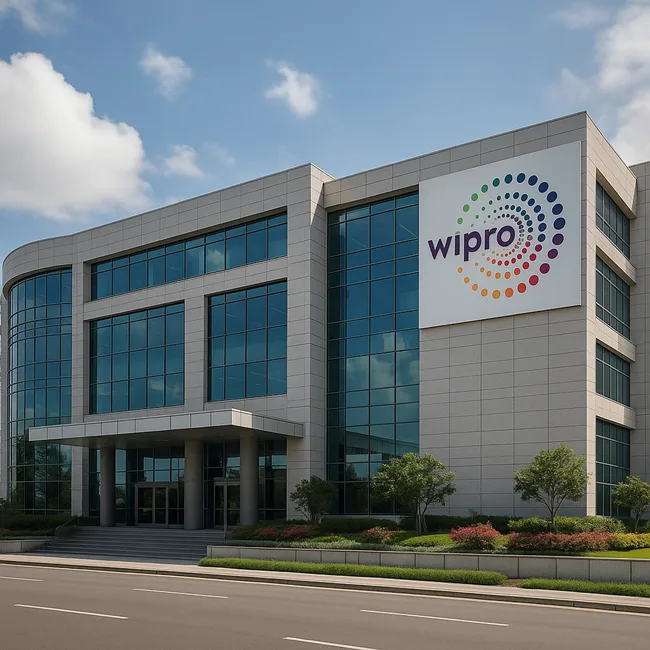
Wipro Limited (NYSE: WIT, BSE: 507685, NSE: WIPRO), the Indian AI-powered technology services and consulting firm, has secured a multi-year strategic contract from Saudi Electric Company – National Grid SA to implement a Smart Meter Data Management (MDM) system across the Kingdom’s transmission network. The agreement, announced on July 24, 2025, is designed to modernize Saudi Arabia’s meter data infrastructure, strengthen grid reliability, and align with the country’s Vision 2030 energy digitalization roadmap.
The project will see Wipro Limited designing, developing, and supporting a fully integrated MDM platform capable of real-time monitoring of power flow, voltage levels, and equipment performance. Intelligent forecasting and predictive analytics will help National Grid SA improve grid planning, reduce unplanned outages, and optimize power dispatch while lowering operational costs. According to the company, these capabilities will also enhance fault detection and enable proactive maintenance, contributing to improved end-user service experiences.
Vinay Firake, CEO – Asia Pacific, India, Middle East & Africa (APMEA) at Wipro Limited, emphasized in a statement that the company’s deep domain expertise in energy and smart grid technology would help the Kingdom achieve its innovation and digitalization ambitions under Vision 2030.
What does Wipro Limited’s smart meter data management contract involve and why is it significant for Saudi Arabia’s grid modernization?
The contract covers the complete lifecycle of a Smart Meter Data Management system for the transmission network. Wipro Limited will not only deploy infrastructure and smart applications but will also provide post-implementation support to ensure seamless operations. The system will collect and analyze high-frequency data on energy flow and equipment conditions, helping National Grid SA better manage peak demand, detect faults early, and minimize downtime.
For Saudi Electric Company, the implementation is critical to improving grid reliability and integrating renewable energy sources, which are a growing part of the Kingdom’s energy mix. Analysts familiar with the Middle East utility sector have noted that such smart grid projects are essential for transitioning toward a decentralized, renewable-friendly energy infrastructure. They also view this contract as a cornerstone in Saudi Arabia’s broader strategy to reduce reliance on fossil fuels while maintaining operational efficiency.
How does this contract align with Saudi Vision 2030 and what does it mean for energy digitalization trends in the region?
Saudi Arabia’s Vision 2030 has placed significant emphasis on upgrading national infrastructure to support a diversified and sustainable economy. Energy modernization, particularly through smart grid adoption, is considered one of its critical pillars. By deploying advanced meter data management, National Grid SA will be able to improve data accuracy, integrate renewable energy resources, and enhance transparency for energy consumers.
Regional institutional sentiment suggests that this deal reflects an increasing appetite for digital transformation in the energy sector. Utility operators across the Gulf Cooperation Council (GCC) are accelerating investment in grid automation and predictive analytics to cope with rising power demand and renewable integration. Wipro Limited’s engagement in Saudi Arabia positions it strategically to capture additional contracts as other GCC nations pursue similar grid modernization initiatives.
How does this contract build on Wipro Limited’s historical track record in utility digital transformation?
Wipro Limited has a long history of providing technology solutions for global energy and utility companies. Its past collaborations include data center consolidation and hybrid cloud architecture projects for leading European utilities. However, the Saudi Electric Company contract marks a significant shift toward operational energy system modernization and real-time analytics.
This transition reflects a broader trend where technology providers are moving beyond traditional IT services to operational technology (OT) integration. By delivering a full-scale MDM system, Wipro Limited demonstrates its ability to handle complex utility transformation projects that combine IT and OT expertise—critical for the next generation of smart grid operations.
How have institutional investors reacted to Wipro Limited’s growing energy tech portfolio, and what does it signal for future growth?
Following its Q1 FY26 earnings release in mid-July 2025, Wipro Limited reported a 2% quarter-on-quarter revenue decline on a constant currency basis, but its operating margin improved to 17.5% due to cost discipline. Total contract bookings rose to USD 4.97 billion, reflecting a 24% sequential increase, with Middle Eastern energy deals cited as a growth driver. Wipro Limited’s American Depositary Receipts (ADRs) rose nearly 4% in the days following the announcement, buoyed by investor confidence in its growing energy-tech pipeline.
Institutional sentiment around this contract is broadly positive. Market observers view it as a long-term, recurring revenue opportunity that diversifies Wipro Limited’s portfolio beyond traditional IT services. The Middle East’s smart grid market, projected to grow at a compound annual rate exceeding 14% through 2033, offers attractive opportunities, and Wipro Limited’s early positioning could deliver significant revenue stability. Analysts also believe that the recurring service nature of MDM operations could provide margin resilience even in a competitive pricing environment.
What market data supports the strategic importance of Wipro Limited’s Saudi Electric contract in the global smart grid space?
The global smart grid market is forecast to reach USD 180 billion by 2034, expanding at a 10.6% CAGR from 2025. In the Middle East, Saudi Arabia’s smart grid market alone is expected to exceed USD 3.2 billion by 2033, fueled by heavy investments in transmission and distribution automation.
By integrating advanced analytics, forecasting, and predictive maintenance into National Grid SA’s transmission system, Wipro Limited positions itself to capture additional contracts as regional governments prioritize reliable and transparent energy infrastructure. Industry experts indicate that successful execution in Saudi Arabia could serve as a blueprint for expansion into Africa and Southeast Asia, where similar grid modernization programs are gaining momentum.
What do experts suggest about Wipro Limited’s long-term positioning in the energy sector after this deal?
Industry observers suggest that this contract validates Wipro Limited’s strategic pivot into high-growth verticals, including energy and utilities. Its end-to-end solution delivery capability reinforces its credibility with utility operators transitioning to smart grid technologies. The company’s growing expertise in IT-OT convergence is seen as a competitive differentiator in a market where utilities are increasingly looking for technology partners capable of managing both digital infrastructure and operational systems.
Analysts also highlight that multi-year contracts in the utility sector tend to create sticky revenue streams and stronger client relationships, improving visibility for future earnings. However, execution risks remain, particularly around integrating new systems with existing infrastructure. Successful delivery in Saudi Arabia could unlock further opportunities in the region, particularly with utilities in the United Arab Emirates and Qatar seeking similar smart grid upgrades.
What are analysts expecting next for Wipro Limited’s energy and utilities portfolio?
Analysts expect Wipro Limited to pursue additional contracts in smart grid modernization, energy analytics, and meter data management in high-growth emerging markets. With the Middle East and Africa ramping up investment in digital grid infrastructure, Wipro Limited is expected to leverage its experience from this Saudi project to replicate similar models in other jurisdictions.
Investors are likely to track Wipro Limited’s Q2 FY26 earnings and order booking trends closely for signs of sustained momentum. Future growth could depend on the company’s ability to scale its energy-tech solutions globally, maintain competitive pricing, and ensure smooth execution of existing large-scale contracts.
Discover more from Business-News-Today.com
Subscribe to get the latest posts sent to your email.