




Winsome Resources Limited (ASX: WR1) surged 21.05% to close at AUD 0.23 on July 11, 2025, with trading volume crossing 2.65 million shares, after unveiling dual progress updates across its Canadian project portfolio. The rally came as investors responded positively to the company’s receipt of key environmental permitting guidelines for the Adina Lithium Project in Québec, alongside the restart of high-grade cesium exploration at the nearby Sirmac-Clapier site—both viewed as pivotal for its critical minerals growth strategy. The Australian lithium and cesium explorer received Québec’s environmental directive for the flagship Adina Lithium Project, enabling final planning for its Environmental and Social Impact Assessment (ESIA). Concurrently, fieldwork resumed at the high-grade cesium discovery in Sirmac-Clapier, advancing drill target preparation in one of the world’s few cesium-prospective terrains.
How does the Québec permitting milestone and new cesium sampling campaign reshape Winsome Resources’ strategic position in critical minerals?
Winsome Resources Limited is moving closer to production at its flagship Adina Lithium Project after receiving the provincial directive outlining the scope of its Environmental and Social Impact Assessment (ESIA), while also accelerating cesium-focused exploration at its 100%-owned Sirmac-Clapier project. These parallel developments reflect the Australian explorer’s deepening footprint in the James Bay region of Québec and reinforce its ambitions in both lithium and cesium—two critical minerals central to battery and specialty chemical supply chains.
On 7 July 2025, Winsome Resources announced that the Government of Québec had formally issued the ESIA directive for the Adina project, enabling the company to plan the final phase of baseline studies and stakeholder engagement prior to formal project submission. Just two days later, the lithium explorer launched a renewed field program at Sirmac-Clapier to delineate high-grade cesium drill targets, building on 2024 discoveries that revealed pollucite-rich mineralisation with grades as high as 5.44% Cs₂O.
Institutional investors monitoring Winsome Resources’ developments view this one-two sequence as a signal of its evolution from early-stage explorer to a near-term producer with strategic exposure to two high-value mineral markets. Analysts note the regulatory momentum at Adina and the geochemical uniqueness at Sirmac together strengthen the Australian developer’s project pipeline, differentiating it from pure-play lithium peers in the region.
Why does the ESIA directive for Adina mark a pivotal step toward lithium production in North America?
The issuance of the ESIA directive by the Québec environmental authority—the Ministère de l’Environnement, de la Lutte contre les changements climatiques, de la Faune et des Parcs (MELCCFP)—is a prerequisite for mining development under Section 22 of the James Bay and Northern Québec Agreement (JBNQA). Winsome Resources had submitted its Preliminary Information Statement in January 2025, detailing plans to mine lithium at Adina and repurpose the existing Renard Operation to produce spodumene concentrate.
The directive, shaped by input from the tripartite Environmental and Social Impact Evaluating Committee (COMEV), mandates a comprehensive review of cumulative project impacts, including the mine site at Adina, the proposed Trans-Atikh road corridor to Renard, and infrastructure modifications at the Renard Operation. Should Winsome proceed with acquiring Renard from Stornoway, these integrated components will enable a more capital-efficient processing flow sheet.
Baseline biophysical and socioeconomic studies at Adina have been underway since mid-2023 and are expected to continue through 2025, with Cree contractors playing a key role in data collection. Winsome has been actively engaging with the Cree Nation of Mistissini, whose traditional lands encompass both Adina and Renard, to ensure culturally sensitive development practices and earn project-level social licence.
The current resource at Adina stands at 77.9 million tonnes grading 1.15% Li₂O, with 79% of the resource classified as Indicated. Analysts consider this a Tier-1 deposit due to its near-surface geometry, long projected mine life exceeding 20 years, and robust capital efficiency metrics previously outlined in the Scoping Study. Future cost optimization could be further enhanced if Renard’s infrastructure—such as its crushers, DMS circuits, and water treatment plant—is integrated into Adina’s production plan.
What makes the Sirmac-Clapier cesium program unique among global exploration efforts for this rare element?
Cesium remains one of the least explored but strategically important critical minerals, with only three historical mines worldwide—Tanco (Canada), Bikita (Zimbabwe), and Sinclair (Australia). Winsome Resources’ latest phase of work at the Sirmac-Clapier Project represents one of the most advanced cesium-specific exploration programs globally.
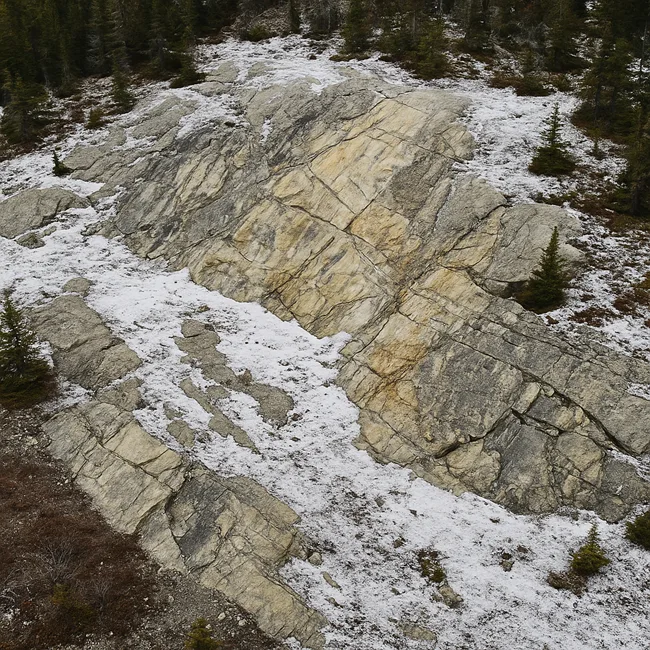
Located approximately 30 kilometers from road infrastructure and 40 kilometers from Sayona Mining’s Moblan lithium project, Sirmac-Clapier lies in a prospective belt of fractionated pegmatites. In 2024, channel sampling over an outcropping pegmatite yielded 26 meters at 2.69% Li₂O and 1.15% Cs₂O, with localized highs of 5.44% Cs₂O—suggesting pollucite as the dominant cesium-bearing phase. These grades place Sirmac-Clapier among the highest-grade cesium discoveries reported in recent years.
The 2025 field campaign includes close-spaced channel sampling around the high-grade zones and additional target generation using LiDAR and aerial imagery. Sampling aims to validate the northeast-trending pegmatite corridor, which is thought to extend toward Vision Lithium’s adjacent discovery area. Initial assays from this new campaign are expected within 6–8 weeks, and Winsome intends to use the results to define a maiden drill program.
Importantly, Winsome Resources also holds offtake rights for cesium (alongside lithium and tantalum) from Power Metals Corp’s Case Lake Project in Ontario and maintains an equity interest in Power Metals, enhancing its exposure to future cesium supply chains.
How are investors interpreting Winsome’s dual-track progress in lithium and cesium exploration?
The parallel updates from Adina and Sirmac-Clapier are being read by institutional investors as a sign of sustained project execution and strategic discipline. Adina’s progression through Québec’s rigorous permitting process is considered a medium-term value unlock, with the ESIA submission and feasibility study expected to be central catalysts in 2026.
In contrast, the cesium exploration at Sirmac-Clapier offers a speculative upside in a structurally undersupplied commodity with few commercial-scale deposits. If follow-up drilling confirms the scale and continuity of mineralisation observed in surface channels, analysts believe Winsome could emerge as a frontrunner in cesium exploration across North America—an area of growing interest for U.S. and Canadian industrial supply chains.
Analyst sentiment surrounding Winsome Resources remains positive, particularly as the developer deepens its collaborative work with Indigenous communities and expands its pipeline of critical minerals projects in Canada. While the firm’s market cap remains modest compared to larger peers, institutional investors are closely tracking near-term catalysts such as the final Renard decision, ESIA filing, and Sirmac drill campaign launch.
What are the key next steps and broader implications for critical minerals development in James Bay?
In the coming months, Winsome Resources will focus on completing the remaining environmental baseline work at Adina and finalizing the ESIA documentation for submission to the Environmental and Social Impact Review Committee (COMEX). The decision regarding whether to proceed with the Renard acquisition will significantly influence infrastructure planning, permitting complexity, and capital expenditure.
At Sirmac-Clapier, the results of the current field sampling program will be instrumental in finalizing drill targets and quantifying the extent of high-grade cesium mineralisation. If pollucite presence is confirmed at economic concentrations, Winsome could potentially position itself as a unique dual-mineral developer in the lithium-cesium space.
Broader implications extend beyond Winsome itself. The Adina-Renard-Trans-Atikh corridor is emerging as a focal point for strategic infrastructure investment in the James Bay region, with Cree-led development initiatives such as the Eskan Corporation’s involvement in road planning. These collaborations reinforce Québec’s ambition to become a continental hub for battery materials, backed by environmentally responsible and socially inclusive resource development.
Discover more from Business-News-Today.com
Subscribe to get the latest posts sent to your email.


