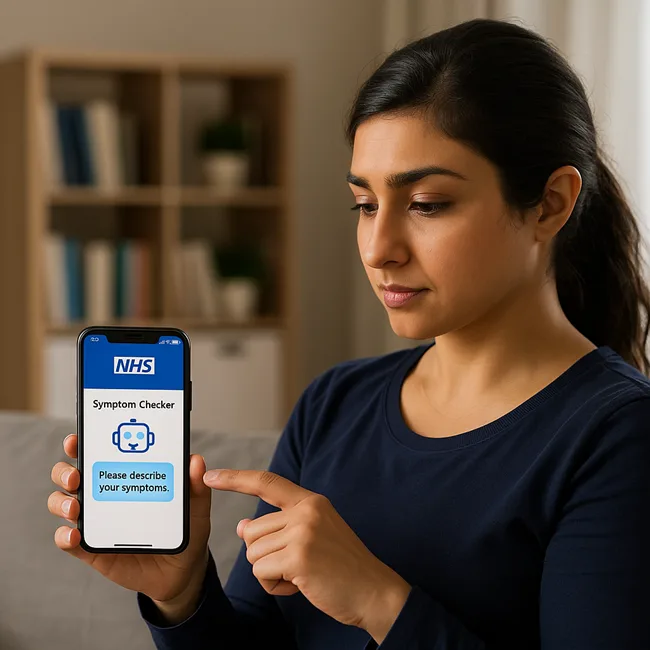
NHS England’s digital health transformation is entering a new chapter with plans to embed AI-powered symptom checkers directly into the NHS App. The feature, expected to go live through phased trials in late 2025 and full rollout in 2026, would allow patients to self-assess health concerns before seeking appointments—essentially turning the NHS App into an AI-assisted triage platform. Positioned as a low-friction entry point to the broader care ecosystem, the move aims to reduce pressure on general practitioners and 111 phone services while supporting faster decision-making for patients.
The initiative is part of the newly announced ten-year NHS plan, which earmarks £10 billion for digital upgrades and infrastructure renewal. With more than 20 million users already on the NHS App, integrating generative AI into its interface would represent a significant scale-up of automated care tools within the UK’s public health system.
What role do AI symptom checkers currently play in UK healthcare?
AI symptom checkers have been present in the UK healthcare landscape for nearly a decade. Early iterations—such as the Babylon Health pilot in London and Ada Health’s symptom assessment platform—offered conversational experiences that aimed to direct patients to appropriate care pathways based on self-reported symptoms. These tools rely on probabilistic reasoning or machine learning models trained on clinical guidelines to suggest next steps.
Accuracy has historically varied depending on the algorithm and medical condition. Structured evaluations in academic settings show that conventional rule-based systems yield accuracy rates from 11% to 60%, while newer AI-based tools report 58% to 76% diagnostic consistency in simulated trials. Despite these variances, NHS England has treated symptom checkers as a promising complement to staffed services, especially when applied in parallel with human oversight.
How could the NHS App integrate AI-driven triage features by 2026?
Labour’s ten-year NHS digital strategy outlines plans to incorporate an AI-powered assistant—referred to as “My NHS Companion”—into the NHS App. The assistant would allow users to check symptoms, get personalised advice, and be guided toward either self-care, digital resources, or appointment booking options. Unlike the static symptom checkers currently embedded in NHS 111 online, this new version is expected to use more dynamic, conversation-based AI models capable of refining queries and adjusting recommendations in real time.
According to officials from NHS England’s Transformation Directorate, the functionality will first support high-frequency conditions such as respiratory infections, mild pain, skin issues, and digestive complaints. The backend logic may eventually integrate with electronic health record access, enabling more accurate suggestions based on personal history and flagged conditions. The programme will also align with wider triage reform goals, offering real-time routing to primary care, pharmacy consultations, or emergency support as needed.
Are symptom checkers accurate enough for public health use?
The integration of AI symptom checkers into public health systems hinges on proven clinical safety and consistency. A recent study published in npj Digital Medicine found that large language model (LLM)-based symptom tools reached diagnostic accuracy levels of up to 76% in controlled conditions. However, their performance declined when symptoms were vague, overlapping, or underreported—common occurrences in real-world settings.
To mitigate safety concerns, the NHS will likely use clinically validated, narrow-purpose AI systems. These will be subject to UKCA (UK Conformity Assessed) medical device regulations and NICE digital technology assessment frameworks before deployment. Clinicians will remain involved in tool governance, ensuring that AI outputs are probabilistic recommendations rather than definitive diagnoses. NHS England has made clear that these tools will not replace the role of general practitioners or NHS 111 staff, but serve as accelerators for appropriate decision-making.
How do NHS leaders and experts view AI-driven self-assessment tools?
Health Secretary Wes Streeting has described the upgraded NHS App as a “doctor in your pocket,” framing the addition of AI symptom tools as a step toward democratising healthcare access. According to Streeting, the goal is to help patients “navigate care more easily” without waiting for phone triage or clinical appointments where unnecessary.
Experts from organisations such as the King’s Fund and the Nuffield Trust have expressed conditional support for the move, emphasising that effectiveness will depend on responsible design, user trust, and clear patient education. Some critics have pointed out risks of self-misdiagnosis or gaming the system to access faster appointments. Others warn of potential digital exclusion, especially for those without smartphones or with lower digital literacy.
However, there is consensus among analysts that AI-assisted symptom triage—when layered with NHS-standardised decision trees and clinician-backed oversight—can offer real efficiency gains, reduce pressure on stretched resources, and improve health literacy for digitally engaged patients.
What are the regulatory, privacy, and equity concerns around this rollout?
As with any AI implementation in healthcare, the deployment of symptom checkers within the NHS App will face significant scrutiny. Tools that influence patient decision-making or clinical routing are considered medical devices under MHRA guidance and must pass UKCA certification. The NHS is also working closely with the Information Commissioner’s Office (ICO) to ensure data governance frameworks are in place to protect personal health data.
Privacy experts have flagged concerns about the use of AI prompts to infer sensitive conditions, such as reproductive health or mental illness, without sufficient transparency. NHS England has responded by stating that all AI logic embedded in the App will be explainable, auditable, and subject to regular bias assessments. Equity challenges are also being addressed through the planned availability of phone-based support for those who cannot or prefer not to use digital tools.
When could the NHS App symptom checker launch, and what comes next?
Pilot trials of AI-assisted symptom assessment are expected to begin in late 2025 across selected NHS trusts, with initial applications focusing on chronic condition support such as diabetes and asthma management, as well as common low-acuity presentations like sore throats, rashes, and mild gastrointestinal issues. These pilots will also test the App’s ability to triage patients into virtual consultation pathways, enabling users to bypass traditional phone queues and directly access remote clinicians when appropriate. NHS England has indicated that initial deployment will prioritise areas with high patient volumes and long wait times, offering a stress test of the platform’s scalability and responsiveness.
If these trials deliver safe and clinically validated outcomes, full integration into the NHS App could follow by 2026. The roadmap envisions broader functionality over time, including AI-prompted video consultations triggered by triage severity, automated referrals to GPs or hospital specialists, and data synchronisation with wearable health technologies to support longitudinal monitoring of chronic illnesses. This aligns with NHS England’s broader vision of enabling predictive, preventative, and personalised care—often referred to as the “3P model” of digital health transformation.
Industry analysts expect AI-powered symptom checkers to form a foundational layer of the NHS’s digital front-door strategy by the second half of the decade. As front-end triage becomes increasingly automated, they argue the system could alleviate mounting pressures on general practitioners by filtering out low-priority cases, while simultaneously providing early risk alerts for conditions that benefit from rapid intervention. The tools could also help reduce the elective care backlog by ensuring that clinical time is focused on the most urgent or complex cases. Experts further note that patient satisfaction may improve with faster, 24/7 access to guidance—especially for tech-savvy users accustomed to digital-first services in other sectors.
However, analysts and policy advisors alike caution that successful implementation will depend on several enabling factors: high levels of NHS App adoption among the general population, robust digital infrastructure at the trust level, secure data interoperability, and sustained public trust in AI-assisted medical tools. Without these supporting pillars, symptom checkers risk becoming underutilised add-ons rather than integral components of the NHS’s long-term digital strategy.
Discover more from Business-News-Today.com
Subscribe to get the latest posts sent to your email.