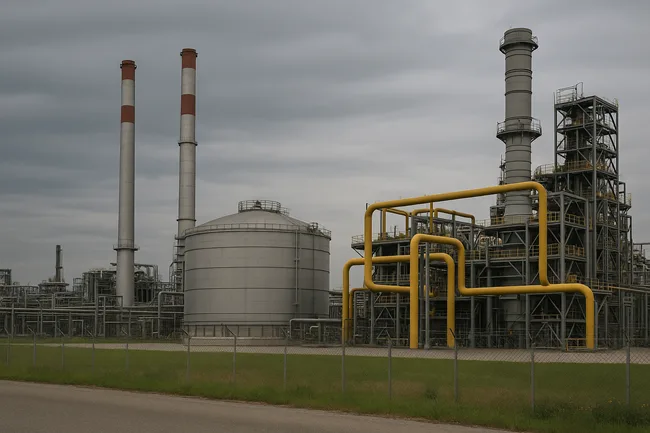





Texas regulators have approved Blackstone Infrastructure’s acquisition of TXNM Energy, clearing one of the most consequential regulatory hurdles in the $11.5 billion take-private deal and moving the transaction closer to completion in the second half of 2026. The Public Utility Commission of Texas concluded the deal meets the public interest after securing customer credits, governance controls, dividend limits, and capital investment commitments that materially reshape how private capital can own regulated utilities. The decision reinforces a broader shift in U.S. infrastructure ownership as long-duration private equity increasingly targets rate-regulated assets under tighter regulatory guardrails.
Why the Public Utility Commission of Texas approval matters for TXNM Energy and private infrastructure capital
Approval by the Public Utility Commission of Texas is not simply a procedural milestone for TXNM Energy. It establishes the regulatory template that will govern how Blackstone Infrastructure can extract value from the business while protecting ratepayers and insulating the operating utilities from private equity risk. Texas regulators accepted the transaction only after negotiating a settlement that effectively ring-fences the regulated subsidiary from leverage, dividend pressure, and parent-level financial engineering.
For TXNM Energy, the ruling reduces execution uncertainty and strengthens deal visibility after shareholders approved the transaction in August 2025. For Blackstone Infrastructure, it demonstrates that large-scale private ownership of regulated utilities remains feasible, but only with concessions that meaningfully limit financial flexibility. This balance between patient capital and regulatory discipline is becoming the defining feature of modern utility buyouts.

How customer rate credits and governance controls reshaped the economics of the TXNM Energy deal
At the center of the Texas settlement is a $45 million rate credit to customers, distributed over four years following closing. While immaterial relative to the overall enterprise value, the credit functions as a regulatory signal rather than a financial concession. It reinforces that customer benefit is no longer a rhetorical commitment but a quantifiable condition of approval.
More consequential is the governance architecture imposed on Texas-New Mexico Power Company. The utility will operate under a seven-member board with independent directors and explicit authority over dividends, capital expenditure plans, and senior management appointments. Dividend payments are subject to credit rating thresholds and financial health metrics, effectively blocking upstream cash extraction if the utility’s balance sheet weakens.
These controls directly constrain Blackstone Infrastructure’s ability to accelerate returns through leverage or aggressive distributions, aligning the utility’s financial profile more closely with long-term infrastructure stewardship than traditional private equity ownership.
What ring-fencing provisions signal about regulator attitudes toward private ownership of utilities
The Texas settlement’s ring-fencing provisions are among the most restrictive applied to a utility buyout in recent years. The utility is prohibited from taking on acquisition-related debt, faces strict limits on intercompany transactions, and cannot recover goodwill or transaction costs through customer rates.
These safeguards reflect heightened regulatory sensitivity following earlier utility acquisitions where financial risk migrated downstream to operating companies. Regulators are now explicitly prioritizing insulation of critical infrastructure from parent-level volatility, especially as private capital plays a growing role in utility ownership.
For Blackstone Infrastructure, acceptance of these constraints suggests confidence that value creation will come from disciplined capital deployment and regulated rate base growth rather than financial leverage. For other infrastructure funds, it sets a clear precedent that future deals will face similar conditions.
How TXNM Energy’s capital expenditure commitments underpin the regulatory case for approval
A central justification for approval was TXNM Energy’s commitment to maintain its existing five-year capital investment plan through 2029. The company serves more than 800,000 customers across Texas and New Mexico and faces sustained demand growth, particularly in Texas where population expansion and industrial load continue to pressure grid infrastructure.
Regulators accepted that Blackstone Infrastructure’s equity-funded ownership model supports continued investment without raising leverage or increasing rate volatility. The settlement effectively locks in capital spending discipline while ensuring that investment priorities remain aligned with reliability and system resilience rather than short-term return optimization.
This emphasis on capex continuity reinforces the evolving regulatory view that infrastructure investment credibility matters as much as ownership structure when evaluating transactions.
What remains unresolved as federal and New Mexico approvals are still pending
Despite Texas approval, the transaction is not yet final. The deal still requires clearance from the Federal Energy Regulatory Commission, the Nuclear Regulatory Commission, and the New Mexico Public Regulation Commission, which oversees Public Service Company of New Mexico, TXNM Energy’s New Mexico utility subsidiary.
While federal antitrust and communications reviews have already cleared, New Mexico approval remains a potential execution risk. New Mexico regulators have historically applied stringent scrutiny to utility transactions, particularly those involving clean energy commitments and long-term rate impacts. However, the Texas settlement strengthens TXNM Energy’s case by demonstrating that robust protections can coexist with private ownership.
The remaining approvals are expected to focus less on deal structure and more on localized policy priorities, including clean energy transition timelines and customer affordability.
How investor sentiment and TXNM Energy’s stock pricing are responding as Texas regulatory risk is removed
TXNM Energy shares have largely traded as a deal proxy since the acquisition announcement, reflecting confidence in deal completion rather than standalone fundamentals. Texas approval removes a major regulatory overhang and modestly improves closing certainty, but it does not materially alter valuation given the fixed cash consideration of $61.25 per share.
Institutional sentiment has remained constructive, anchored by the all-equity funding structure and absence of acquisition leverage. Investors appear comfortable that regulatory concessions, while constraining upside optionality, also reduce downside risk and lower the probability of deal renegotiation or regulatory delay.
The market reaction underscores that in regulated utility buyouts, certainty now carries greater value than aggressive pricing.
Why this deal matters for the broader U.S. utility and infrastructure investment landscape
The TXNM Energy transaction illustrates how private infrastructure capital is adapting to a more interventionist regulatory environment. Rather than resisting constraints, Blackstone Infrastructure structured the deal to absorb governance limits, dividend restrictions, and customer protections as the cost of access to long-duration, rate-regulated cash flows.
This model is likely to influence future utility acquisitions, particularly as pension funds and sovereign investors seek inflation-linked infrastructure exposure through private vehicles. Regulators, in turn, are demonstrating that they can accommodate private ownership while preserving public interest outcomes through enforceable conditions.
The result is a more mature, rules-based framework for private participation in essential infrastructure rather than a rollback of private capital’s role.
What the Blackstone Infrastructure acquisition means for TXNM Energy’s operating utilities in Texas and New Mexico
Operationally, the transaction changes little in the near term. Local management remains in place, headquarters stay within service territories, and workforce protections limit restructuring for several years post-closing. This continuity was a decisive factor in regulatory approval and reduces integration risk.
Over the longer term, TXNM Energy’s utilities may benefit from capital availability and balance-sheet stability that supports grid modernization and clean energy investment without public market volatility. However, constrained financial flexibility also means management execution must compensate for the absence of financial engineering levers.
Success will depend on regulatory rate recovery, capital efficiency, and operational performance rather than ownership structure.
Key takeaways on what the Blackstone Infrastructure acquisition means for TXNM Energy, utilities, and private capital
- Texas regulatory approval significantly reduces deal execution risk and reinforces confidence in a second-half 2026 closing timeline.
- The settlement establishes one of the most restrictive governance and ring-fencing frameworks applied to a U.S. utility buyout.
- Customer rate credits and dividend controls signal a shift toward quantifiable public interest benefits in regulatory approvals.
- Blackstone Infrastructure’s all-equity funding model aligns with regulator expectations but limits financial flexibility.
- TXNM Energy’s five-year capital expenditure commitment underpins the strategic rationale for approval.
- New Mexico regulatory review remains the most meaningful outstanding hurdle.
- Investor sentiment prioritizes certainty and downside protection over incremental upside in regulated utility transactions.
- The deal sets a precedent for how private infrastructure capital can own U.S. utilities under tighter regulatory discipline.
- Long-term value creation will depend on execution, rate recovery, and capital efficiency rather than leverage.
Discover more from Business-News-Today.com
Subscribe to get the latest posts sent to your email.