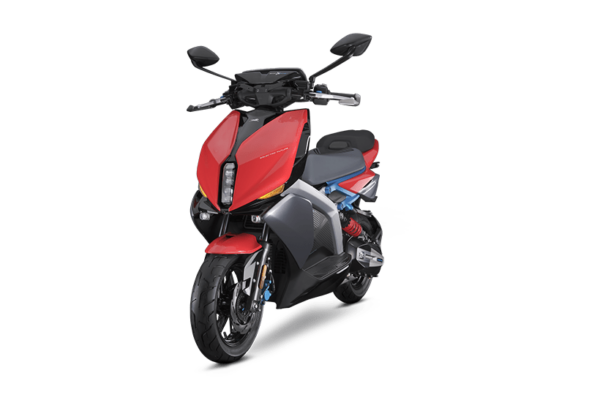




Ola Electric Mobility Limited has commenced same-day registration and delivery for its 4680 Bharat Cell powered electric scooters in Bengaluru, extending its Hyperdelivery service under the broader Hyperservice initiative. The move brings vehicle registration fully in-house and signals a deeper push toward end-to-end control over the electric vehicle buying, delivery, and ownership experience in India, with implications for cost structure, customer conversion, and competitive differentiation in a crowded two-wheeler electric market.
Why is Ola Electric Mobility Limited bringing same-day registration and delivery in-house instead of relying on traditional dealer workflows?
The decision to internalise vehicle registration and enable same-day delivery reflects a strategic break from the legacy dealership and regional transport office coordination model that still defines most of the Indian automobile industry. By pulling registration into its own systems, Ola Electric Mobility Limited is attempting to remove one of the most friction-heavy steps in the purchase journey, where delays, paperwork dependency, and state-level variability have historically slowed conversion from booking to delivery.
This is less about convenience marketing and more about operational leverage. Registration delays often translate into inventory carrying costs, customer drop-offs, and refund risk, particularly in an electric two-wheeler market where price sensitivity remains high and switching costs are low. By collapsing purchase, registration, and delivery into a single-day cycle, Ola Electric Mobility Limited is effectively tightening the order-to-cash loop, improving working capital efficiency while reducing exposure to last-mile cancellations.
More importantly, in-house registration allows the company to standardise compliance processes across states as it scales Hyperdelivery beyond Bengaluru. That standardisation becomes an asset if volume ramps quickly, because regulatory throughput becomes a controllable variable rather than an external bottleneck.
How does Hyperdelivery change the economics of customer acquisition and conversion in India’s electric two-wheeler market?
Customer acquisition costs in electric two-wheelers are increasingly influenced by speed and certainty rather than pure pricing. As multiple manufacturers compete with similar range claims, feature sets, and financing offers, the purchase experience itself becomes a conversion lever.
Hyperdelivery compresses the decision cycle. A buyer who can test, purchase, register, and ride home the same day is less exposed to second thoughts, competitive offers, or financing reconsideration. That immediacy is particularly valuable in urban markets like Bengaluru, where impulse-to-action timelines are shorter and digital-native buyers dominate.
From a cost perspective, faster delivery also reduces the duration for which vehicles sit in pre-delivery inventory. This matters for a manufacturer pursuing vertical integration, because inventory stagnation ties up not just finished vehicles but also upstream battery and component capital. If executed cleanly, Hyperdelivery can subtly improve return on invested capital even without visible price changes.
What role do 4680 Bharat Cell powered vehicles play in Ola Electric Mobility Limited’s broader vertical integration strategy?
The Hyperdelivery rollout is specifically tied to 4680 Bharat Cell powered vehicles, which is not incidental. These models sit at the intersection of Ola Electric Mobility Limited’s manufacturing ambition and its India Inside strategy, which emphasises domestic integration across batteries, software, and delivery infrastructure.
By pairing same-day delivery with internally developed battery technology, the company is effectively bundling product differentiation with process differentiation. The message to the market is that control over battery cells is not just about cost or supply security, but also about enabling faster, more predictable delivery cycles.
This linkage matters strategically. Battery supply volatility has been a constraint across the global electric vehicle industry. Companies that control cell manufacturing gain not only margin insulation but also scheduling flexibility. If Ola Electric Mobility Limited can synchronise cell output, vehicle assembly, and registration workflows, it reduces the operational slack that competitors dependent on third-party suppliers must absorb.
Why Bengaluru is the logical first market for Hyperdelivery and what must change before national scale-up works
Bengaluru is a rational pilot geography. It is Ola Electric Mobility Limited’s home base, a high electric vehicle adoption market, and an administrative environment where regulatory coordination is comparatively predictable. The city also has a dense network of Ola Electric stores, which reduces logistical complexity for same-day handovers.
However, scaling Hyperdelivery nationally will be materially harder. Regional transport office processes vary significantly by state, and in some regions digital integration is uneven. Bringing registration in-house does not eliminate regulatory dependency, it simply centralises interface management. The execution risk lies in maintaining speed without triggering compliance delays or errors as volumes rise.
Additionally, same-day delivery demands precise forecasting and local inventory placement. Overstocking at store level undermines capital efficiency, while understocking breaks the Hyperdelivery promise. National expansion will therefore test the maturity of Ola Electric Mobility Limited’s demand forecasting and regional logistics models more than its technology stack.
How Hyperservice fits into a wider attempt to own the post-sale relationship rather than just the vehicle sale
Hyperdelivery is positioned as one pillar of the broader Hyperservice initiative, which also includes in-app service appointment scheduling and plans to scale service operations into an open platform. Strategically, this suggests Ola Electric Mobility Limited is trying to extend its direct-to-customer philosophy beyond the sale into the entire ownership lifecycle.
Owning post-sale engagement matters because electric two-wheelers still face consumer anxiety around service reliability, spare availability, and downtime. By digitising service booking and integrating it with delivery data, Ola Electric Mobility Limited can build a unified customer profile that links manufacturing batch, battery type, service history, and usage patterns.
This data integration is an underappreciated asset. Over time, it can inform predictive maintenance, warranty risk management, and targeted upsell opportunities. Competitors relying on franchise dealers often lack this visibility, creating structural blind spots in both customer satisfaction and cost control.
What competitive pressure does Hyperdelivery place on legacy two-wheeler manufacturers and new EV startups?
For legacy two-wheeler manufacturers, Hyperdelivery exposes a structural disadvantage. Dealer-centric models are poorly suited to same-day registration at scale because incentives, inventory ownership, and process control are fragmented. Matching Hyperdelivery would require renegotiating dealer economics or absorbing higher operational costs.
For newer electric vehicle startups, the challenge is capital intensity. Same-day delivery requires owned inventory, digital integration with regulators, and operational redundancy to absorb failures. Many startups lack the balance sheet or systems maturity to support this without burning cash.
As a result, Hyperdelivery is less likely to be copied wholesale and more likely to function as a segmentation tool. It positions Ola Electric Mobility Limited as a convenience-led, process-integrated player, while competitors either compete on price or niche differentiation.
How investors may interpret this move in the context of execution discipline and capital efficiency
From an investor perspective, Hyperdelivery will be evaluated less on announcement optics and more on consistency of execution. If same-day delivery becomes reliable and scalable, it signals operational discipline rather than experimentation.
The key questions will revolve around cost. In-house registration and rapid delivery must not inflate per-unit operating expenses or lead to higher error rates that trigger rework or penalties. Investors will also watch whether Hyperdelivery improves conversion rates enough to offset the additional infrastructure investment required.
Importantly, the initiative aligns with a broader narrative of vertical integration that investors already associate with Ola Electric Mobility Limited. Hyperdelivery does not introduce a new strategic direction, it deepens an existing one. That continuity reduces perception risk, even if near-term execution hiccups emerge.
What this signals about the future structure of electric vehicle retail in India
Hyperdelivery suggests that electric vehicle retail in India may gradually move away from extended booking-to-delivery timelines toward near-instant fulfilment, at least in urban markets. As electric vehicles become more standardised and digitally integrated, the traditional waiting period loses justification.
However, this shift will likely be uneven. Urban centres with strong digital infrastructure and regulatory readiness will see faster adoption, while semi-urban and rural markets may continue with hybrid models. Ola Electric Mobility Limited’s approach effectively bets that early leadership in fast fulfilment will translate into brand preference before competitors can adapt structurally.
What are the key takeaways for executives and investors tracking Ola Electric Mobility Limited’s Hyperdelivery strategy and India’s EV retail evolution?
- Hyperdelivery is a working capital and conversion strategy disguised as a customer convenience initiative, aimed at shortening the order-to-cash cycle.
- In-house registration gives Ola Electric Mobility Limited greater control over regulatory throughput but increases execution responsibility as volumes scale.
- Linking same-day delivery specifically to 4680 Bharat Cell powered vehicles reinforces the strategic value of vertical integration beyond cost savings.
- National rollout will test logistics precision and regulatory coordination more than technology capability.
- Legacy manufacturers face structural barriers in matching this model, while startups may lack the capital depth to replicate it.
- Investors should focus on reliability, error rates, and cost discipline rather than headline speed claims.
- The move signals a gradual redefinition of electric vehicle retail expectations in India, particularly in urban markets.
Discover more from Business-News-Today.com
Subscribe to get the latest posts sent to your email.