




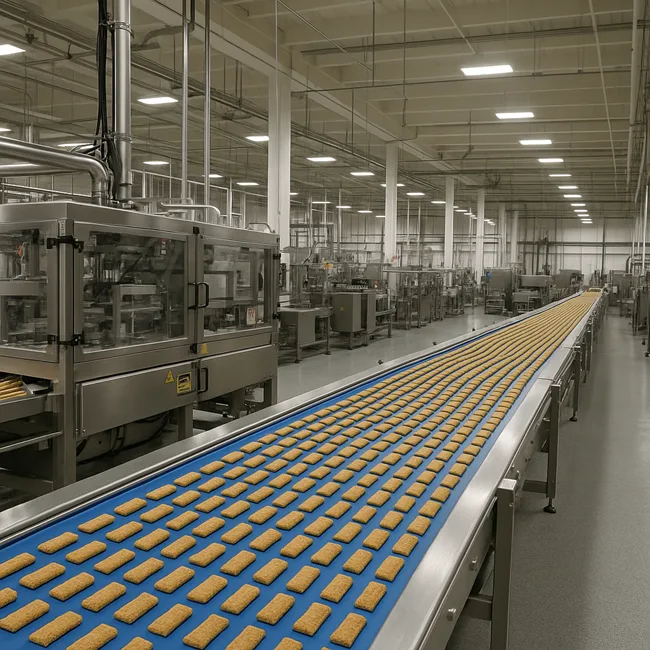
Mars, Incorporated is doubling down on plant-based snacking in a big way. With the official opening of a new $240 million Nature’s Bakery facility in Salt Lake City, Utah, the American food conglomerate is signaling that it sees its 2020 acquisition not just as a complementary asset—but as a core driver of future growth. The new facility spans more than 339,000 square feet and will allow Mars to produce nearly one billion snack bars annually, creating over 230 new jobs in the process.
This site is part of Mars’s broader $2 billion U.S. manufacturing investment program through 2026. But unlike legacy brand expansions in confectionery or pet food, this bet is aimed squarely at a segment that has exploded in recent years: the plant-based, better-for-you snack bar category. As American consumers continue to prioritize clean-label foods, whole grains, and allergen-conscious snacks, Mars is positioning Nature’s Bakery to compete at scale with established players like Kind, Clif Bar, and RXBar.
How does Nature’s Bakery fit into Mars’s evolving strategy for functional snacking and healthier food offerings?
Nature’s Bakery has become a strategic growth engine within Mars’s food portfolio—especially as the company pivots toward more functional and health-forward categories. Known for its soft-baked fig bars and non-GMO credentials, the brand offers Mars a foothold in a space increasingly shaped by ingredient transparency, low-sugar formulations, and school-friendly formats.
Analysts say the nearly one-billion-bar capacity of the Utah facility will give Mars a significant competitive edge—not only in pricing and distribution, but also in freshness, formulation flexibility, and supply chain control. By internalizing production and moving away from third-party co-packers, Mars gains the ability to rapidly innovate and test new flavors or formats while maintaining quality and consistency at scale.
This is particularly important in a category where brand loyalty can be driven by subtle factors—like texture, label claims, or diet compatibility. With RXBar continuing to experiment with protein-forward positioning under Kellogg Company, and Mondelez investing heavily into Clif Bar since its 2022 acquisition, the pressure is mounting for challengers to match speed with scale. Mars’s investment suggests it intends for Nature’s Bakery to go from niche to national.
The move also reflects broader shifts within Mars itself. Best known for iconic indulgent brands like M&M’S, Twix, and SNICKERS, the company is now balancing its portfolio by investing in better-for-you snack lines. In addition to Nature’s Bakery, Mars also acquired Trü Frü, a frozen snacking brand that caters to health-conscious, convenience-driven shoppers.
At a macro level, the U.S. snack bar market is valued at over $10 billion, with plant-based and low-processed variants driving the most consistent growth. Retail buyers are increasingly allocating shelf space to brands that promise fiber, protein, and natural energy without excessive sugar or artificial additives. In that context, Nature’s Bakery sits in a sweet spot—and with this new manufacturing muscle, Mars intends to capitalize on that positioning.
What does the Salt Lake City plant mean for regional food manufacturing and Mars’s future in the category?
Beyond brand strategy, the choice of Salt Lake City reflects a calculated geographic move. Utah has emerged as a favorable hub for food and beverage production, offering logistical advantages, business incentives, and growing infrastructure support. Major names like PepsiCo, Nestlé, and General Mills have expanded operations in the state, and Mars’s presence adds further validation to the region’s manufacturing appeal.
The facility is also expected to act as a center of innovation for Nature’s Bakery, allowing the brand to test new SKUs that meet specific dietary trends such as gluten-free, high-protein, or nut-free snacks—categories where consumer segmentation is fast maturing.
Mars has not publicly disclosed revenue projections or profitability targets for the Salt Lake City site, but executives stated the project will materially expand the brand’s distribution footprint. The billion-bar capacity is not just symbolic—it allows Mars to support mass-market penetration via national grocery, convenience, and online channels.
Industry experts say Mars’s strategy with Nature’s Bakery is about more than just expanding a plant—it’s about reshaping its brand architecture for the next generation of health-conscious eaters. If it succeeds, the company could establish a dominant position in a category still evolving from niche to necessity.
Discover more from Business-News-Today.com
Subscribe to get the latest posts sent to your email.

