


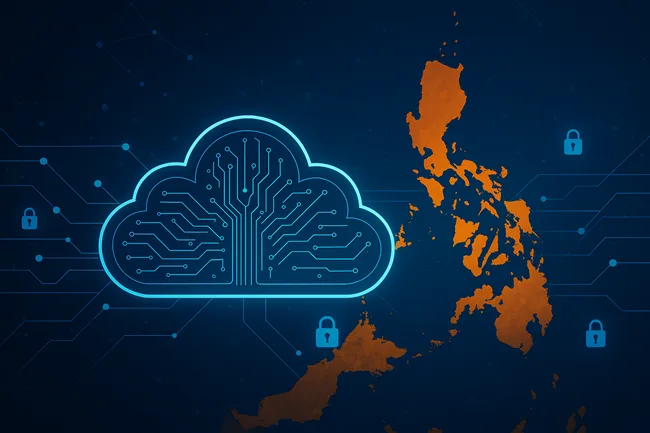
Tata Consultancy Services Limited (BSE: 532540, NSE: TCS), the global IT services and consulting firm under the Tata Group, has announced a landmark collaboration with Now Corporation, a publicly listed Philippine telecommunications, media, and technology company (PSE: NOW). The partnership, disclosed on August 11, 2025, outlines a Memorandum of Understanding (MoU) under which TCS will support Now Telecom—the telecom arm of Now Corporation—in creating a sovereign data cloud infrastructure for the Philippines, strengthening national digital sovereignty, and enabling citizen-oriented services such as digital banking and healthcare.
For TCS, which reported consolidated revenues exceeding USD 30 billion in FY2025, this alliance highlights its growing Indo-Pacific presence and mirrors its prior digital governance partnerships in India. For the Philippines, where digital infrastructure gaps remain a critical constraint to financial inclusion, the agreement represents a strategic bet on reducing foreign technology dependency and building domestic resilience.
How does the partnership between TCS and Now Corporation align with the Philippines’ drive for digital sovereignty and cybersecurity?
The Philippines has struggled with balancing openness to foreign technology vendors with a growing imperative to secure national data sovereignty. Now Corporation, which operates across broadband, wireless, and IT manpower services, has emerged as a critical player in aligning local needs with international funding support, including U.S. Trade and Development Agency (USTDA) grants for 5G and national broadband expansion.
Under the new partnership, TCS will deploy its SovereignSecure Cloud platform, a solution designed to ensure local control of critical data, AI infrastructure readiness, and operational continuity. Alongside the sovereign cloud, TCS will provide its Cyber Defense Suite, encompassing identity protection, vendor risk management, and cyber intelligence. Analysts note that such capabilities are essential for a country that has seen repeated attacks on government systems and private banking platforms. The partnership also fits neatly within the Trusted Network Initiative, a global framework for secure telecommunications infrastructure, of which both TCS and Now Telecom are members.
Institutional sentiment suggests that the tie-up could be a test case for sovereign cloud adoption in other emerging Indo-Pacific markets, particularly where concerns over data flows and geopolitical vulnerabilities are intensifying.
What role will the partnership play in promoting financial inclusivity and digital citizen services in the Philippines?
The partnership is not limited to securing networks; it directly targets financial inclusivity and digital citizen empowerment. TCS has committed to co-developing citizen-centric services in areas such as healthcare, digital private infrastructure, and digital banking. In the Philippines, where nearly 44% of adults remain unbanked according to the World Bank, cloud-backed digital banking platforms could accelerate financial penetration.
TCS has experience in deploying large-scale citizen services in India, where its Aadhaar-linked projects and digital payment platforms have supported inclusive finance. Replicating such models in the Philippines could enable cross-agency interoperability, reduce the cost of transactions, and bring millions into formal economic systems. Shiju Varghese, TCS Philippines Country Head, indicated that the collaboration was designed to “enhance national digital sovereignty and cybersecurity” while ensuring the Philippines builds a “resilient and secure digital ecosystem”.
Why are institutional investors paying attention to TCS’ Indo-Pacific digital strategy at this stage?
TCS has been present in the Philippines since 2008, supporting sectors ranging from telecom to banking and real estate. The country has become a major IT-BPM hub globally, with over 1.5 million employees, but local infrastructure has lagged behind in resilience and sovereignty. By embedding itself in the Philippines’ sovereign digital push, TCS is positioning for long-term growth beyond its established outsourcing and consulting base.
For institutional investors, TCS’ moves in emerging Asia are seen as a hedge against saturation in North American and European markets. The Indo-Pacific digital sovereignty theme is attracting both policy and capital momentum, as countries seek to avoid over-dependence on U.S. hyperscalers or Chinese telecom vendors. Investors appear to interpret the TCS–Now alliance as a sign that the firm is aligning itself with a multipolar technology order, which could support stable revenue streams in a sector otherwise vulnerable to cyclical demand.
How are TCS and Now Corporation addressing foreign dependency concerns in digital infrastructure?
One of the most significant elements of the MoU is the explicit commitment to reduce foreign dependency. For the Philippines, this is a critical step, as the country has historically relied on imported telecom hardware and cloud services. Now Corporation Chairman Mel Velarde framed the partnership as a “significant step towards enhancing national digital sovereignty and reducing reliance on foreign technologies”.
The SovereignSecure Cloud is designed to be locally managed and operated, ensuring that critical government and financial data remains within Philippine jurisdiction. For TCS, this model could serve as a template for similar projects in Southeast Asia and Africa, where governments are increasingly enacting data localization laws.
What does this mean for TCS’ stock sentiment and investor positioning in August 2025?
TCS shares (BSE: 532540, NSE: TCS) have traded in line with broader Indian IT sector performance in mid-2025, with investor sentiment cautiously optimistic after Q1 FY26 results showed steady demand for digital transformation services. While revenue growth has slowed in mature Western markets, projects like the Philippines sovereign cloud signal diversification and resilience.
Analysts believe that institutional investors may interpret this partnership as a long-term “buy and hold” driver, given its alignment with government-backed spending and its potential for replication across the Indo-Pacific. Foreign institutional investor (FII) flows into Indian IT stocks have been choppy due to U.S. interest rate volatility, but domestic institutional investors (DIIs) have steadily supported large-cap IT names like TCS, cushioning downside risks.
Market reaction to the August 11 announcement has been measured, with sentiment neutral-to-positive. Investors are awaiting execution milestones—particularly deployment of the SovereignSecure Cloud and rollout of citizen services—before re-rating the stock. However, the narrative of TCS as a “sovereign digital partner” could strengthen its valuation premium relative to peers focused solely on outsourcing contracts.
What is the future outlook for the TCS–Now Corporation partnership and its regional implications?
Looking ahead, the partnership is expected to accelerate in phases aligned with the Philippines’ Department of Information and Communications Technology (DICT) roadmap. The focus areas include sovereign cloud deployment, AI infrastructure building, cybersecurity protocol development, and citizen service delivery.
From a regional standpoint, this agreement reinforces the Philippines’ position as a testing ground for Indo-Pacific sovereign digital ecosystems. If successful, it could pave the way for TCS to extend SovereignSecure Cloud projects into other ASEAN markets, where local governments are grappling with similar sovereignty and inclusion challenges.
For Now Corporation, the partnership provides validation of its role as a national digital player and enhances its standing as a TMT sector stock on the Philippine Stock Exchange. Institutional investors in Manila are likely to track execution closely, as sovereign infrastructure partnerships typically involve long gestation but stable returns.
Discover more from Business-News-Today.com
Subscribe to get the latest posts sent to your email.