




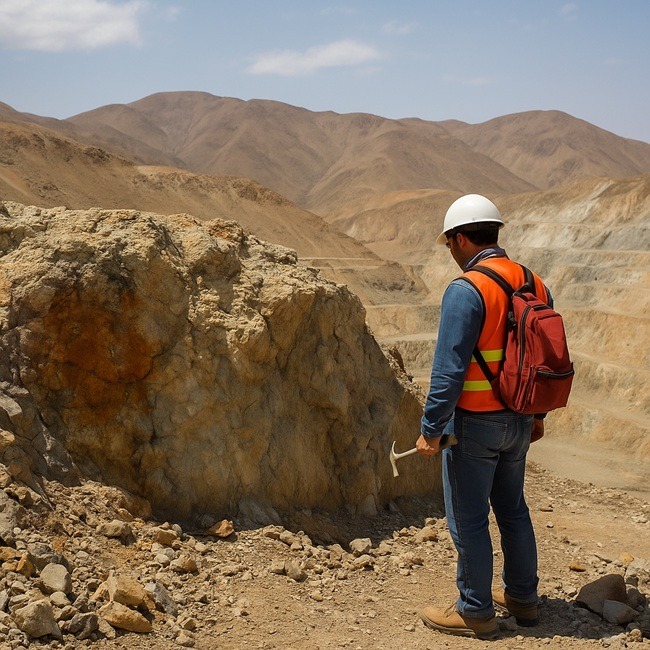
A quiet but decisive shift is underway in the global copper exploration and project development space. Gold credits, which were long treated as an optional upside, are now emerging as a powerful factor in bringing previously marginal copper porphyry deposits back into play. These dual-metal systems, once sidelined for their sub-economic copper grades, are attracting renewed investor and operational attention as gold prices remain strong and copper continues to trade near structurally elevated levels.
Exploration companies, institutional investors, and technical teams are rethinking the economics of porphyry copper projects with meaningful gold by-products. The ability to extract both metals from the same ore body is increasingly seen as a critical buffer against commodity volatility, permitting delays, and rising development costs. From the coastal belts of Chile to North America and Southeast Asia, marginal porphyries with dual-metal potential are being re-rated—not just geologically, but financially.
This revival of interest is reshaping exploration priorities and mine planning models across the sector. It is also prompting a reevaluation of long-held beliefs around grade, scale, and what makes a porphyry deposit worth developing.
What makes copper-gold porphyry systems economically attractive again?
Porphyry copper deposits are the backbone of global copper production. They are typically large, low- to medium-grade systems formed in magmatic hydrothermal environments. In many cases, these deposits are polymetallic, containing copper along with gold, molybdenum, and sometimes silver or rhenium. While copper remains the primary revenue driver, the presence of gold credits can significantly improve overall project economics, especially when copper grades are modest.
Gold can contribute 10 to 40 percent of net smelter return in some porphyry systems, depending on grade, recovery, and processing method. This revenue uplift can be enough to shift a project from marginal to viable. In addition, gold’s role as a financial hedge means it tends to hold or increase in value during periods of economic uncertainty, making it a counter-cyclical asset in otherwise copper-centric portfolios.
This economic resilience is crucial in the current macro environment. Global inflation, geopolitical tensions, tightening credit conditions, and permitting challenges have all combined to make investors more cautious. Projects that offer dual-metal exposure—particularly those with gold by-products—are seen as more defensible. In a financing environment where capital is scarce and due diligence is more intense, gold credits are helping marginal porphyries stand out.
Why marginal porphyry deposits are being re-evaluated through the gold lens
The term “marginal” in the mining industry typically refers to deposits that, under previous economic models or pricing environments, failed to meet investment thresholds. These projects may have lacked grade, scale, infrastructure access, or regulatory certainty. However, a key class of marginal assets now being reconsidered are porphyry copper systems with meaningful, but underutilised, gold components.
Several developments are driving this reevaluation. First, the long-term copper supply outlook is tightening. Existing tier-one mines are facing declining ore grades and increasing operating costs. New copper discoveries, particularly at high grades, have become rarer. As copper demand from the energy transition surges, the urgency to bring new supply online is growing. In this context, porphyries with existing gold credits offer a near-term, partially de-risked opportunity.
Second, gold prices have remained consistently strong, with spot prices hovering above USD 1,900 per ounce in recent quarters. This strength is not just a function of traditional demand, such as jewelry and central bank purchases, but also reflects broader financial uncertainty. With gold trading at historically elevated levels, even small quantities in a copper deposit can have a disproportionate impact on project net present value and internal rate of return.
Third, technological improvements in metallurgical processing and ore sorting are making it easier to recover gold alongside copper, particularly in sulphide-hosted porphyry systems. Techniques such as flotation, pressure oxidation, and bioleaching are being optimised for dual recovery. This has improved confidence in achieving economic gold recoveries even in challenging mineralogical settings.
Finally, permitting and social license pressures are shifting capital allocation strategies. Projects with lower strip ratios, shorter haul distances, and multi-metal outputs are viewed more favourably in ESG-conscious markets. The gold component adds financial efficiency and operational flexibility to copper projects, aligning with shareholder expectations for both profitability and sustainability.
How gold credits are influencing project prioritisation and M&A strategies
Across the junior and mid-tier segments, there is clear evidence that gold credits are changing how companies prioritise their assets. Projects once dismissed for their sub-0.5 percent copper grades are now being dusted off and reassessed, particularly if they offer 0.1 to 0.3 grams per tonne gold in association.
Hot Chili Limited’s recent drilling results at La Verde in Chile’s coastal porphyry belt are a timely example. While the copper grades fall within a mid-range category at 0.41 percent over 529 metres, the accompanying gold credits—up to 0.30 grams per tonne over wide intervals—have positioned the deposit as an economically significant satellite to the company’s Costa Fuego hub. These results are not just geological successes. They have economic and strategic implications, as the gold component enhances the project’s margin profile and supports potential modular development.
In Canada, similarly structured copper-gold porphyry projects are being re-rated based on updated economic models that place greater weight on gold by-product streams. This is particularly true in British Columbia’s Golden Triangle, where projects like KSM (Seabridge Gold), Galore Creek (Teck Resources), and Saddle North (Newmont Corporation) are reassessed not just as copper mines with some gold, but as balanced dual-metal assets.
In Southeast Asia, firms such as Philex Mining Corporation in the Philippines are also touting the gold content of their copper operations as a strategic differentiator. This positioning is not incidental. It is a response to investor appetite for assets that offer diversified commodity exposure and stronger cash flow resilience.
The same trend is influencing merger and acquisition strategies. Buyers are increasingly screening for copper assets with additional metal streams, seeing them as better risk-adjusted bets. In some cases, gold credits are enabling acquirers to pay premiums while maintaining internal hurdle rates, because the by-product revenue offsets higher capital intensity or development risk.
What success looks like for copper-gold porphyries in the current cycle
To capitalise on this shift, companies must deliver in three areas. First, resource delineation must accurately model both copper and gold mineralisation, including variability across domains and recoveries. Investors are wary of inflated inferred resources that fail to convert under economic modelling.
Second, metallurgical test work must demonstrate efficient, scalable gold recovery. If gold is refractory, encapsulated, or finely disseminated, recovery strategies must be technically sound and financially justified. Projects that underestimate gold recovery complexity often disappoint during feasibility or operations.
Third, development plans must show how the gold credit is integrated into mine sequencing, processing flowsheets, and revenue models. Whether the gold is sold as doré, recovered in concentrate, or retained in an intermediate form, transparency is key. Sophisticated investors are increasingly focused on how gold credits translate into realisable cash flow, not just headline grade.
Why this trend could change the long-term supply mix of copper and gold
If the re-rating of marginal porphyry copper projects with gold credits continues, the long-term supply mix of both metals could shift. For copper, these deposits represent a previously sidelined class of assets that could bridge supply gaps while large greenfield projects face delay. For gold, the trend increases the share of production sourced as a by-product, which often comes at lower marginal cost and with lower environmental footprint per ounce.
This evolution also supports the growing convergence between base metal and precious metal capital pools. Funds that traditionally specialised in one or the other are now allocating capital across both categories, often using dual-metal projects as portfolio bridges. The rise of hybrid commodity investing is both a symptom and a driver of the trend.
Finally, for governments and communities, dual-metal projects offer more resilient revenue bases, higher job stability, and more diversified fiscal flows. In an era where mining projects face increasing scrutiny, the ability to deliver multiple commodities from a single site may become a competitive advantage in securing long-term development partnerships.
Discover more from Business-News-Today.com
Subscribe to get the latest posts sent to your email.
