


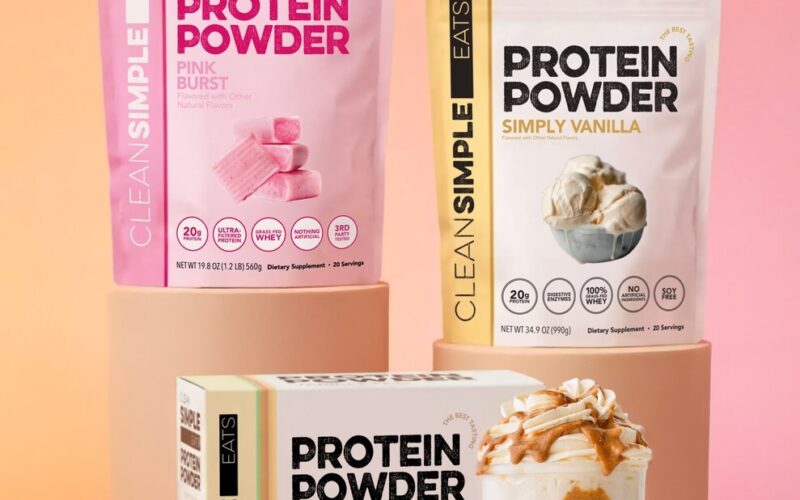
Clean Simple Eats has moved from digital-native wellness brand to national mass retail shelf play with its launch in 2,000 Walmart stores and on Walmart’s e-commerce platform. The April 1 announcement matters because it shifts the company from a community-driven brand model toward a scale test inside one of the world’s largest retailers, where reach is vast but shelf discipline is unforgiving. Walmart Inc. trades at about $125.79, with a market capitalization above $803 billion, while external market data places the stock’s 52-week range roughly between $79.81 and $134.69, giving the retailer plenty of financial room to keep sharpening category mix and private-label pressure across health and wellness. For Clean Simple Eats, this is less a feel-good availability update and more a referendum on whether premium, taste-led protein can survive the fluorescent lights of mainstream retail.
Why does Clean Simple Eats launching in Walmart matter for the premium supplement category right now?
The immediate significance is channel migration. Clean Simple Eats built attention through direct engagement, product-led loyalty, and social momentum, but Walmart introduces a very different economic engine. In direct-to-consumer, brands can control storytelling, margins, and cross-sell behavior. In Walmart, the game becomes velocity, repeat purchase, price architecture, packaging clarity, and the ability to convert shoppers who have never heard of the founders, never followed the brand online, and may only grant a product about three seconds of consideration before moving on.
That is why the 2,000-store number matters. It is big enough to be meaningful and small enough to still be a test. National presence sounds dramatic, but selective placement inside the Performance Nutrition Department suggests Walmart is giving Clean Simple Eats real exposure without handing it blanket ubiquity on day one. Translation: welcome to the party, but please prove you belong near the punch bowl.

The product mix also tells a story. Walmart’s launch assortment includes mainstream whey options such as Simply Vanilla and Chocolate Brownie Batter, alongside the Pink Burst Clear Protein Powder and a Protein Variety 10-Pack. That is not just assortment padding. It reflects an attempt to widen the brand’s entry points, from everyday protein buyers to flavor-curious shoppers who may treat supplement buying less like a gym obligation and more like functional snacking. In a category where sameness is the fastest route to obscurity, flavor is doing strategic work.
Is Walmart using brands like Clean Simple Eats to upgrade wellness aisle economics and shopper mix?
Probably yes, and that is where Walmart becomes more than a distribution partner. Walmart already operates at extraordinary scale, serving roughly 270 million customers and members weekly across more than 10,750 stores and e-commerce sites in 19 countries, with fiscal 2025 revenue of $681 billion. A retailer that large does not need one supplement brand to survive. What it does need is continued proof that higher-intent categories such as wellness, protein, and functional nutrition can drive basket expansion and keep the retailer relevant to younger, digitally influenced consumers who might otherwise drift toward specialty retailers or subscription brands.
For Walmart, stocking Clean Simple Eats is a low-drama, potentially high-upside bet on premiumization within mass retail. The retailer has spent years proving it can sell more than basics. Bringing in a brand that positions itself around clean-label cues, grass-fed whey, third-party testing, and strong flavor identity supports that broader merchandising logic. If the products turn quickly, Walmart strengthens its claim that mass retail can absorb digitally built wellness brands without sandpapering away their premium aura. If they do not, shelf space will be reallocated with all the sentimentality of a spreadsheet.
What does this Walmart rollout reveal about Clean Simple Eats’ next phase beyond direct-to-consumer growth?
It suggests the company is entering the hard phase of brand building, where community must convert into retail repeatability. Founders Erika and JJ Peterson built Clean Simple Eats around food, fitness, and habit-based wellness positioning, which helped the company develop an identity broader than a single protein SKU. That matters because Walmart is not just buying units. It is testing whether Clean Simple Eats can function as a brand system with enough recognition and trust to earn multiple facings, possible line extensions, and perhaps broader physical distribution over time.
The announcement explicitly says the company hopes to expand to all Walmart locations nationwide. That ambition is revealing. It frames the current rollout not as the finish line but as an operational pilot at industrial scale. To get from 2,000 stores to something closer to full-chain penetration, Clean Simple Eats will need consistent in-stock performance, retailer-friendly replenishment, shopper conversion beyond its social audience, and probably continued proof that premium protein can hold its own even when consumers are staring at adjacent options through a value lens.
This is where many founder-led brands discover that virality and retail durability are distant cousins, not twins. One gets you attention. The other gets you purchase orders.
Can clean-label and taste-led protein brands still win in mass retail when pricing pressure remains intense?
Yes, but only if they can make “premium” feel practical. The press release leans heavily on product quality markers such as non-GMO positioning, gluten-free formulation, third-party testing, and grass-fed whey protein isolate. Those claims can support differentiation, but Walmart shoppers still live in the kingdom of value. The consumer question is not whether a protein powder sounds impressive. It is whether the premium feels justified enough to survive comparison with cheaper tubs nearby and cheaper clicks online.
That makes packaging and merchandising unusually important. Clean Simple Eats is not just selling macronutrients. It is selling reassurance and convenience to a customer base that may be increasingly label-aware but still highly price-sensitive. The brand’s advantage is that it appears to understand taste as a retention lever rather than a nice extra. Protein, after all, is a category where many shoppers begin with discipline and end with regret. If Clean Simple Eats can make compliance feel indulgent, that gives it a real shot at outperforming more utilitarian competitors.
The risk is that mass retail tends to compress differences unless brands fight to preserve them. Once a premium wellness brand sits on a mainstream shelf, the shopper often stops asking, “Is this beloved online?” and starts asking, “Why is this pricier than that one?”
How should investors read Walmart’s stock context alongside a niche brand launch like Clean Simple Eats?
No one should pretend this launch moves Walmart’s stock on its own. Walmart is simply too large for a single supplement placement to register meaningfully in valuation terms. Walmart reported fiscal 2025 revenue of $681 billion, and its current equity value sits above $800 billion by the market tool used here. Its share price around early April has hovered in the mid-$120s, while external market sources place the 52-week range near $79.81 to $134.69 and indicate the stock remains below its February high. That tells investors the market is already pricing Walmart on execution, consumer resilience, omnichannel leverage, and margin discipline, not on any one protein powder cameo.
Still, the category signal matters. Walmart’s willingness to carry brands like Clean Simple Eats supports the broader thesis that wellness remains one of the more adaptable and margin-friendly corners of consumer retail. Even if the revenue contribution is tiny in Walmart terms, the merchandising strategy is not trivial. It shows the retailer continues to refine assortment toward categories that blend repeat purchase behavior, digital discoverability, and higher consumer engagement than standard center-store staples.
For Walmart shareholders, that is a modest but constructive read-through. For anyone tracking challenger consumer brands, it is a reminder that Walmart can be both launchpad and filter. Shelf access is impressive. Shelf productivity is what counts.
What execution risks could slow Clean Simple Eats after its Walmart shelf expansion begins?
The first risk is sell-through. A brand that performs well online can stall in stores if impulse recognition is weak or the pricing ladder is too steep. The second risk is supply chain complexity. Serving direct customers is one thing; serving a retail giant with national footprint, replenishment expectations, and zero patience for inconsistency is quite another. The third risk is brand dilution. Once premium positioning enters mass retail, the company has to preserve perceived quality without becoming either too niche for mainstream shoppers or too mainstream for its loyal base.
There is also a competitive risk hiding in plain sight: Walmart already carries a wide array of protein and wellness products, including other grass-fed or clean-label-adjacent options. That means Clean Simple Eats is not entering an empty aisle. It is entering a comparison engine. The real opponent is not just another brand. It is shopper indecision, which is usually undefeated until proven otherwise.
If Clean Simple Eats executes well, this rollout can become a template for broader brick-and-mortar expansion. If not, the Walmart launch will still look good in a headline, but headlines do not reorder planograms.
What are the key takeaways on what Clean Simple Eats’ Walmart launch means for the company, Walmart, and supplement retail?
- Clean Simple Eats’ move into 2,000 Walmart stores marks a real channel shift from community-led direct sales toward mainstream retail scale.
- Walmart appears to be using premium wellness brands to improve assortment quality and attract higher-intent health shoppers.
- The selective store count suggests this is a meaningful rollout but still a live performance test, not unconditional national saturation.
- Product variety matters here because flavor differentiation may help Clean Simple Eats avoid becoming just another protein tub on a crowded shelf.
- The brand’s clean-label positioning can support premium pricing, but only if Walmart shoppers perceive that premium as practical and repeat-worthy.
- For Walmart, the financial impact is negligible in isolation, but the category signal is positive for wellness-led merchandising strategy.
- For Clean Simple Eats, success now depends less on social traction and more on sell-through, replenishment consistency, and retention in physical retail.
- The biggest operational risk is that mass retail compresses brand differences and forces premium challengers to justify every extra dollar.
- If the Walmart trial performs, Clean Simple Eats could turn this launch into broader chain expansion and stronger negotiating leverage in retail.
- If it underperforms, the story becomes a familiar one in consumer goods: strong online buzz, weak shelf economics, and a hard lesson in how retail scale really works.
Discover more from Business-News-Today.com
Subscribe to get the latest posts sent to your email.


