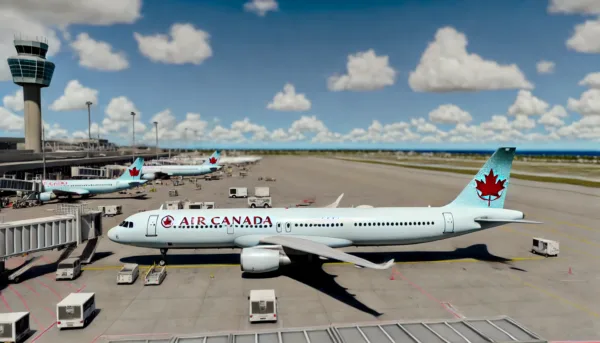





Airbus SE has confirmed it delivered just 72 commercial aircraft in November 2025, significantly down from 78 in October and well below the 84 aircraft delivered in November 2024. The slump is directly tied to a supplier-induced quality issue affecting metal fuselage panels on some of its A320 family jets, prompting a wave of inspections and delivery disruptions. With just one month left in the calendar year, the company now needs to deliver a staggering 133 aircraft in December to meet its revised full-year target of 790 deliveries.
This revised guidance represents a downgrade from its original goal of 820 aircraft and signals that the planemaker’s final month will require an exceptionally high output, even by its own historical standards. The issue has renewed concerns about Airbus SE’s operational resilience, supply chain quality control, and its ability to maintain the production tempo required to satisfy growing airline demand.
What caused Airbus to miss its November delivery expectations?
The root of the problem traces back to fuselage panels supplied by a Spanish manufacturer that were found to have defects, reportedly involving metal integrity and machining inconsistencies. The impacted panels affected some narrowbody jets in the A320neo series during final assembly. Airbus SE was forced to halt delivery on affected units, conduct re-inspections, and in some cases, delay handovers to airline customers. The company did not name the supplier directly but acknowledged that remedial measures were being implemented.
November’s delivery total, among the lowest monthly figures in over a year, comes at a critical moment in Airbus SE’s operational calendar. The fourth quarter is typically the most active for aircraft deliveries as airlines and lessors align fleet upgrades to annual planning cycles, and manufacturers push for year-end revenue recognition. The delivery lag is not only a reputational concern but also a financial one, as revenue is recognized only upon formal aircraft handover.
Can Airbus realistically deliver 133 aircraft in one month?
To reach the updated 790-aircraft target, Airbus SE will need to achieve one of its highest monthly delivery volumes ever. The target requires the company to deliver more than 130 aircraft in a single month, a level previously hit only during record-setting years or end-of-year surges when production had been running smoothly.
Analysts suggest that Airbus SE may rely on a backlog of nearly complete aircraft, often referred to as “gliders,” which are airframes awaiting engine installation or documentation clearance. If enough of these units are ready for handover, the company may still manage a late sprint. However, with the A320 fuselage issue still fresh and some aircraft undergoing additional quality checks, even optimized workflows could be strained under the pressure.
Historical delivery surges in December have helped Airbus SE close its books strong in past years, but the context in 2025 is different. Unlike previous output boosts driven by logistical ramp-ups or engine deliveries, this year’s acceleration must overcome actual manufacturing setbacks.
How are Airbus supply chain flaws affecting production timelines?
The fuselage glitch is the second notable disruption to Airbus SE’s A320 family in recent weeks. The company previously disclosed a separate flight-control software issue that affected approximately 6,000 A320 aircraft globally. The issue, which prompted an urgent software update and regulatory scrutiny, raised questions about both design oversight and internal validation procedures.
Although the software problem did not materially affect new deliveries, it highlighted the sensitivity of flight-critical systems and drew attention to the overall risk landscape for Airbus SE. When paired with the fuselage defect, the dual setbacks paint a picture of a manufacturer under strain from both upstream and downstream factors.
While no safety incidents have occurred due to the metal panel flaw, the broader implication is one of rising quality-control complexity across Airbus SE’s supply chain. With production rates targeted to rise further in 2026 to meet surging demand from low-cost carriers and Asian markets, the recent stumbles could serve as a warning sign.
Will delivery delays ripple into fast-growth markets like India?
Airbus SE’s delivery delays could create knock-on effects for airline operators worldwide, particularly in fast-growing aviation markets such as India. Carriers in the region, including IndiGo, Go First, and Air India, are relying heavily on timely A320neo deliveries to fuel domestic and regional capacity expansion. The inability to induct new jets on schedule may result in adjusted capacity forecasts, deferment of new routes, or higher reliance on existing, less efficient aircraft.
The situation also exposes the fragility of global aircraft supply chains, where even a single component supplier can affect downstream delivery volumes at scale. Lessors may also find themselves caught in between, with slot timings slipping and contracted delivery timelines requiring renegotiation.
In parallel, competitors such as The Boeing Company could benefit slightly in narrowbody conversations, though its own supply chain has been under similar scrutiny, particularly in the 737 MAX program.
How are markets reacting to Airbus’ reduced 2025 guidance?
Investor sentiment toward Airbus SE remains broadly cautious, though not yet negative. The company’s stock remained relatively stable after the announcement, suggesting that markets had priced in some risk related to industrial disruptions. However, if the December push falls short of the 133-unit requirement, further downgrades to revenue and operating margin forecasts could follow in early 2026.
Several institutional analysts noted that the lowered guidance was a responsible step, acknowledging the production challenge rather than over-promising on recoverability. Still, recurring quality incidents, even if individually minor, erode confidence in the manufacturer’s ability to scale output while maintaining consistency.
Airbus SE will also face deeper scrutiny from regulators and partners around supplier qualification, particularly when it comes to critical structural components. Any regulatory interventions or calls for audits in early 2026 could further constrain throughput.
What is the longer-term impact on Airbus production targets?
Looking ahead, Airbus SE remains under pressure to recover lost momentum and demonstrate robustness across its manufacturing ecosystem. The company has been aggressively investing in digital production tools, supplier digitization, and AI-powered quality assurance to reduce error propagation in future aircraft builds.
The push to raise A320-family production to 75 jets per month by 2026 will require more than just scale. It demands surgical precision across thousands of components and hundreds of suppliers. Airbus SE has indicated that it is reevaluating how it certifies critical inputs and plans to onboard additional redundancy measures to mitigate single-supplier bottlenecks.
In a year defined by macroeconomic volatility, engine supply constraints, and increasing demand from airlines seeking newer, more fuel-efficient aircraft, Airbus SE’s challenge is to deliver not just numbers, but consistency.
What are the key takeaways from Airbus SE’s November delivery miss?
- Airbus SE delivered 72 aircraft in November 2025, down from 78 in October and 84 a year earlier, marking a significant month-on-month and year-on-year decline.
- The shortfall was caused by a quality issue involving defective fuselage panels supplied by a Spanish vendor, affecting production of A320-family aircraft.
- The company revised its full-year 2025 delivery guidance from 820 units down to approximately 790, citing supplier disruption as the key reason.
- To hit the revised target, Airbus SE must now deliver 133 aircraft in December, a historically high monthly figure with little margin for delay.
- A recent flight-control software glitch affecting around 6,000 A320 aircraft further complicated the company’s quality-control narrative.
- Airline customers, particularly in fast-expanding markets like India, may experience delayed aircraft inductions as a result of November’s disruptions.
- Investor sentiment remains cautiously optimistic, with markets awaiting December figures before adjusting long-term confidence levels.
- Airbus SE faces mounting pressure to demonstrate supply chain resilience and deliver consistent output ahead of its 2026 ramp-up goals.
- The company’s plan to scale A320-family monthly production to 75 units by 2026 now faces scrutiny over supplier reliability and quality assurance.
- Any further slips in December deliveries could trigger financial outlook revisions and regulatory attention in early 2026.
Discover more from Business-News-Today.com
Subscribe to get the latest posts sent to your email.