




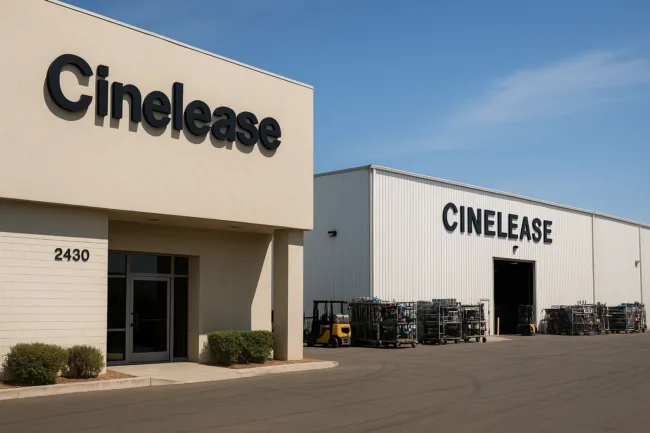
Zello, the private investment platform focused on scaling infrastructure-driven companies in entertainment, has officially acquired Cinelease, the long-standing North American lighting and grip rental provider, from Herc Rentals (NYSE: HRI). The transaction underscores Zello’s ambition to build an integrated content production platform at scale and reflects rising institutional confidence in behind-the-scenes media infrastructure assets.
The acquisition comes at a pivotal time for the global entertainment industry, where traditional studio systems are increasingly decentralized and demand for scalable production infrastructure is intensifying. Cinelease’s expansive footprint in the United States and Canada positions it as a critical enabler of that transition, with integrated capabilities in lighting, grip rentals, expendables, and studio facility management.
How does Zello plan to transform Cinelease into a cornerstone of its media infrastructure strategy?
Zello will operate Cinelease as a standalone, privately held entity within its investment platform, allowing the business to maintain operational independence while tapping into deeper financial and strategic resources. The deal ensures that Cinelease’s existing executive team—including Mark Lamberton, Chris Rogers, and Gannon Murphy—remains in place to lead day-to-day operations, providing continuity for clients while enabling scale.
Founded in 1977, Cinelease has earned a reputation for reliability and deep-rooted relationships with crews, studios, and producers. The company serves thousands of film, television, and commercial productions each year, offering an integrated suite of production services across every major filming hub in North America. Its model blends equipment rentals with facility management, providing seamless support to producers who increasingly demand both flexibility and scale.

Zello’s platform approach emphasizes long-term operational partnerships, combining capital investment with on-the-ground execution support. For Cinelease, this means increased investment in studio infrastructure, expansion into underserved markets, and a sharpened focus on logistics efficiency for high-volume productions. Zello’s leadership described the acquisition as a move to “honor Cinelease’s legacy while leaning into the future,” citing a strong belief in the brand’s long-term strategic role.
What competitive advantages make Cinelease a strategic infrastructure asset in the entertainment supply chain?
Cinelease offers more than traditional rental services—it functions as a full-stack provider for production logistics. This includes managing studio spaces on behalf of real estate investors and serving as a centralized partner for lighting, grip, and expendables. With an average team tenure exceeding a decade, the firm is known for its responsiveness, on-set knowledge, and service-first mentality.
This deep operational DNA—paired with a loyal customer base and coast-to-coast coverage—made Cinelease an attractive acquisition target for Zello. In today’s environment, where streaming content production demands reliability and speed, Cinelease’s logistics backbone and multi-market presence allow producers to move fast without compromising quality.
From a macro perspective, Cinelease sits at the convergence of three trends: decentralization of content production, growing demand for hybrid stage-rental models, and investor appetite for physical infrastructure supporting creative industries. Its legacy and operational resilience give Zello a strong foundation on which to layer innovation and expansion.
What were the deal dynamics and who were the key financial and legal advisors involved in the transaction?
The acquisition was backed by MidCap Financial, a leading middle-market lender affiliated with Apollo Global Management. Legal counsel to Zello was provided by Proskauer Rose LLP, with Ernst & Young serving as accounting advisor and American Discovery Capital as financial advisor. On the seller side, Herc Rentals engaged Sidley Austin LLP and Goldman Sachs to oversee legal and financial components of the transaction. MidCap Financial was advised by Paul Hastings LLP.
Though financial terms were not disclosed, the transaction structure reflects a classic sponsor-backed platform expansion model, with Zello using a combination of private equity and debt capital to fund its entry into critical infrastructure within entertainment. Institutional sentiment toward such assets has grown markedly in recent years, as infrastructure in media—ranging from post-production and editing suites to power and logistics—has become essential for the high-output content ecosystem.
How does this acquisition fit into Zello’s broader investment thesis in creative economy infrastructure?
Zello positions itself as a “next-generation investment platform” that blends capital, operational excellence, and strategic partnerships to build enduring businesses. While its primary focus has been entertainment, the firm’s platform model is designed for scalability across content, infrastructure, and high-growth digital categories.
The Cinelease acquisition signals that Zello is doubling down on physical infrastructure—an area many content investors have overlooked in favor of IP or distribution rights. In an environment where global production timelines are tightening and location-based logistics are more important than ever, Zello sees an opportunity to build a networked ecosystem of services supporting modern storytellers.
Cinelease’s leadership expressed optimism about the partnership. President Mark Lamberton said the deal marks “an exciting new chapter” and praised Zello’s understanding of both operational scale and the cultural foundations that underpin Cinelease’s service philosophy. The alignment of service ethos and expansion ambition could prove critical in differentiating the business as new studios and production hubs emerge outside traditional locations like Los Angeles, New York, and Vancouver.
What are institutional investors and analysts watching for in Cinelease’s next phase under Zello?
Institutional sentiment remains favorable, particularly as Cinelease occupies a unique space within an otherwise fragmented production support market. Analysts will likely focus on three key areas going forward: geographic expansion, technology modernization, and vertical integration.
Zello is expected to fund selective expansions into secondary U.S. markets and potentially explore international linkages—especially in regions offering production tax incentives or growing digital content ecosystems. Technology-wise, the platform could benefit from integrated asset-tracking systems, logistics optimization tools, and client-facing dashboards to improve transparency and reduce operational friction.
There’s also speculation that Zello may seek to integrate or partner with adjacent service providers—such as transportation, set construction, or camera equipment vendors—to create bundled offerings. By aggregating more services under the Cinelease brand or adjacent entities, the platform could become an indispensable logistics partner for end-to-end production delivery.
Analysts expect Zello to maintain capital discipline but are closely watching how quickly the platform executes on its growth roadmap. A move into Latin America, Europe, or Australia/New Zealand—where production infrastructure is less consolidated—could be part of longer-term strategic planning.
How does this acquisition reflect the shifting landscape of media infrastructure investment in 2025?
While much of the media investment narrative in recent years has revolved around digital streaming rights and AI-driven content generation, Zello’s Cinelease deal signals a renewed focus on the physical layer of the entertainment economy. Lighting rigs, grip equipment, studio space, and location logistics remain indispensable—especially for high-budget productions and serialized content schedules.
The return of focus to nuts-and-bolts infrastructure aligns with a wider recalibration of investor expectations in the media sector. Rather than chasing high-risk, short-cycle IP bets, capital is flowing into durable, service-based assets that enable continuity and efficiency. Cinelease’s consistent revenue profile and reputation for delivery place it firmly in this “infrastructure-as-enabler” narrative.
For Zello, the Cinelease acquisition is more than just a financial transaction—it’s a statement of long-term intent to build the unseen but essential systems that support storytelling. And in an era where content may be king, infrastructure—quietly but powerfully—is its throne.
Discover more from Business-News-Today.com
Subscribe to get the latest posts sent to your email.

