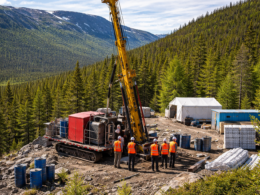
Silver Bullet Mines Corp. (TSXV: SBMI, OTCQB: SBMCF) has announced the acquisition of the Columbia Mine and Gold Queen Mine in Arizona—two past-producing, copper-gold-silver properties located within 30 miles of the company’s Globe-based mill. The all-cash deal, which involves no equity issuance or royalty obligations, immediately expands Silver Bullet Mines Corp.’s asset base while reinforcing its hub-and-spoke operational model.
The move signals an execution-focused approach as Silver Bullet Mines Corp. looks to fast-track ore processing at its Globe facility, target direct shipping opportunities, and potentially validate historical resource estimates across the two mine sites. With permits and access already in motion, the transaction sets the stage for near-term feedstock growth with minimal capital dilution.
Why Silver Bullet Mines is betting on near-term production optionality over greenfield exploration risk
The Columbia and Gold Queen Mines, though dormant, represent precisely the type of asset that Silver Bullet Mines Corp. has sought to incorporate into its feed-forward strategy. The company’s thesis revolves around regional consolidation of small but mineral-rich past-producing properties that can quickly become high-grade throughput for its fully owned Globe mill. Rather than pursuing speculative greenfield targets, Silver Bullet Mines Corp. is favoring brownfield opportunities with historic production and proximity advantages.
Critically, both mines are within trucking distance of the Globe facility. That geographic clustering is central to the company’s “hub and spoke” configuration: the mill as the centralized processing hub, surrounded by multiple lower-capex, staged-feed assets. This reduces logistical costs, shortens development cycles, and allows flexibility in managing material variability.
The Columbia and Gold Queen properties, located in Gila County, Arizona, consist of twelve Bureau of Land Management claims that were previously held by Phelps Dodge Corporation. The properties host numerous historical copper, gold, and silver workings. While no NI 43-101-compliant resource has yet been declared, Silver Bullet Mines Corp. has already begun due diligence sampling and processing trials at its mill, validating material compatibility with its existing infrastructure.
How Silver Bullet Mines is approaching capital efficiency and scale-up without equity dilution
One of the standout elements of this acquisition is its structure. The purchase price was a small cash outlay, with no shares issued and no royalty encumbrances, effectively insulating current shareholders from dilution. In an environment where many juniors rely heavily on equity raises or royalty carve-outs to fund asset expansion, Silver Bullet Mines Corp.’s cash-based approach highlights disciplined capital deployment and potentially strengthens investor trust.
In parallel, the company confirmed that engineering is underway to expand the capacity of the Globe mill, suggesting confidence in a sustained and scalable ore supply. That expansion will be critical if additional assets, including the Columbia and Gold Queen Mines, are advanced into consistent production contributors. It also positions Silver Bullet Mines Corp. to pursue higher-volume direct shipping ore contracts, a key part of its near-term monetization strategy.
The company noted that a direct ship ore (DSO) contract is already in place, subject to final material validation. If verified, this agreement could allow the immediate monetization of high-grade stockpiles while the company undertakes longer-term rehabilitation of underground workings.
What execution risks remain as Silver Bullet shifts from acquisition to throughput delivery
While the acquisition structure and regional logic are both strong, execution risks remain. Silver Bullet Mines Corp. has not yet disclosed technical data for the Columbia or Gold Queen Mines, and no compliant resource estimates are currently available. The success of the mill-feed strategy will therefore depend on the volume, grade, and metallurgical behavior of both existing stockpiles and in-situ material.
Additionally, while permitting is reportedly in process, any regulatory delays could impact the company’s ability to bring these assets online swiftly. Rehabilitation of older workings—such as the planned reopening of a crosscut at the 1,300-foot level—also carries typical safety, ventilation, and geotechnical risks associated with legacy underground operations.
That said, the company has demonstrated some agility in due diligence turnaround, having already completed material testing and determined compatibility with its processing flowsheet. This operational responsiveness could mitigate some early-stage delays, but institutional investors will likely watch closely for technical disclosures in upcoming releases.
Why investor sentiment is likely to hinge on output realization, not acquisition headlines
Silver Bullet Mines Corp. has historically traded on relatively low volumes, with market interest often tied to discrete production milestones or assay updates. With the latest transaction focused more on throughput and feedstock security than speculative upside, institutional sentiment will likely center on concrete production deliverables.
If the Columbia and Gold Queen Mines can supply economically recoverable material at grades consistent with past production, and if the DSO contract transitions into revenue, then Silver Bullet Mines Corp. may earn credibility as a self-funded, production-stage junior with true optionality. However, if material proves marginal or if ramp-up lags, investors may see this as another speculative bolt-on rather than a true step-change.
Importantly, the company has avoided share issuance—a factor that tends to weigh heavily in junior mining sentiment cycles. In doing so, Silver Bullet Mines Corp. has preserved its capital structure, giving it more leeway to pursue non-dilutive scaling strategies, which may appeal to long-term holders prioritizing asset value growth over narrative excitement.
Why disciplined asset acquisition without equity dilution is gaining favor among junior mining investors in 2026
The decision to acquire legacy assets with near-term production potential aligns with a broader trend among junior miners in Arizona and the U.S. Southwest. With permitting for new exploration projects tightening, many are turning to brownfield revitalization strategies. The advantages are clear: faster timelines, embedded infrastructure, and lower environmental barriers.
Silver Bullet Mines Corp. appears to be following a similar path seen in other recent Arizona-based junior mining moves, where underutilized past-producing assets are brought into modern compliance regimes through private acquisition, light-touch reentry, and scalable processing.
If successfully executed, this model could eventually make Silver Bullet Mines Corp. an aggregator of short-cycle, feed-compatible properties across Arizona, particularly if it continues expanding its processing capacity and contracting offtake partners.
Importantly, the company has avoided share issuance—a factor that tends to weigh heavily in junior mining sentiment cycles. In doing so, Silver Bullet Mines Corp. has preserved its capital structure, giving it more leeway to pursue non-dilutive scaling strategies, which may appeal to long-term holders prioritizing asset value growth over narrative excitement. With investor trust increasingly tied to balance sheet discipline rather than speculative upside, such acquisition structures could offer a repeatable template. As many juniors face declining access to capital and heightened scrutiny from institutional allocators, cash-based deals like this signal an intentional shift away from dilution-prone models. If Silver Bullet Mines Corp. succeeds in converting these assets into revenue-generating feedstock without sacrificing shareholder value, it may strengthen its position not only operationally but also reputationally among yield-conscious, risk-calibrated investors.
Key takeaways on what this development means for the company, its competitors, and the industry
- Silver Bullet Mines Corp.’s acquisition of Columbia and Gold Queen Mines reinforces its hub-and-spoke model centered around its Globe, Arizona mill.
- The deal was structured with a small cash payment, no equity dilution, and no royalties, reflecting disciplined capital allocation.
- The proximity of the mines enables low-logistics, fast-to-mill integration, aligning with the company’s short-cycle, low-capex strategy.
- The company has already conducted mill processing tests, validating material compatibility for gold, silver, and copper recovery.
- Engineering efforts to expand the Globe mill suggest confidence in sustained ore supply from new and existing properties.
- Investor sentiment will likely remain milestone-driven and tied to revenue realization, not merely asset acquisition.
- Execution risks include unknown resource quality, underground rehabilitation challenges, and permitting timelines.
- The company’s model may reflect a broader pivot in U.S. junior mining toward brownfield, near-term restart strategies over speculative greenfield exploration.
Discover more from Business-News-Today.com
Subscribe to get the latest posts sent to your email.