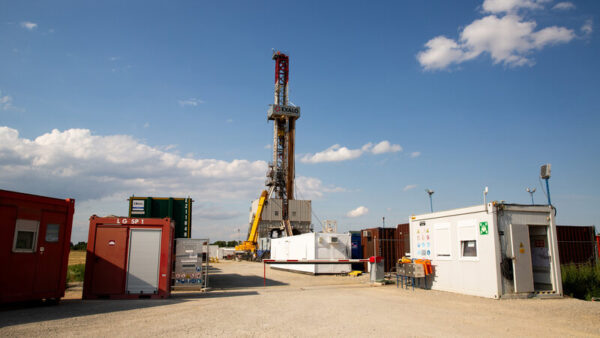
Greenland Energy Company has secured a five-year strategic drilling agreement with Stampede Drilling Inc. to deploy Arctic-capable rig infrastructure in the Jameson Land Basin, marking its first major operational step following its recent business combination and Nasdaq listing. The agreement provides access to a high-performance rig and drilling services, positioning the company to initiate its 2026 onshore exploration program in one of the world’s least developed hydrocarbon basins.
The move matters immediately because it converts Greenland Energy Company’s post-merger structure into an executable field program, shifting the narrative from capital formation to operational delivery in a frontier environment where timelines, logistics, and technical execution will determine valuation credibility. It also signals to investors that the company is moving beyond transactional milestones and into a phase where tangible operational progress, rather than deal activity, will begin to shape market perception and valuation.
Why does securing Arctic-capable rig capacity signal a shift from strategy to execution for Greenland Energy Company?
Frontier exploration stories often stall at the transition point between geological promise and operational readiness. By locking in Stampede Drilling Inc.’s Rig #12, Greenland Energy Company is effectively removing one of the most common bottlenecks in Arctic exploration: access to equipment and crews capable of operating in extreme conditions.
This is not a trivial milestone. Arctic drilling is defined by narrow seasonal windows, high mobilization costs, and stringent environmental constraints. Missing a drilling window can delay a project by an entire year, which compounds capital costs and weakens investor confidence. By securing a multi-year agreement, Greenland Energy Company is signaling that it intends to maintain continuity rather than operate in a start-stop cycle typical of smaller exploration firms.
Operationally, the partnership introduces predictability into a domain that is inherently unpredictable. Stampede Drilling Inc.’s experience in harsh environments reduces execution risk, at least at the level of drilling logistics and safety. That does not eliminate subsurface risk, but it ensures that the company can test its geological thesis without avoidable operational disruptions.
How does the Jameson Land Basin opportunity reshape the risk-reward equation for frontier oil exploration investors?
The Jameson Land Basin represents a classic frontier exploration profile: high uncertainty, potentially large resource upside, and limited historical drilling data. For investors, this creates a binary framework where outcomes can swing dramatically between value creation and capital impairment.
What differentiates Greenland Energy Company’s positioning is timing. Global energy markets remain structurally undersupplied in certain crude grades, and long-cycle projects are back in focus as companies reassess supply security. Frontier basins, once sidelined during the energy transition narrative’s peak, are re-entering strategic discussions as a hedge against long-term supply constraints.
However, the basin’s attractiveness is not purely geological. It is also geopolitical and infrastructural. Greenland’s evolving role in global resource strategy, coupled with increasing interest from Western governments in Arctic resource development, adds a layer of strategic relevance that extends beyond immediate production economics.
At the same time, the risk profile remains elevated. Exploration success rates in frontier basins are inherently low, and even successful discoveries require significant follow-on capital to move toward development. Greenland Energy Company is effectively asking investors to underwrite both geological uncertainty and future capital intensity.
What does the five-year drilling agreement reveal about capital discipline and long-term planning?
A five-year contract in a frontier project is a deliberate signal about capital planning and operational intent. Rather than treating the initial wells as isolated tests, Greenland Energy Company appears to be structuring a multi-phase exploration program that could extend beyond early results.
This approach has two implications. First, it suggests that the company is aligning its capital structure with a longer exploration horizon, which may involve staged financing rather than a single large capital raise. Second, it indicates confidence that the basin merits sustained evaluation, not just opportunistic drilling.
From a capital discipline perspective, securing a dedicated rig over multiple years can reduce per-well costs compared to ad hoc contracting. It also improves scheduling efficiency, which is critical in environments where weather and logistics already impose constraints.
However, this strategy also increases exposure. If early wells fail to deliver encouraging results, the company may face pressure to either renegotiate commitments or justify continued spending in the face of uncertain returns.
How does the recent business combination and Nasdaq listing change investor expectations and scrutiny levels?
The formation of Greenland Energy Company through its business combination and subsequent Nasdaq listing introduces a new layer of accountability. Public market investors typically demand clearer milestones, transparent reporting, and measurable progress, especially in capital-intensive sectors like oil exploration.
The timing of the drilling agreement, coming shortly after the listing, appears designed to address a common concern in newly listed exploration companies: whether they can transition quickly from corporate restructuring to operational execution.
Investor sentiment in such cases tends to hinge on early signals. Announcements like this drilling agreement can support a narrative of momentum, but the market will ultimately look for tangible outcomes such as spud dates, drilling results, and resource estimates.
In the absence of these, the stock can become highly sensitive to broader energy market sentiment rather than company-specific fundamentals. This creates volatility, particularly for a company operating in a high-risk exploration segment.
What execution risks could still derail Greenland Energy Company’s Arctic exploration strategy despite this partnership?
While the agreement addresses rig availability and operational expertise, several layers of risk remain intact. Environmental conditions in Arctic regions can disrupt timelines despite the best planning. Weather variability, logistical constraints, and regulatory requirements can all introduce delays or cost overruns.
Subsurface risk remains the most significant unknown. Even with advanced geological modeling, drilling results can diverge sharply from expectations. A dry well or sub-commercial discovery would not only impact near-term valuation but could also challenge the viability of the broader exploration program.
There are also regulatory and environmental considerations. Arctic projects often attract heightened scrutiny from environmental groups and policymakers. Any changes in regulatory frameworks or permitting timelines could affect project economics and scheduling.
Finally, capital market conditions will play a role. Frontier exploration requires sustained funding, and access to capital can fluctuate based on macroeconomic factors, oil price trends, and investor appetite for high-risk energy plays.
How should investors interpret early sentiment and valuation dynamics around Greenland Energy Company stock?
At this stage, Greenland Energy Company’s valuation is likely to be driven more by narrative and expectation than by fundamentals. The company is pre-production, with no proven reserves or cash flow to anchor valuation metrics.
Investor sentiment will therefore revolve around milestones. The securing of a drilling partner is a positive signal, but it is an early one. The next critical inflection points will include mobilization timelines, drilling commencement, and initial results.
Comparatively, similar frontier exploration companies have experienced sharp valuation swings based on limited data points. This suggests that Greenland Energy Company’s stock could exhibit high volatility as the market reacts to incremental updates.
Institutional investors may take a cautious approach, waiting for more concrete evidence before building significant positions. Retail investors, on the other hand, may be more responsive to narrative shifts, particularly those tied to the broader energy market outlook.
From a sentiment perspective, the current development strengthens the execution narrative but does not yet reduce the underlying risk profile. That balance will define how the stock trades in the coming quarters.
What happens next if drilling success validates the Jameson Land Basin thesis or fails to deliver commercial results?
If early drilling results confirm the presence of commercially viable hydrocarbons, Greenland Energy Company could transition rapidly from an exploration story to a development candidate. This would open pathways for partnerships, asset monetization, or additional capital raises to fund development. Such a scenario would also elevate the strategic importance of the Jameson Land Basin, potentially attracting interest from larger energy companies seeking exposure to new resource basins.
Conversely, if results are inconclusive or negative, the company will face a different set of decisions. It may need to reassess its exploration strategy, reduce capital commitments, or pivot to alternative opportunities.
In either case, the next phase will be defined by data rather than narrative. The drilling program is not just a technical exercise; it is a valuation-defining event that will shape the company’s trajectory.
Key takeaways on what this development means for Greenland Energy Company, its competitors, and the energy sector
- Greenland Energy Company has transitioned from post-merger structuring to operational execution, which is a critical credibility milestone for a newly listed exploration firm
- The Stampede Drilling Inc. agreement reduces operational uncertainty but does not materially lower geological or financial risk
- The Jameson Land Basin represents a high-risk, high-reward opportunity that aligns with renewed interest in long-cycle oil supply
- A five-year drilling commitment signals long-term planning but increases exposure if early results disappoint
- Investor sentiment will remain highly milestone-driven, with volatility expected around drilling updates and results
- Arctic exploration adds geopolitical and environmental complexity that could influence timelines and capital requirements
- Early success could unlock strategic partnerships and re-rate the company, while failure could challenge the entire exploration thesis
Discover more from Business-News-Today.com
Subscribe to get the latest posts sent to your email.