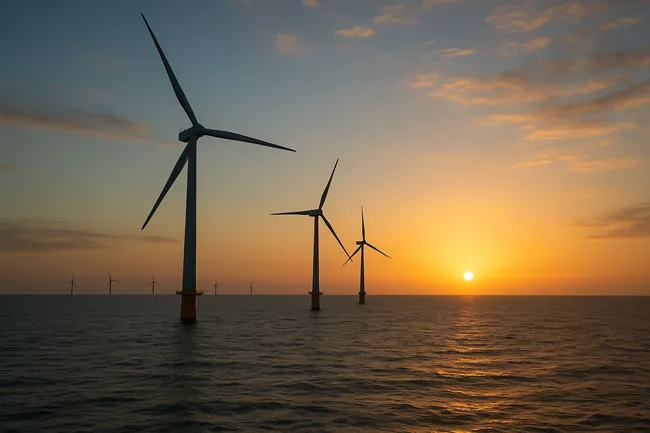
Aker Horizons ASA (OSE: AKH) has formally completed the merger between its wholly owned subsidiary Aker Horizons Holding AS and AKH HoldCo AS, a subsidiary of Aker ASA (OSE: AKER). The move, which was officially registered in the Norwegian Register of Business Enterprises, represents a defining moment for Aker Horizons as it restructures its role in the broader green industry landscape.
The company had signaled this restructuring earlier in 2025, citing the need to strengthen its capital structure and provide shareholders with direct access to Aker ASA’s balance sheet. Under the merger framework, shares of Aker Horizons Holding were distributed as a dividend in kind to Aker Horizons shareholders. This allowed investors to benefit from the merger consideration directly, avoiding dilution and positioning them to capture value from the exchange ratio tied to Aker ASA shares and cash.
The agreed structure ensured that for each Aker Horizons share, investors (excluding Aker Capital) receive NOK 0.267963 in cash and 0.001898 Aker ASA shares. The exchange ratio was based on the 30-day volume-weighted average price of both companies, creating a transparent benchmark rooted in market pricing rather than arbitrary valuation.
What benefits do Aker Horizons ASA shareholders gain from the merger consideration?
Settlement of the merger consideration is expected around 12 September 2025, with eligible shareholders receiving both the cash portion and Aker ASA shares into their VPS accounts. Importantly, investors continue to retain their Aker Horizons shares, meaning they now hold exposure to both Aker Horizons and Aker ASA following the merger.
For institutional investors, this dual position is particularly important. Aker ASA, with its diversified industrial base and financial strength, provides a layer of stability that complements the higher-risk profile of Aker Horizons’ green energy portfolio. Retail investors may find the number of Aker ASA shares allotted per Aker Horizons share modest, but the inclusion of a cash component offers immediate liquidity. Analysts have pointed out that this blended consideration structure reflects an effort to balance long-term industrial participation with near-term shareholder value.
How does the merger fit into Aker Horizons’ wider debt management and portfolio restructuring strategy?
The merger was not a standalone step but part of a broader financial restructuring plan announced in May 2025. Aker Horizons confirmed it would redeem its NOK 2.5 billion green bond, originally due in August 2025, at 100.37 percent of par plus accrued interest. By using cash reserves for early redemption, the company avoided further interest costs and reduced near-term refinancing risk.
In parallel, Aker Horizons offered to repurchase its NOK 1.6 billion convertible bond due 2026 at 93 percent of par. Although Aker Capital, the largest bondholder, declined to participate, the company reduced outstanding liabilities and signaled its intention to clean up its balance sheet. As part of the merger, Aker Horizons Holding assumed responsibility for a NOK 2.6 billion shareholder loan from Aker Capital, further consolidating debt obligations within Aker ASA’s corporate structure.
This restructuring underscores a fundamental reality: Aker Horizons faced challenges in funding large-scale renewable projects as a stand-alone entity. By merging into Aker ASA’s framework, the company gains access to stronger financing capacity and industrial partnerships, reducing risk for both debt and equity investors.
What has been the market sentiment around Aker Horizons ASA stock following the merger announcement?
Market sentiment toward Aker Horizons has been cautious but stabilizing. Shares had been under significant pressure leading into the merger, reflecting global weakness in renewable equities as higher interest rates, supply chain constraints, and project execution risks weighed on valuations. Foreign institutional investors trimmed exposure to Norway’s green sector in early 2025, while domestic institutions took a more supportive stance, betting on Aker ASA’s ability to stabilize the portfolio.
Investor perception is shaped by the context in which the merger occurred. Aker Carbon Capture ASA had already announced plans to divest its stake in SLB Capturi and eventually liquidate, while Mainstream Renewable Power scaled back its global ambitions to focus on South Africa and Australia. The Narvik properties, once envisioned as a cornerstone for green hydrogen and industrial development, have been repurposed toward data centers and artificial intelligence infrastructure. This pivot reflects both market constraints in renewables and the new capital flow into AI-related industrial opportunities.
In this light, the merger can be seen as a protective measure rather than an expansive one. Investors recognize the benefits of Aker ASA’s balance sheet but remain cautious about whether the revised portfolio can deliver the growth once promised by Aker Horizons’ original decarbonization vision.
How does Aker ASA benefit strategically from integrating Aker Horizons’ assets directly?
For Aker ASA, the transaction consolidates assets that require industrial scale and capital commitment beyond the reach of Aker Horizons as a listed vehicle. Øyvind Eriksen, President and CEO of Aker ASA, stressed that the group remains committed to long-term industrial development, but the strategy now requires sharper focus and more disciplined capital deployment.
Bringing Aker Horizons’ portfolio under its direct umbrella allows Aker ASA to control allocation of resources, prioritize projects with stronger risk-adjusted returns, and avoid duplication of governance. The company can now pursue industrial opportunities, such as offshore wind projects or AI-driven data centers, in a more coordinated fashion. For investors, this integration reduces uncertainty and aligns strategic execution with the broader industrial strengths of the Aker group.
What does the merger reveal about challenges in the global renewable energy sector?
The restructuring of Aker Horizons is part of a wider trend where standalone renewable developers have struggled under capital intensity, cost inflation, and volatile policy support. Across Europe, several offshore wind developers have booked impairments due to higher input costs and supply delays. Carbon capture projects, while crucial for achieving net-zero goals, remain heavily dependent on subsidies and partnerships, creating financial strain.
Aker Horizons’ experience illustrates how renewable energy portfolios increasingly need the backing of large industrial groups with robust balance sheets. Investors who once favored pure-play green listings are now gravitating toward diversified companies like Aker ASA, which can absorb volatility in renewables while generating cash flow from other industrial divisions.
What should investors watch for in Aker Horizons ASA and Aker ASA after the merger?
The future of Aker Horizons as a listed entity remains an open question. The board has promised to update shareholders later in 2025 with a revised strategy. Investors will be keen to see whether Aker Horizons positions itself as a leaner green investment platform or transitions into more of a passive holding structure.
For Aker ASA, the focus will be on unlocking value from its diversified portfolio, balancing renewable opportunities with industrial ventures such as data centers in Narvik. The credibility of its management in executing these shifts will determine whether the merger translates into shareholder returns.
From a sentiment standpoint, broker desks in Oslo suggest a “hold” recommendation on Aker Horizons pending clarity, while leaning “buy” on Aker ASA for its broader industrial exposure and stronger financial foundation. Institutional flows may return as confidence builds around the Narvik AI factory project and selective renewable ventures in South Africa and Australia.
What are the long-term implications of the Aker Horizons ASA merger with Aker ASA for investors and Norway’s green transition strategy?
The completion of the Aker Horizons–Aker ASA merger represents both an ending and a beginning. It closes the chapter on Aker Horizons’ ambitious attempt to stand alone as a renewable energy investment vehicle and opens a new phase where its assets are supported by Aker ASA’s financial and industrial capacity.
For shareholders, the structure provides stability, liquidity, and an indirect stake in Aker ASA. For the Norwegian renewable sector, it highlights the capital challenges facing green developers and the growing necessity of industrial backing. Looking ahead, whether Aker Horizons redefines its identity or fades into a residual listing will be determined by how effectively Aker ASA can extract value from a portfolio caught between climate ambition and market reality.
Discover more from Business-News-Today.com
Subscribe to get the latest posts sent to your email.