




Verdad Resources Holdings LLC has completed the sale of its entire operated oil and gas portfolio in the Denver-Julesburg Basin to Peoria Resources, LLC, a subsidiary of Japan Petroleum Exploration Co., Ltd. (JAPEX), at an enterprise value of approximately $1.26 billion. The transaction transfers operational control of more than 100,000 net acres across Colorado and Wyoming to a JAPEX-backed platform and marks a decisive strategic pivot for the Japanese upstream group from minority participation to full U.S. operatorship.
The deal is not merely an asset sale. It is a clean ownership transfer that reshapes control, capital allocation, and long-term production strategy in one of the most technically mature shale basins in the United States.
Why JAPEX’s acquisition of Verdad’s DJ Basin assets signals a structural shift toward operated U.S. shale exposure
For Japan Petroleum Exploration Co., Ltd., this transaction represents the culmination of a multi-year effort to escape the constraints of non-operated U.S. shale exposure. Historically, JAPEX’s U.S. presence has been defined by minority positions that limited operational learning, pace control, and capital efficiency. By acquiring Verdad Resources Intermediate Holdings LLC through Peoria Resources, the company moves decisively into an operator-led model in the Denver-Julesburg Basin.
The strategic logic is clear. Tight oil and gas development is no longer about acreage accumulation alone. It is about execution consistency, drilling cadence, cost discipline, and learning curve compression. Operatorship enables JAPEX to internalize these capabilities rather than renting them through joint venture structures. According to JAPEX disclosures, the assets currently produce roughly 35,000 barrels of oil equivalent per day net, with development plans targeting approximately 50,000 barrels of oil equivalent per day by around 2030, with roughly 70 percent weighted to light crude oil and natural gas liquids.
This is not a speculative growth story. It is a controlled production ramp in a basin where infrastructure, takeaway, and regulatory frameworks are already well understood.
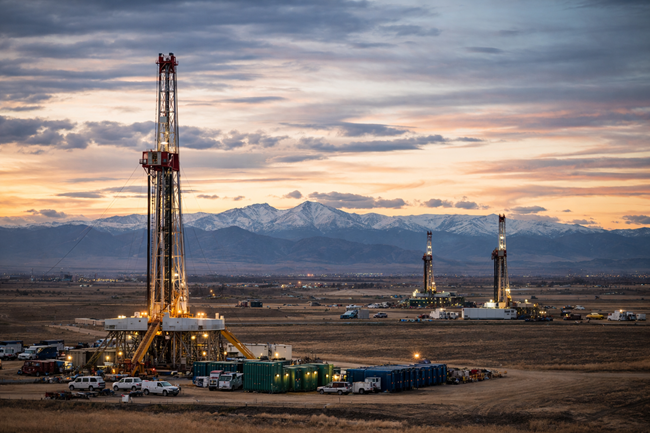
How Verdad Resources monetized a decade-long DJ Basin build into a clean upstream exit
Verdad Resources’ decision to sell its entire operated portfolio reflects a classic private upstream playbook executed to completion. Over the past decade, the company assembled a scaled, contiguous DJ Basin position focused on the Niobrara and Codell formations, de-risked through horizontal development, repeatable drilling outcomes, and operational standardization.
By exiting in one transaction rather than pursuing partial divestments or asset-level carve-outs, Verdad converts accumulated geological and operational value into immediate liquidity. The absence of retained operated exposure suggests confidence that the portfolio had reached a maturity point where incremental value creation would increasingly depend on capital intensity rather than technical arbitrage.
Management commentary emphasized execution rather than timing, implicitly framing the transaction as a platform handoff rather than a market call. That distinction matters. In U.S. shale, top-of-cycle exits are rare. Well-executed exits at scale are not.
What Peoria Resources becomes overnight as a JAPEX-backed operated shale platform
Peoria Resources emerges from this transaction as a fully scaled operator rather than an acquisition vehicle. With control of approximately 101,000 net acres and immediate operatorship across the DJ Basin, Peoria gains credibility with service providers, regulators, lenders, and potential sellers.
The platform is designed for continuity. Leadership continuity from Verdad’s operational culture is complemented by JAPEX’s balance sheet and long-term capital horizon. Peoria executives have emphasized rig activation, service partner stability, and regulatory engagement, signaling a development-first rather than transaction-first operating philosophy.
Importantly, Peoria is not framed as a single-asset vehicle. Public disclosures describe the acquisition as the foundation for additional operated acquisitions across the Lower 48. That language suggests a consolidation thesis where disciplined bolt-on deals supplement organic development rather than replace it.
Why the DJ Basin remains attractive despite regulatory scrutiny and capital discipline pressures
The Denver-Julesburg Basin has faced persistent regulatory scrutiny, particularly in Colorado. Yet it continues to attract long-term capital because it sits at the intersection of mature infrastructure, stacked pay zones, and improving drilling efficiencies.
The Niobrara and Codell formations have benefited from years of subsurface learning, reducing geological risk relative to frontier shale plays. Development economics increasingly hinge on pad design optimization, completion intensity tuning, and supply chain management rather than exploration upside.
For an international operator like JAPEX, this maturity is an advantage. It lowers the execution volatility associated with learning a new basin while still offering enough development runway to justify operatorship.
How this deal reflects a broader Japanese upstream strategy shift toward operational control
Japanese energy companies have historically favored minority stakes in overseas upstream assets, prioritizing supply security and risk diversification over operational leadership. That model is changing.
Japan Petroleum Exploration Co., Ltd. has explicitly stated that operatorship is essential for building sustainable profitability and technical expertise in U.S. tight oil development. By structuring the acquisition through Peoria Resources and financing part of the transaction through reserve-based lending, JAPEX balances capital efficiency with control.
The company expects the acquisition to contribute approximately 20 billion yen to operating profit in the fiscal year ending March 2027, underscoring that this is not framed as a long-dated strategic option but as a near- to mid-term earnings contributor.
What the $1.26 billion valuation says about DJ Basin asset pricing in 2026
At approximately $1.26 billion enterprise value, the transaction provides a useful benchmark for scaled DJ Basin operated assets in the current capital environment. The valuation reflects developed producing reserves, inventory depth, and infrastructure readiness rather than speculative upside.
Compared with Permian Basin transactions, DJ Basin assets typically trade at lower headline multiples but offer steadier decline profiles and lower reinvestment volatility. For buyers with long-term development horizons rather than exit-driven timelines, this trade-off can be attractive.
The use of reserve-based lending to finance roughly $360 million of the transaction further anchors valuation to proved reserve economics rather than growth projections alone.
Why operational learning may matter more than headline production growth for JAPEX
While the projected increase to 50,000 barrels of oil equivalent per day by 2030 draws attention, the deeper strategic value lies in operational learning accumulation. Running rigs, managing completions, optimizing spacing, and navigating U.S. regulatory processes create institutional knowledge that cannot be acquired through non-operated positions.
For JAPEX, this learning has optionality beyond the DJ Basin. It can be redeployed across future U.S. acquisitions, joint ventures, or even international tight resource plays where similar development models apply.
In that sense, Peoria is as much a learning platform as a production engine.
How this transaction reshapes competitive dynamics among mid-sized DJ Basin operators
The entry of a well-capitalized, operator-focused platform backed by a listed international parent subtly alters competitive dynamics in the DJ Basin. Smaller private operators may face higher service costs as Peoria scales activity, while sellers may view Peoria as a credible counterparty for operated asset exits.
At the same time, Peoria’s stated commitment to regulatory and community engagement suggests a lower-risk posture in a basin where social license remains a critical constraint.
This positioning could make Peoria a preferred consolidator in a basin where scale increasingly matters for regulatory resilience as much as for operational efficiency.
What happens next as Peoria transitions from acquisition mode to execution mode
The immediate focus will be execution. Rig deployment, drilling cadence, cost control, and production consistency will determine whether projected production targets are achieved within capital discipline constraints.
Beyond that, the platform’s credibility will be tested by its ability to integrate additional operated assets without diluting operational focus. In shale, growth through acquisition can easily undermine execution quality if not carefully sequenced.
For JAPEX, the longer-term test will be whether U.S. operatorship meaningfully reshapes its global upstream portfolio and skill base rather than remaining a geographically isolated experiment.
Key takeaways: What the Verdad–Peoria–JAPEX deal means for U.S. shale and international upstream strategy
- The $1.26 billion transaction marks a clean exit for Verdad Resources after a decade of DJ Basin value creation.
- Japan Petroleum Exploration Co., Ltd. decisively shifts from non-operator to operator in U.S. shale through Peoria Resources.
- The DJ Basin’s maturity and infrastructure make it an ideal learning ground for international operators seeking execution control.
- Peoria Resources emerges as a scaled operated platform positioned for disciplined Lower 48 consolidation.
- Production growth targets are secondary to the operational learning embedded in full operatorship.
- The valuation anchors DJ Basin pricing to reserve-backed economics rather than speculative growth.
- Japanese upstream strategy is evolving toward hands-on operational control rather than passive exposure.
- Competitive dynamics in the DJ Basin may shift as Peoria scales activity with long-term capital backing.
- Execution discipline over the next two years will determine whether this becomes a replicable model for JAPEX.
Discover more from Business-News-Today.com
Subscribe to get the latest posts sent to your email.

