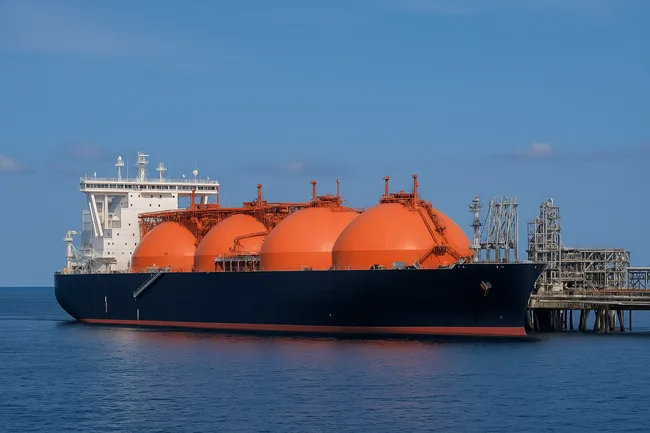





Venture Global, Inc. (NYSE: VG) has taken a final investment decision (FID) and closed an $8.6 billion project financing for Phase 2 of its CP2 LNG facility in Cameron Parish, Louisiana, bringing total financing for the project to $20.7 billion. The transaction, completed on 13 March 2026, is the largest standalone project financing recorded in the United States bank market. Combined with five FIDs executed in less than seven years and more than $95 billion in capital markets transactions to date, the milestone cements Venture Global’s position as the most aggressively expanding LNG developer in North America. Once CP2 reaches full production, Venture Global expects to displace Cheniere Energy as the largest exporter of United States LNG.
What does the $20.7 billion CP2 LNG financing mean for US energy infrastructure investment and global supply security?
The scale of the financing package is hard to overstate. Phase 1 of CP2, which reached FID in July 2025, drew $34 billion in lender commitments. Phase 2 attracted a further $19 billion in commitments despite an already saturated bank market for LNG credit, with no outside equity investment required to close either tranche. The lender syndicate for Phase 2 spans 26 institutions including Banco Santander, Bank of America, Barclays, Deutsche Bank, Goldman Sachs, J.P. Morgan Chase, Mizuho, and Wells Fargo, alongside significant Chinese and Canadian representation through Bank of China, Industrial and Commercial Bank of China, Canadian Imperial Bank of Commerce, and National Bank of Canada. The breadth of that list is not incidental. It signals that European and Asian banks remain willing to fund long-dated US LNG infrastructure at scale, notwithstanding the broader debate around energy transition financing and fossil fuel exposure on institutional balance sheets.
CP2 is designed to produce up to 29 million tonnes per annum (MTPA) at peak capacity, with nearly all of that volume already locked in under long-term offtake agreements predominantly with buyers in Europe and Asia. Venture Global now holds contracted capacity of over 49 MTPA across its three Louisiana projects: Calcasieu Pass, Plaquemines LNG, and CP2. That contracted book is strategically significant. It means the cash flows underpinning $20.7 billion in debt service are not speculative. They are backed by identifiable counterparties that have signed multi-decade purchase agreements, many of whom are European utilities seeking to reduce dependence on pipeline gas from Russia and Middle Eastern suppliers.

How does Venture Global CP2 Phase 2 change the competitive landscape for US LNG exporters including Cheniere Energy?
The competitive significance of CP2’s full buildout is straightforward. Venture Global’s total nameplate capacity across all three projects, once operational, is expected to exceed 100 MTPA. Cheniere Energy, the current largest US LNG exporter, operates approximately 60 MTPA across its Sabine Pass and Corpus Christi facilities. Venture Global’s CP2 alone will add 29 MTPA, and the company is already targeting FIDs on bolt-on expansions at both CP2 and Plaquemines LNG in 2027. The trajectory, if construction timelines hold, would put Venture Global well ahead of Cheniere Energy on sheer volume by the end of this decade.
Cheniere Energy is not standing still. Its Sabine Pass expansion remains in development, though a Chinese counterparty recently elected to take only half the contracted volumes under an existing long-term agreement with Cheniere, a reminder that demand-side commitments are not immune to revision. Venture Global’s approach, contracting nearly all capacity before breaking ground, reduces but does not eliminate that risk. Its long-term agreement with Hanwha Aerospace of South Korea for 1.5 MTPA over 20 years, signed in February 2026, and a separate five-year arrangement with commodity trader Trafigura for approximately 0.5 MTPA, both announced ahead of the CP2 Phase 2 FID, illustrate the company’s strategy of layering diverse customer relationships across geographies and contract durations.
What are the execution and geopolitical risks facing Venture Global CP2 LNG construction and delivery schedules?
The pace at which Venture Global has accumulated FIDs and capital markets transactions is genuinely unusual in the LNG industry, where greenfield project timelines routinely slip by years and cost overruns are the norm rather than the exception. Venture Global has pioneered the use of modular, factory-built liquefaction equipment across its projects, a construction approach intended to compress timelines and reduce on-site complexity. Phase 1 of CP2 began construction after its July 2025 FID, with first LNG from that phase targeted in late 2027. Phase 2 construction will now proceed in parallel, with the Phase 2 completion timeline not yet publicly specified in detail.
Execution risk at this scale is real. Venture Global’s Plaquemines LNG project, its second facility, has faced delays in achieving commercial operations, with Phase 1 commercial operations now targeted in the fourth quarter of 2026 according to the company’s most recent guidance. The company has also been managing a significant volume of arbitration proceedings initiated by customers including Shell and BP over its handling of LNG deliveries from Calcasieu Pass, where Venture Global opted to sell spot cargoes at elevated prices rather than deliver to long-term contract holders. A New York court rejected Shell’s bid to overturn an arbitration award in Venture Global’s favour in early March 2026, while BP’s case seeking damages between $3.7 billion and potentially more than $6 billion remains active. These proceedings represent a material contingent liability that does not appear in the headline financing figures.
The geopolitical backdrop for LNG investment has shifted materially in early 2026. The disruption of Qatari LNG production following military strikes in the Persian Gulf added acute urgency to supply diversification discussions in Europe and Asia, and directly contributed to a sharp rally in Venture Global’s share price in early March. That external tailwind reinforces the commercial logic of CP2 but also introduces a degree of market-timing dependency into the investment thesis. The LNG price environment that makes these projects maximally valuable is contingent on sustained Middle Eastern supply disruption, a scenario that carries its own tail risks.
How are capital markets and institutional investors pricing Venture Global VG stock following the CP2 Phase 2 FID announcement?
Venture Global’s stock has been on a volatile path since its initial public offering in early 2025, when shares touched an all-time closing high of $23.83 in January of that year. The 52-week range as of mid-March 2026 spans $5.72 to $19.50, reflecting the uncertainty investors have attached to the company’s ability to convert its project pipeline into reliable cash flow. As of 11 March 2026, VG traded at approximately $12.46, having risen sharply from lows around $5.72. The early March surge was partly driven by the Qatar LNG disruption narrative, which elevated the strategic value of US export capacity in investors’ eyes.
Analyst sentiment is broadly constructive. Goldman Sachs maintains a Buy rating with a $15 price target. Raymond James raised its target to $13 from $11. Wells Fargo lifted its target to $10 from $8 in early March 2026. The 15-analyst consensus as of mid-March 2026 stands at a Buy, with an average 12-month price target of approximately $13.83. VG’s Q4 2025 earnings per share of $0.41 beat the $0.35 consensus estimate, and the company’s 2025 revenue of $13.8 billion represented a 177% increase over 2024. Management’s 2026 guidance for Consolidated Adjusted EBITDA of $5.2 billion to $5.8 billion provides a reasonable near-term anchor for valuation, though the full cash flow benefit of CP2 remains several years away.
The stock’s distance from its IPO highs is instructive. Morningstar’s fair value estimate of $56 per share, based on long-term LNG demand assumptions, suggests the market is pricing in substantial execution and counterparty risk that is not captured in headline project metrics. The arbitration overhang, the ongoing ramp at Plaquemines, and the multi-year construction horizon for CP2 all justify that discount. For investors with long time horizons and appetite for infrastructure-scale capital intensity, the CP2 FID is a meaningful de-risking event. For those seeking near-term cash flow clarity, the picture remains complex.
What does Venture Global CP2 LNG mean for European and Asian energy security policy and long-term LNG demand?
CP2’s customer base reflects the structural shifts in global LNG trade that have accelerated since 2022. The project’s offtake is contracted predominantly to European and Asian buyers, the two regions with the most urgent structural need for non-Russian and non-Middle Eastern gas supply. The lender group for both CP2 phases includes significant European and Asian bank participation, reinforcing the point that this is not purely an American capital markets story but a globally financed infrastructure bet on long-term demand from two of the world’s largest import markets.
The policy environment in the United States also matters. The current administration in Washington has been broadly supportive of LNG export expansion, which removes a regulatory barrier that had complicated several project timelines in prior years. Venture Global’s ability to take five FIDs in under seven years owes something to that permitting environment as well as to its own execution capability. If that regulatory posture were to shift, the pace of US LNG infrastructure development would slow materially.
For CP2 specifically, the combination of a 29 MTPA peak capacity project that is substantially contracted, financed without equity dilution, and backed by a globally diversified lender group represents a structurally sound foundation. The risks, principally construction execution, the arbitration liability, and the gap between project completion and debt service requirements, are real but are the kind of risks that large infrastructure investors are built to underwrite. The question for Venture Global over the next 18 to 24 months is less whether CP2 will be built and more whether Plaquemines and Calcasieu deliver the cash flow necessary to support the balance sheet while the next phase of growth is under construction.
Key takeaways: What Venture Global CP2 Phase 2 FID means for investors, competitors, and the global LNG market
- Venture Global has closed $8.6 billion in project financing for CP2 Phase 2, bringing total CP2 financing to $20.7 billion and setting a new record as the largest standalone project financing in the US bank market.
- The transaction required no outside equity investment, a structurally important detail that limits dilution risk for existing VG shareholders and signals lender confidence in the contracted cash flow backing the project.
- Over $19 billion in commitments were received for Phase 2 alone, alongside the $34 billion secured for Phase 1, reflecting sustained institutional appetite for US LNG infrastructure from European and Asian banks as much as domestic ones.
- With 49 MTPA of total contracted capacity across three Louisiana projects, Venture Global is now positioned to overtake Cheniere Energy as the largest US LNG exporter once CP2 reaches full production, a shift with significant implications for competitive pricing dynamics in global LNG markets.
- CP2’s 29 MTPA peak capacity is nearly fully contracted with long-term buyers in Europe and Asia, providing multi-decade revenue visibility that reduces, though does not eliminate, the demand-side risks that have affected other LNG developers.
- The geopolitical disruption to Qatari LNG output in early 2026 has materially elevated the strategic value of US Gulf Coast export capacity, creating a market tailwind that directly benefits Venture Global’s contracted customer base and near-term spot pricing leverage.
- Active arbitration proceedings from BP, seeking damages between $3.7 billion and potentially over $6 billion, constitute a material contingent liability that investors must weigh against the headline financing achievement. Shell’s parallel challenge was rejected by a New York court in March 2026 but illustrates the company’s complex counterparty relationships.
- Venture Global’s share price, trading around $12.46 as of 11 March 2026 against a 52-week range of $5.72 to $19.50, reflects the market’s uncertainty about the timeline between construction milestones and free cash flow generation. Analyst consensus is Buy with an average target of approximately $13.83.
- The bolt-on expansions planned for CP2 and Plaquemines, with FIDs targeted in 2027, indicate that Venture Global’s capital deployment ambition extends well beyond CP2, though execution of the current project pipeline must be demonstrated before those milestones can be credibly priced into the stock.
- For Cheniere Energy and other US LNG developers, Venture Global’s trajectory raises competitive stakes on long-term contract pricing, customer retention, and the pace of permitted capacity expansion, making the next two to three years a defining period for the structure of US LNG export market leadership.
Discover more from Business-News-Today.com
Subscribe to get the latest posts sent to your email.