





Kavach, scientifically identified as Mucuna pruriens and traditionally known as cowhage or cow itch plant, has long held a place in Indian ethnomedicine. This climbing legume belongs to the family Fabaceae (Leguminosae) and thrives in tropical regions. In India, it grows widely across states and is cultivated on a commercial scale in warmer areas such as Maharashtra. Historically, its use spanned both medicinal and dietary contexts, but in modern medicine, it is most valued for its high concentration of levodopa—a compound crucial in treating Parkinson’s disease.
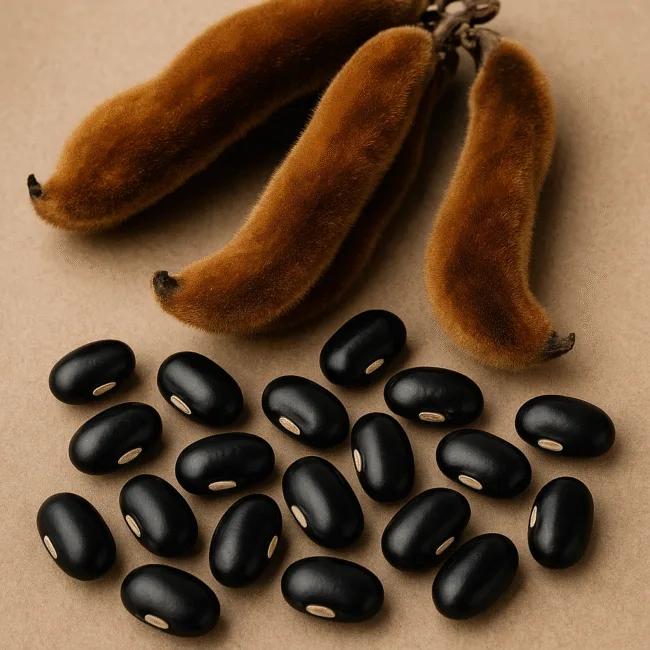
The plant’s pods are covered with fine, bristly hairs that can cause severe itching upon contact with skin, a reaction caused by mechanical irritation and histamine release. In traditional preparation methods, the pods are roasted over an open flame to destroy these hairs, making them safe to handle and consume. In times of famine, the seeds have been eaten as a survival food, providing a dense source of protein and energy.
The seeds themselves are black, odourless, and bitter, with a kidney-like shape. While their historical role in folk remedies is well documented, scientific interest has been driven by the discovery that these seeds are one of the richest natural sources of levodopa, a biochemical precursor of dopamine.
What are the main chemical constituents in kavach seeds and how does levodopa influence brain health and neurological function?
Kavach seeds contain a complex mix of biologically active compounds. The most clinically significant of these is levodopa, also called L-DOPA or L-3,4-dihydroxyphenylalanine. This amino acid derivative plays an essential role in the body’s production of dopamine, a neurotransmitter that regulates movement, emotional responses, and certain cognitive processes.
Dopamine itself cannot cross the blood–brain barrier, which means direct supplementation is ineffective. Levodopa, however, can pass into the brain, where it is enzymatically converted into dopamine by aromatic L-amino acid decarboxylase. This restoration of dopamine levels helps improve communication between nerve cells in brain regions that control motor function.
Aside from levodopa, kavach seeds also contain lecithin, essential amino acids, fatty acids, and alkaloids such as mucunine, mucunadine, prurienine, and prurieninine. While some of these compounds may contribute to the plant’s antioxidant and adaptogenic effects, it is levodopa’s neurochemical action that makes Mucuna pruriens a cornerstone of interest in neuropharmacology.
How does levodopa from kavach seeds help manage the motor symptoms associated with parkinsonism?
Parkinson’s disease, also called paralysis agitans, is a degenerative disorder characterised by the progressive loss of dopamine-producing neurons in the substantia nigra of the midbrain. This dopamine deficiency disrupts the brain’s basal ganglia circuitry, impairing the ability to initiate and control voluntary movements.
When administered, levodopa replenishes dopamine in the brain, helping to restore normal motor function. The most pronounced improvements are seen in reducing rigidity and hypokinesia, enabling patients to move more freely and initiate activities with less effort.
Levodopa therapy can also improve related complications such as dysphagia (difficulty swallowing), sialorrhea (excessive salivation), seborrhea (excessive oiliness of the skin), postural instability, and impaired speech. For many patients, this translates into better daily function, independence, and quality of life.
What are the possible side effects of consuming levodopa from kavach or pharmaceutical sources?
While levodopa is highly effective, it is not without risks. Gastrointestinal discomfort is common and may include nausea, vomiting, anorexia, epigastric pain, flatulence, and dry mouth. These symptoms can sometimes be reduced by adjusting dosage or using peripheral decarboxylase inhibitors that prevent levodopa breakdown before it reaches the brain.
Long-term use of levodopa can lead to motor complications, such as dyskinesias—uncontrolled, involuntary movements—and fluctuations in drug response, where symptom relief shortens in duration. These “on–off” phenomena require careful management through dosing schedules and combination therapy.
When kavach seeds are used directly, there is an added consideration: natural variability in levodopa concentration, which can make precise dosing difficult. This underscores the need for standardised extracts and medical supervision when using plant-based levodopa.
What traditional preparation methods make kavach seeds safe for medicinal or dietary use?
Because the outer hairs of Mucuna pruriens pods can cause intense itching and irritation, they must be removed before handling the seeds. Traditional communities roast the pods to destroy these hairs, after which the seeds can be extracted. The seeds may then be boiled, ground into powder, or processed into medicinal extracts.
In Ayurvedic medicine, kavach seeds are often dried and powdered for use in herbal formulations, sometimes mixed with other botanicals to balance their effects. For clinical applications in neurology, standardised extracts are preferred, ensuring that the levodopa concentration is consistent and within a therapeutic range.
How does kavach’s widespread presence in India reflect its ethnobotanical importance?
The plant’s cultural footprint is evident in its many regional names. In Bengali it is known as Alkusi, in Hindi as Kavach, in Malayalam as Shoriyanam, in Marathi as Kach Kuhili, in Sanskrit as Kapikachechha or Atmagupta, in Tamil as Punajkhali, and in Punjabi as Dulagondi. These variations highlight the plant’s longstanding recognition across linguistic and geographic boundaries, pointing to its versatility as both a traditional remedy and a practical crop in rural communities.
Why does the natural origin of levodopa from kavach remain relevant in modern medical research and practice?
The discovery of levodopa revolutionised the treatment of Parkinson’s disease in the 1960s, and synthetic levodopa remains the gold standard today. However, interest in natural sources like Mucuna pruriens continues, partly because plant-based levodopa is accompanied by other phytochemicals that may influence its absorption and metabolism.
Some studies have explored whether kavach-derived levodopa produces smoother symptom control or fewer fluctuations in motor response compared to synthetic forms. While evidence remains mixed, the potential benefits have spurred research into integrating plant-based levodopa into formal treatment regimens, particularly in low-resource settings where access to pharmaceuticals is limited.
What safety measures should be taken when using kavach as a source of levodopa for neurological disorders?
Kavach should never be self-administered for Parkinson’s disease without the guidance of a qualified healthcare professional. Parkinsonism is a complex condition that requires tailored treatment strategies, ongoing monitoring, and careful adjustment of medications.
Natural extracts can interact with other drugs, including antidepressants and monoamine oxidase inhibitors, potentially causing dangerous side effects such as hypertensive crises. Patients with certain cardiovascular conditions, psychiatric disorders, or narrow-angle glaucoma should be particularly cautious. Standardised dosing, medical oversight, and sourcing from reputable suppliers are essential for safe use.
What makes kavach a unique bridge between traditional plant medicine and modern neurology?
Kavach (Mucuna pruriens) is a plant with a dual legacy—deep roots in traditional medicine and a pivotal role in modern neurological care. Its seeds contain levodopa, a biochemical lifeline for individuals with Parkinson’s disease, enabling them to regain movement control and improve daily living.
While its use in Ayurveda and other traditional systems is well established, its place in clinical neurology depends on rigorous standardisation, precise dosing, and professional supervision. In the evolving dialogue between herbal medicine and pharmaceutical science, kavach stands out as a plant whose ancient relevance continues to meet contemporary medical needs.
Discover more from Business-News-Today.com
Subscribe to get the latest posts sent to your email.