USA Rare Earth, Inc. (NASDAQ: USAR) has signed a definitive agreement to acquire Texas Mineral Resources Corporation (OTCQB: TMRC) in an all-stock transaction valued at roughly $73 million, a move that would give the company full ownership and operational control of the Round Top heavy rare earth and critical minerals project in Texas once the transaction closes. The agreement consolidates the remaining minority interest in the project and positions USA Rare Earth to become the sole economic beneficiary and operator of one of North America’s most strategically important rare earth deposits. The transaction still requires approval from Texas Mineral Resources shareholders and other customary closing conditions, with the companies expecting completion no later than the third quarter of 2026. The deal arrives at a moment when Western governments are intensifying efforts to rebuild domestic critical mineral supply chains that currently depend heavily on Chinese processing capacity.
The agreement would eliminate the remaining 18.6 percent interest previously held by Texas Mineral Resources and simplify governance for the Round Top development plan. Under the terms of the transaction, Texas Mineral Resources shareholders will receive approximately 3.8 million shares of USA Rare Earth common stock, reflecting the $73 million implied value based on the company’s recent share price. Both companies’ boards have approved the deal, and executives from Texas Mineral Resources have entered voting support agreements backing the transaction.
Although modest in financial size compared with major mining acquisitions, the strategic implications of the deal are considerably larger.
Why does full ownership of the Round Top rare earth project matter for USA Rare Earth’s long-term strategy?
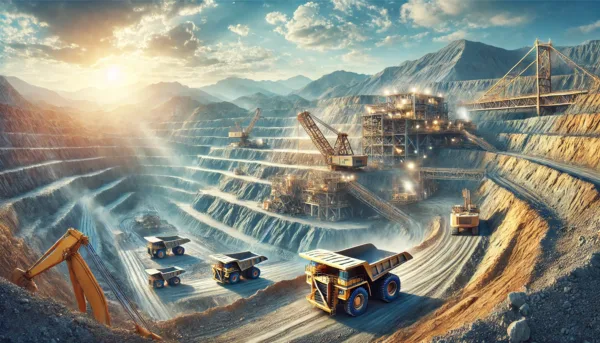
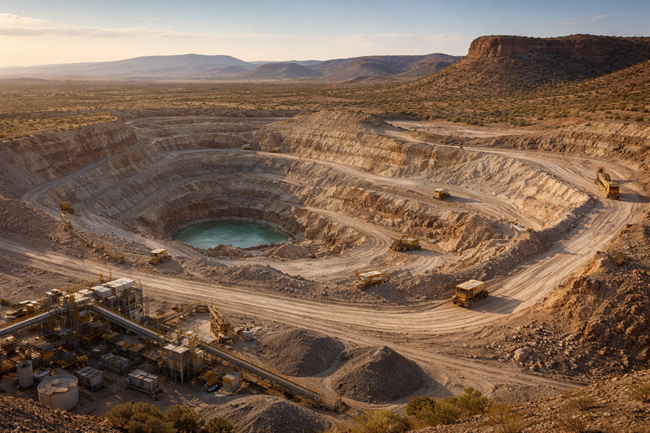
Round Top, located in Hudspeth County in West Texas, is considered one of the richest known deposits of heavy rare earth elements and critical minerals in North America. The project sits on Texas state land under a long-term lease with the Texas General Land Office and contains a range of rare earth elements that are essential for modern industrial technologies.
These elements include dysprosium, terbium, yttrium, and other materials required to manufacture permanent magnets used in electric vehicle motors, wind turbines, robotics systems, and high-performance electronics deployed in aerospace and defense applications.
Heavy rare earth elements are particularly valuable because they allow permanent magnets to maintain magnetic strength under high temperatures and demanding operating conditions. These properties make them indispensable in advanced technologies such as fighter aircraft systems, satellite components, precision robotics, and semiconductor manufacturing equipment.
Once the acquisition closes, USA Rare Earth will have full operational authority over development decisions at Round Top. Eliminating the joint-venture structure simplifies capital allocation, infrastructure planning, and project governance for a deposit expected to require significant investment before reaching commercial production.
The company has indicated that commercial mining could begin in 2028 under its Accelerated Mining Plan, with large-scale production expected to ramp through the end of the decade.
How does this acquisition strengthen USA Rare Earth’s mine-to-magnet industrial strategy?
Round Top represents the upstream anchor of a broader industrial strategy that USA Rare Earth has been developing for several years. Rather than focusing solely on mining, the company has been attempting to build a vertically integrated rare earth platform that spans mining, refining, metal production, alloy manufacturing, and permanent magnet fabrication.
This strategy reflects a structural feature of the rare earth industry. Mining rare earth minerals is only the first stage of a much more complex supply chain. The real industrial bottleneck lies in refining rare earth ores into usable oxides, converting those oxides into metals and alloys, and then manufacturing permanent magnets that power modern technologies.
China currently dominates these downstream stages of the value chain.
To reduce dependence on foreign processing capacity, USA Rare Earth has been developing facilities capable of converting raw rare earth materials into finished magnets within Western supply chains.
The company operates magnet manufacturing infrastructure in Stillwater, Oklahoma and previously acquired Less Common Metals, a producer of rare earth metals and alloys used in magnet manufacturing. That acquisition extended the company’s capabilities beyond mining and into metallurgical processing.
By combining the Round Top deposit with processing and magnet production facilities, USA Rare Earth aims to build a fully integrated mine-to-magnet platform capable of supplying advanced manufacturing sectors in the United States and allied markets.
Why are government funding initiatives and private capital shaping the economics of the Round Top project?
The Texas Mineral Resources acquisition is occurring alongside a major funding push designed to support the development of the Round Top project and associated manufacturing infrastructure.
Earlier in 2026, USA Rare Earth announced a non-binding Letter of Intent with the U.S. Department of Commerce under the CHIPS Program that could provide up to $1.6 billion in financial support for building a domestic rare earth supply chain.
The proposed package includes direct federal funding alongside a large senior secured loan designed to accelerate construction of mining, processing, and magnet manufacturing facilities.
In parallel with that government support, the company also completed a $1.5 billion private investment in public equity transaction anchored by investment firm Inflection Point and other institutional investors. The financing involved issuing nearly seventy million shares at a price of $21.50 per share.
Combined, the potential government support and the private investment raise the total capital pool supporting the project to more than $3 billion.
For a sector that historically struggled to attract large-scale investment outside China, that level of funding reflects a significant shift in investor and government interest in critical mineral supply chains.
Why is the Round Top project becoming central to U.S. industrial and national security policy?
Rare earth elements have become a focal point of geopolitical competition because they are essential inputs for a wide range of advanced technologies. Semiconductor manufacturing equipment, electric vehicle motors, renewable energy systems, robotics, and modern weapons platforms all rely on high-performance permanent magnets that contain rare earth elements.
For decades, the United States relied heavily on foreign processing capacity, particularly in China, for the refinement and production of these materials.
Although rare earth deposits exist in multiple countries, most of the global infrastructure required to process rare earth ores into usable materials remains concentrated in China. This has created supply chain vulnerabilities that policymakers in Washington and allied capitals have increasingly sought to address.
Programs such as the CHIPS and Science Act and various Department of Energy initiatives are designed to rebuild domestic industrial capabilities in critical materials that underpin advanced manufacturing and defense systems.
The proposed federal funding partnership with USA Rare Earth reflects those policy priorities. By supporting projects like Round Top, the United States aims to restore portions of the rare earth supply chain that migrated overseas over the past three decades.
If fully developed, Round Top could become one of the most important sources of heavy rare earth materials within Western supply chains.
What scale of production is USA Rare Earth targeting as the Round Top project moves toward development?
Under the company’s long-term development plan, the Round Top project could eventually become one of the largest rare earth production hubs outside China.
The company has outlined plans to extract approximately 40,000 metric tons per day of rare earth and critical mineral feedstock once the project reaches full operating capacity. The extracted materials would then move through processing facilities that separate rare earth oxides before being converted into metals and alloys used in magnet manufacturing.
Downstream facilities are expected to produce neodymium-iron-boron magnets that are widely used in electric vehicles, wind turbines, industrial robotics, and aerospace technologies.
These magnets play a central role in high-efficiency electric motors and other applications that require strong and stable magnetic fields.
If the project reaches its intended scale, it could supply materials used across industries including semiconductor fabrication, renewable energy infrastructure, robotics manufacturing, and advanced defense technologies.
What risks could complicate the development of the Round Top rare earth platform?
Despite its strategic potential, the Round Top project still faces a range of execution risks common to large-scale mining and processing developments.
Rare earth extraction requires specialized metallurgical processes that are more complex than many conventional mining operations. Building the necessary infrastructure for mining, processing, and manufacturing will require years of engineering work and substantial capital investment.
The proposed federal funding package has not yet been finalized and remains subject to additional approvals and milestone conditions. Even if approved, the funding would likely be released in stages tied to project development progress.
Mining projects also face potential permitting challenges, environmental oversight requirements, and the logistical complexities of building industrial infrastructure in remote areas.
In addition, rare earth markets have historically experienced periods of significant price volatility, which can affect the economics of new projects.
For USA Rare Earth, the coming years will determine whether its vertically integrated strategy can transition from planning and financing into operational production.
What does the Texas Mineral Resources acquisition signal about the future direction of the Western rare earth industry?
The agreement to acquire Texas Mineral Resources represents more than a simple ownership consolidation. It reflects a broader shift in how Western countries are approaching the development of critical mineral supply chains.
Rather than relying on fragmented mining projects, governments and investors are increasingly supporting companies capable of building end-to-end industrial ecosystems spanning extraction, processing, and manufacturing.
USA Rare Earth’s strategy aligns with this model.
By integrating mining operations in Texas with downstream manufacturing capabilities in the United States and Europe, the company is attempting to create a supply chain capable of supporting advanced industries that depend on rare earth materials.
If the company successfully executes this strategy, it could become one of the few Western companies capable of producing heavy rare earth magnets at industrial scale.
That outcome would represent a meaningful shift in the balance of global rare earth supply chains and reduce reliance on foreign processing infrastructure.
Whether that ambition becomes reality will depend on the company’s ability to execute large-scale engineering, financing, and operational programs over the remainder of the decade.
What are the key takeaways executives and investors should understand about the USA Rare Earth acquisition strategy?
- USA Rare Earth has signed a definitive agreement to acquire Texas Mineral Resources in a $73 million all-stock transaction expected to close in 2026.
- The deal would give USA Rare Earth full ownership and operational control of the Round Top heavy rare earth project in Texas.
- Consolidating the remaining minority stake simplifies governance and financing for the project’s large-scale development plan.
- Round Top is considered one of North America’s most significant deposits of heavy rare earth elements used in advanced technologies.
- The acquisition supports USA Rare Earth’s strategy to build a vertically integrated mine-to-magnet supply chain spanning mining, processing, and magnet manufacturing.
- The project has attracted significant financial backing through both government funding initiatives and private investment.
- Rare earth materials produced at Round Top could support industries including semiconductors, electric vehicles, renewable energy, robotics, and defense.
- The project aligns with broader Western efforts to reduce dependence on Chinese rare earth processing and manufacturing capacity.
- Development risks remain substantial due to technical complexity, financing milestones, and long project timelines.
- If successfully executed, the Round Top platform could become a cornerstone of a new Western rare earth industrial ecosystem.
Discover more from Business-News-Today.com
Subscribe to get the latest posts sent to your email.