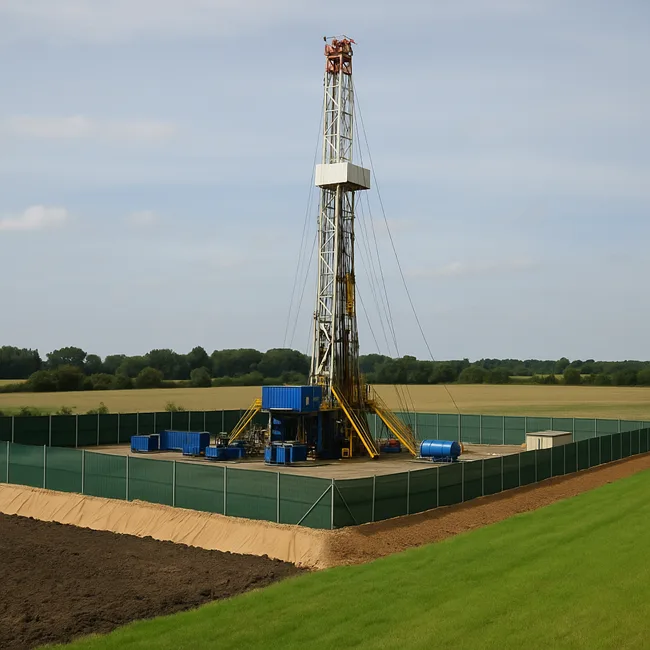
Europa Oil and Gas Limited’s plans to appraise a decades-old gas discovery in North Yorkshire have entered a critical public review stage. The UK Environment Agency has opened a formal consultation on the company’s application to construct and operate a temporary wellsite for the Cloughton-2 appraisal well at Burniston Mill.
The consultation period, which began earlier this month, will run until 19 September 2025. Local residents, environmental groups, and other stakeholders now have an opportunity to share views and raise concerns before the regulator makes a decision on whether to grant the required environmental permit.
What is the UK Environment Agency reviewing in this application?
The environmental permit process is designed to ensure that onshore oil and gas activities meet strict standards for protecting people and the environment. In this case, the UK Environment Agency will assess Europa’s application against legal requirements that cover water quality, air emissions, waste management, and potential impacts on human health.
Officials have explained that a permit can only be refused if the project fails to meet one or more of these statutory criteria. If all requirements are satisfied, the regulator is legally bound to issue the permit. However, the consultation stage allows for public feedback that may influence permit conditions or highlight additional safeguards.
Europa’s application covers the construction of a well pad, drilling of a deviated borehole, and short-term testing of the Cloughton-2 well. It does not include any request for full-scale production. Should the appraisal prove commercially viable, a separate planning and permitting process would be required for development.
How can local residents and stakeholders take part in the consultation?
The UK Environment Agency has made the full consultation documents available through its Citizen Space website. These include technical details of the proposed operations, environmental protection measures, and regulatory obligations that Europa must meet if the permit is approved.
Submissions can be made electronically, ensuring accessibility for both local participants and interested parties from further afield. Feedback can focus on environmental factors such as groundwater protection, emissions management, noise control, and habitat preservation. The agency has indicated that it values local knowledge when assessing site-specific risks and determining monitoring requirements.
For community groups and residents near Burniston Mill, this consultation is one of the most direct opportunities to influence how the project is regulated. Comments submitted before the deadline will be reviewed alongside the technical assessment.
Why is Europa Oil and Gas seeking to drill Cloughton-2 now?
The Cloughton structure, located within Petroleum Exploration and Development Licence (PEDL) 343, was first tested in 1986 when the Cloughton-1 well confirmed the presence of gas in multiple geological formations. That earlier drilling achieved modest natural flow rates, but modern completion and stimulation techniques could deliver higher commercial output.
Europa, which holds a 40% interest in the licence alongside Egdon Resources and Petrichor Partners, believes that Cloughton contains a Pmean gas initially in place estimate of 192 billion cubic feet. The gas is described as “sweet,” with methane and ethane making up more than 98% of its composition.
The appraisal well at Burniston Mill will target the Cloughton anticline using a deviated borehole drilled to a depth of about 3,000 metres. The goal is to gather modern flow test data and determine whether the field can sustain production rates that justify a development phase.
What happens after the consultation period ends?
Once the consultation closes on 19 September, the UK Environment Agency will review all submissions alongside its technical evaluation of the application. This process involves examining Europa’s proposed safeguards, assessing potential environmental impacts, and determining whether the project meets all legal standards.
If the permit is approved, Europa will move forward with its four-phase operational plan. The first phase will involve site construction, followed by drilling, well stimulation and testing, and finally either decommissioning and restoration or a separate application for production.
Should the permit be refused, Europa would need to address any deficiencies identified by the regulator before resubmitting its application or exploring alternative approaches.
Why this consultation matters for the wider UK onshore gas sector
While the Cloughton-2 appraisal is modest in scale compared to offshore gas developments, it is being closely watched within the onshore sector. The outcome could set the tone for how future gas appraisal projects are regulated and how much weight public feedback carries in permitting decisions.
Supporters argue that developing domestic gas resources can help reduce reliance on imports and contribute to energy security, particularly as North Sea output continues to decline. Opponents highlight environmental concerns and question the compatibility of new fossil fuel developments with the UK’s net-zero commitments.
The public consultation process sits at the intersection of these debates, offering a structured forum for weighing economic, environmental, and community priorities.
Discover more from Business-News-Today.com
Subscribe to get the latest posts sent to your email.