




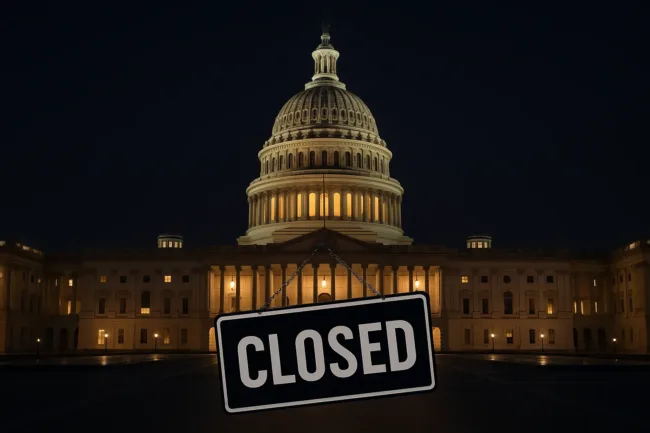
Why did the U.S. government enter a shutdown and what triggered the political deadlock?
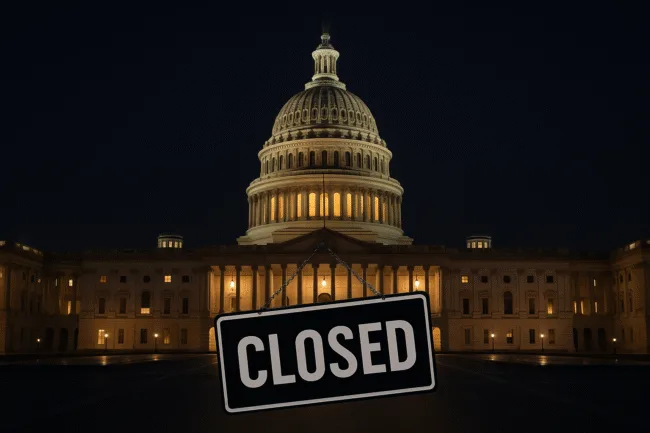
At 12:01 a.m. EDT on October 1, 2025, the U.S. federal government officially entered a shutdown after lawmakers in Congress failed to pass either an appropriations package or a continuing resolution to extend funding. The stalemate between the Republican-controlled House and the Democratic Senate underscored the deep partisan divisions over healthcare subsidies, Medicaid, and fiscal spending priorities. President Donald Trump’s administration signaled a hardline stance by directing the Office of Management and Budget to instruct agencies not only to prepare for furloughs but also to draft plans for permanent reductions in force, raising the stakes beyond the typical stop-gap crisis planning.
This shutdown is the first since 2019 and the third to occur under Trump’s presidency, reigniting global scrutiny of U.S. fiscal governance. The event reintroduces questions about the reliability of U.S. political institutions at a time when investors are already anxious over inflationary pressures, the Federal Reserve’s interest rate outlook, and geopolitical uncertainties ranging from trade disputes with China to instability in global energy markets.
How many federal workers are affected and what services are most vulnerable to disruption?
The immediate consequence of the shutdown is the furlough of up to 750,000 federal workers. Essential personnel, such as military service members, border patrol agents, and air traffic controllers, are required to remain on duty but will not receive paychecks until funding resumes. Historically, unpaid workforces experience sharp declines in morale and efficiency, leading to increased absenteeism and attrition.
Healthcare and public health services face significant disruptions. The Department of Health and Human Services announced that 41 percent of its workforce would be furloughed. The National Institutes of Health retained only one in four employees, severely limiting ongoing research projects. The Centers for Disease Control and Prevention reduced its public health monitoring and communications capacity, an especially concerning development as the nation enters flu season. The Food and Drug Administration said it would continue core functions like drug approvals, but many routine oversight tasks would be delayed or paused.
Air travel and transportation are among the most visible casualties of the shutdown. More than 11,000 Federal Aviation Administration employees were furloughed, while air traffic controllers and Transportation Security Administration officers continue working unpaid. The risk of delays, cancellations, and reduced service quality is high. Travel industry associations estimate that airlines and related businesses could lose nearly one billion dollars per week if the shutdown continues.
Other services are affected in varying degrees. National parks may remain partially open by using visitor fees to cover costs, but many sites without independent revenue streams will close. Postal services, Social Security payments, and military operations continue under essential service designations. Yet, procurement cycles, grant approvals, and regulatory processes across multiple industries are frozen until Congress restores funding.
What is the estimated economic cost of the government shutdown and how does it compare with history?
Shutdowns carry substantial economic costs that compound with time. The Congressional Budget Office estimates that this closure could cost the economy about 400 million dollars per day in lost output and delayed payments. Local economies with heavy concentrations of federal employees, such as Virginia, Maryland, and New Mexico, are expected to feel the impact immediately as consumer spending contracts.
The U.S. economy has endured shutdowns before, most notably the 35-day record closure in 2018 and 2019. That episode shaved an estimated 11 billion dollars from gross domestic product, of which 3 billion dollars was permanently lost. While workers typically receive back pay once funding resumes, productivity losses, delayed contracts, and canceled research projects cannot be recovered. With inflation still a concern and interest rates at restrictive levels, another prolonged shutdown risks intensifying existing economic headwinds just as the holiday season begins.
How are financial markets, investors, and institutions reacting to the shutdown news?
Financial markets opened on edge as the shutdown began. Futures on the Dow Jones Industrial Average, S&P 500, and Nasdaq Composite showed declines in pre-market trading, reflecting investor caution. While shutdowns rarely cause prolonged equity market crashes, they often increase short-term volatility and reduce transparency by delaying government data releases such as monthly employment reports and GDP statistics.
Institutional investors have shifted into defensive postures. Analysts observed weaker demand for near-term U.S. Treasury bills, signaling unease about liquidity risks. Hedge funds and large asset managers rotated into safer sectors such as utilities and healthcare providers, while retail investor sentiment leaned toward selling stocks in federal contractor-heavy companies. Aerospace and defense firms like Lockheed Martin Corporation (NYSE: LMT) and Northrop Grumman Corporation (NYSE: NOC) were flagged as vulnerable to contract delays, though market strategists suggested holding rather than exiting these positions given the historical tendency for contracts to resume once funding is restored.
Market commentary reflected a consensus that shutdown-related turbulence is transitory but frustrating. Long-term institutional flows remain cautious but stable, as most expect resolution before credit rating agencies escalate warnings. Yet the memory of the 2011 debt ceiling standoff, which led Standard & Poor’s to downgrade the U.S. credit rating, looms large over investor sentiment.
What political dynamics are fueling the impasse between Congress and the White House?
At the heart of the standoff are disagreements over healthcare and social spending priorities. Democrats have insisted on maintaining Affordable Care Act subsidies and protecting Medicaid expansion, while Republicans argue that these programs are unsustainable entitlements that must be reined in. The House attempted to pass a continuing resolution stripped of healthcare guarantees, but the measure failed in the Senate.
The Trump administration’s aggressive posture has amplified tensions. By directing agencies to prepare for permanent reductions in force, the White House escalated the stakes far beyond traditional furlough planning. Democrats view this move as a political maneuver to weaken federal institutions, while Republicans defend it as fiscal discipline. The rhetoric reflects a hardening of positions on both sides, raising the risk that the shutdown will last longer than previous episodes.
What historical lessons can be drawn from past shutdowns and how do they inform today’s crisis?
Since 1976, the U.S. government has experienced 21 funding gaps, though not all resulted in full shutdowns. Some of the most notable occurred in 2013 under President Barack Obama and in 2018 and 2019 under Trump. The 2013 shutdown lasted 16 days over disagreements tied to the Affordable Care Act, while the 2018-2019 shutdown extended to 35 days over border wall funding, becoming the longest in U.S. history.
The economic consequences of these shutdowns were mixed but damaging. While most lost wages were reimbursed, disruptions to contractors, small businesses, and research initiatives left lasting scars. Credit rating agencies and global investors increasingly view repeated shutdowns as signals of structural dysfunction in U.S. politics. The current crisis adds a new dimension with its threat of permanent federal job cuts, raising concerns about long-term institutional weakening and reduced attractiveness of federal employment.
What should businesses, investors, and citizens expect if the shutdown continues?
If the shutdown extends beyond two weeks, industries tied to federal research, procurement, and regulation will face mounting risks. Pharmaceutical companies awaiting Food and Drug Administration approvals could see product launches delayed, impacting revenue projections. Airlines and logistics providers may accumulate mounting losses as inspections and certifications stall. Defense contractors could face contract backlogs, affecting quarterly earnings visibility.
Markets will increasingly price in the risk of a credit rating warning if the impasse drags into mid-October. Federal debt issuance could become more complicated, adding pressure to the Treasury market. Consumer confidence, which is already fragile, may slip further if households begin to anticipate missed paychecks and delayed government services. Politically, the shutdown could reshape narratives ahead of the 2026 midterm elections, with both parties seeking to portray the other as reckless custodians of fiscal responsibility.
How long can the U.S. government shutdown last and what outcomes are analysts expecting next
The U.S. government shutdown of 2025 is more than a budgetary dispute. It reflects entrenched political polarization, heightened executive pressure tactics, and mounting investor unease. While history suggests that shutdowns eventually end with short-term compromises, the longer this standoff drags on, the more damage it inflicts on the economy, markets, and public trust.
Federal workers face uncertain weeks ahead, industries dependent on government contracts brace for delays, and global investors watch closely for signs of resolution. The U.S. political system once again finds itself tested, and the outcome will shape both near-term economic performance and long-term perceptions of American governance.
Discover more from Business-News-Today.com
Subscribe to get the latest posts sent to your email.


