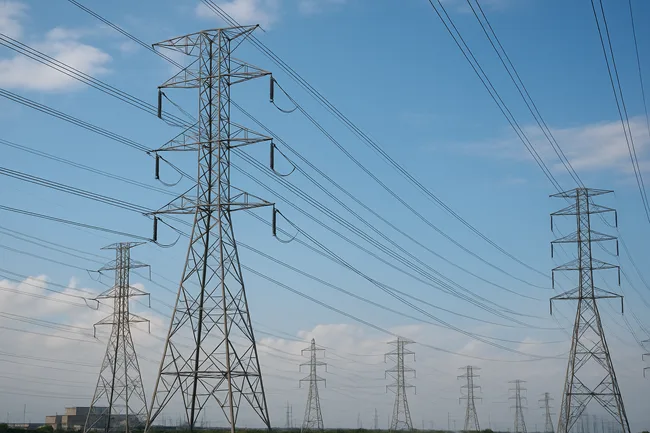
US President Donald J. Trump has issued a sweeping Executive Order to eliminate clean energy subsidies for wind and solar power, escalating his administration’s pivot away from what he labeled “unreliable, foreign-controlled energy sources.” The order follows provisions outlined in the One Big Beautiful Bill Act and directs both the U.S. Treasury and the Department of the Interior to revise guidance and regulations that previously supported renewable energy development. The directive could significantly disrupt investment timelines for solar and wind developers and has already triggered sharp declines in the stock prices of leading U.S. clean energy firms.
The Executive Order reinforces policy themes introduced earlier this year with the passage of the One Big Beautiful Bill Act, which curtailed federal tax credits for renewable energy projects beyond 2026. While those statutory changes set longer-term deadlines, the new Executive Order mandates immediate administrative action, effectively accelerating the phaseout of key subsidies and increasing regulatory risk for projects under development.
Institutional investors are weighing the implications of the directive as a material shift in U.S. energy policy, with analysts cautioning that regulatory uncertainty could dampen near-term deployment of clean power infrastructure. Sentiment in clean tech markets remains cautious as stakeholders await new Treasury guidance and Interior rule changes over the next 30 to 45 days.
What changes are being mandated for the Treasury and Interior departments, and how might they disrupt renewable project timelines?
The Executive Order calls for the Secretary of the Treasury to revise and restrict eligibility guidance for clean electricity tax credits under Sections 45Y and 48E of the Internal Revenue Code. Specifically, it directs the department to end current safe harbor rules that allowed developers to secure credits by demonstrating “beginning of construction,” a clause widely interpreted to include minimal site preparation or procurement deposits. The Treasury has been tasked with tightening these definitions within 45 days, raising the bar for what qualifies as a credit-eligible project.
At the same time, the Department of the Interior has been ordered to review and repeal all federal land leasing, permitting, or environmental policy frameworks that provide preferential treatment to renewable energy projects. This includes solar and wind installations on federal land, which had benefited from streamlined reviews and lower fees compared to fossil fuel projects.
Developers now face a compressed and more ambiguous timeline for project initiation. Solar and wind developers that had previously relied on liberal interpretations of pre-construction to lock in tax credits could see their eligibility revoked retroactively, depending on how Treasury’s updated guidance is structured. Additionally, projects awaiting permits from the Interior Department may encounter new procedural barriers or withdrawal of existing authorizations, especially on federal land managed by the Bureau of Land Management and the U.S. Forest Service.
How have public clean energy stocks and sector sentiment responded following the executive order’s release?
The clean energy sector saw immediate equity market volatility after the order’s release. On July 8, shares of Enphase Energy Inc. (NASDAQ: ENPH) fell 4.2%, while First Solar Inc. (NASDAQ: FSLR) dropped 6.9%. Other publicly listed solar and battery storage firms—including SunRun Inc. (NASDAQ: RUN) and SolarEdge Technologies Inc. (NASDAQ: SEDG)—each declined by over 5% intraday. Integrated renewable utilities such as NextEra Energy Inc. (NYSE: NEE) and AES Corporation (NYSE: AES) also closed lower, reflecting broader market concern.
These declines follow a broader year-to-date trend. As of July 9, 2025, Enphase has lost over 38% of its market value in 2025, primarily on weaker demand in residential solar and declining margins. First Solar has performed better relative to peers, retaining a modest 0.5% YTD gain due to strong demand for its U.S.-manufactured panels, which are insulated from import tariffs. Still, institutional sentiment turned sharply negative after the executive order, with increased put activity and declining volume-weighted average price benchmarks across the clean tech sector.
Analysts note that the executive action introduces a level of regulatory ambiguity that could delay project financing and break the momentum built under the Inflation Reduction Act. With future project economics now in question, developers may scale back pipeline targets for 2026–2027 or shift focus toward energy storage and firm power generation, where subsidies remain more secure.
What is the broader context behind President Trump’s criticism of “foreign-controlled energy sources” and national security framing?
The executive order frames renewable energy as a national security liability, arguing that supply chains for solar panels and critical components are dominated by geopolitical adversaries, especially China. It accuses previous administrations of weakening America’s energy security by subsidizing intermittent sources while neglecting “reliable, dispatchable” ones like natural gas, nuclear, and coal.
This framing builds on Trump’s earlier declarations of a National Energy Emergency on Day One of his second term. The White House established the National Energy Dominance Council to implement policies aimed at energy independence, reduce regulatory friction, and boost fossil fuel production. By characterizing renewables as aesthetically harmful and structurally unreliable, the administration is setting a policy tone that re-centers fossil fuels and nuclear power as cornerstones of the national grid.
Critics, however, point to U.S. Department of Energy data showing renewables already make up over 23% of utility-scale electricity generation as of Q1 2025, with solar and wind projected to account for 75% of new generation capacity added this year. The policy shift, they argue, will stall this momentum and send conflicting signals to investors and manufacturers building U.S.-based supply chains.
What do institutional investors expect in terms of project delays, litigation risks, and shifting energy portfolios?
Institutional sentiment suggests a pivot toward safer, subsidy-insulated sectors. Investment managers anticipate that renewable developers will frontload project timelines to complete construction before 2026, when credit eligibility sharply declines. There is also growing concern over potential litigation if Treasury revokes or retroactively alters safe harbor determinations.
While the executive order did not repeal any parts of the One Big Beautiful Bill Act, it introduces execution risk for projects in early-stage development. Some institutional fund managers have flagged elevated due diligence timelines and are revising project risk ratings upward for unfinanced utility-scale solar and onshore wind deals. At the same time, investors are exploring new allocations to long-duration energy storage, small modular reactors (SMRs), and gas-fired peakers, especially in capacity-constrained regional transmission zones.
Over the next 12 months, capital deployment may favor hybrid solutions—such as solar paired with lithium-ion battery systems—that still qualify for the 30% standalone storage tax credit extended through 2033. Distributed energy resource aggregators and grid software developers are also seeing renewed interest as investors look to support grid resilience without relying on utility-scale renewables.
What is the expected regulatory and market trajectory for the remainder of 2025 and into 2026?
Treasury and the Interior Department are required to issue new implementation guidance within 45 days, likely by late August 2025. Developers, investors, and project financiers are closely watching for revisions that define the exact thresholds for “construction commencement” and clarify whether permits issued under previous frameworks remain valid.
Analysts expect a flurry of regulatory comment periods, legal challenges, and industry lobbying to shape the final rules. If the new Treasury guidelines are interpreted narrowly, thousands of megawatts of planned solar and wind projects could become financially unviable. Conversely, if the rules maintain certain legacy provisions or include carve-outs for U.S.-based manufacturing, the sector could still see moderate deployment, albeit with constrained returns.
Energy markets may remain volatile in the interim, especially as utilities recalibrate their Integrated Resource Plans (IRPs) in light of changed assumptions around clean energy timelines. Market observers will also be monitoring the 2026 budget proposal for additional clues on federal energy priorities.
Discover more from Business-News-Today.com
Subscribe to get the latest posts sent to your email.