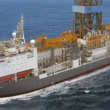





Transocean Ltd. (NYSE: RIG) has confirmed a significant milestone in its European operations, announcing a $181 million contract extension from Equinor Energy for its ultra-harsh environment semisubmersible rig, Transocean Spitsbergen. The agreement marks a decisive affirmation of the rig’s value in high-specification drilling operations and signals continued confidence in Norway’s offshore upstream ambitions amid global volatility in energy markets.
The extension involves the drilling of nine additional wells on the Norwegian Continental Shelf (NCS), with options for two further wells. Transocean expects the contract to commence in October 2023 and continue through April 2025, thereby ensuring sustained utilization of one of its most technically capable assets in the North Sea.
This latest award from Equinor Energy not only bolsters Transocean’s backlog but also deepens its strategic alignment with Norway’s energy priorities, where reliability, safety, and ultra-deepwater drilling performance remain non-negotiable.
What makes the Transocean Spitsbergen rig suitable for ultra-harsh environments like the Norwegian Continental Shelf?
Originally delivered in 2009, the Transocean Spitsbergen is a sixth-generation dual-activity rig designed for some of the harshest operating conditions in the world. With winterization capabilities, advanced subsea systems, and a water depth rating of 3,000 meters, it is purpose-built for Equinor’s challenging development and exploration campaigns in the Barents Sea and Norwegian Sea regions.
The harsh environment semisubmersible is classified under the Aker H-6e design, with a dynamic positioning system and a dual-derrick configuration enabling parallel operations—key advantages when executing multi-well drilling programs in time-sensitive offshore settings. It has previously been deployed across several high-priority Equinor campaigns, including work on the Snorre and Aasta Hansteen fields.
The rig’s operational history with Equinor further cements its reputation as a reliable workhorse for ultra-deepwater and high-latitude drilling, where metocean risks and logistical constraints demand engineering redundancy and high-performance reliability.
How does this contract extension impact Transocean’s operational backlog and financial outlook?
The $181 million contract extension adds meaningful visibility to Transocean’s backlog, which is a closely watched metric among institutional investors and industry analysts. Transocean continues to differentiate itself from lower-tier offshore drilling providers by focusing on ultra-deepwater and harsh-environment segments—areas where dayrates are structurally higher and barriers to entry remain steep.
As of Q1 2022, Transocean reported a total contract backlog of approximately $6.1 billion. This new award from Equinor contributes not only volume but also continuity, ensuring the Transocean Spitsbergen stays active in a competitive environment where rig supply tightness is beginning to return, particularly in the high-spec floating rig market.
The Swiss-headquartered offshore drilling contractor has emphasized that long-term contracts from supermajors and NOCs—like Equinor—are vital for underpinning fleet utilization, free cash flow generation, and post-restructuring capital efficiency.
In this context, the extension is more than a top-line boost; it serves as a testament to Transocean’s premium positioning in a consolidating offshore drilling sector, where speculative builds and uncontracted assets remain high-risk propositions.
Why does Equinor continue to rely on Transocean’s harsh-environment rigs in 2022?
Equinor Energy has consistently prioritized fleet stability and vendor continuity in its offshore programs, particularly within the Norwegian regulatory regime, which mandates stringent safety and environmental controls. In harsh environment theaters such as the Barents Sea, well control, ice load resilience, and dual-activity capability are non-negotiable. Transocean’s assets meet these needs, and the Spitsbergen, in particular, has already been through Norwegian PSA audits and maintained strong uptime performance during prior campaigns.
Norway’s national oil company has been doubling down on its North Sea and Arctic development programs even amid the broader European energy transition, with a strong push toward energy security. In this scenario, Transocean offers a technically mature and operationally proven rig fleet with a long history of working in partnership with Equinor on flagship projects.
Equinor’s ongoing trust in Transocean may also reflect the broader strategy of aligning with a reduced pool of experienced offshore drilling contractors capable of executing safely and at scale in frontier conditions.
What is the broader industry sentiment toward harsh-environment rig demand in 2022?
In 2022, industry sentiment around harsh-environment drilling rigs is shifting upward as energy prices remain elevated and operators revisit offshore programs shelved during the pandemic-era downturn. Rig dayrates for sixth- and seventh-generation floaters in high-demand zones are reportedly showing signs of upward pressure, though not yet at pre-2014 boom levels.
Equinor’s decision to lock in capacity through 2025 with options signals not only rising confidence but also strategic foresight in managing drilling campaign continuity and capital expenditure timing. As one of the largest offshore upstream developers in Europe, Equinor’s move will likely be interpreted as an early signal of fleet reactivation momentum in the high-specification semisubmersible segment.
Offshore contractors like Transocean, Seadrill, and Noble Corporation are expected to benefit the most from this cyclical upturn, especially if long-cycle deepwater investments make a stronger-than-anticipated return in the second half of 2022.
How does this deal reflect post-pandemic offshore drilling recovery signals?
The Transocean Spitsbergen extension serves as a bellwether for improving sentiment in the global offshore drilling sector following a bruising downturn caused by COVID-19 and the oil price collapse of 2020. While short-cycle shale projects continue to dominate production growth globally, the recent upswing in commodity prices has reignited interest in capital-intensive offshore developments.
This is particularly true for mature basins like the North Sea, where legacy infrastructure, fiscal incentives, and seasoned service providers make offshore reinvestment more attractive under current price scenarios. As of June 2022, Brent crude remains above $110 per barrel, adding urgency to final investment decisions across European E&P portfolios.
Within this backdrop, Transocean’s contract win with Equinor reinforces the notion that high-quality rigs with harsh-environment pedigree are returning to the spotlight as operators look to balance risk, uptime, and long-term resource monetization.
What could follow next for Transocean in the European offshore drilling theater?
With the Transocean Spitsbergen locked into the Norwegian Continental Shelf through 2025, attention will now turn to the redeployment of other harsh-environment assets within Transocean’s fleet. Industry observers will be watching closely to see whether additional extensions or new contracts emerge for rigs like Transocean Barents and Transocean Norge, especially if European majors accelerate their upstream timelines in response to energy security concerns.
The rig contractor’s ability to maintain operational excellence and deliver on safety benchmarks in the Spitsbergen extension could pave the way for deeper engagement with Equinor, including potential involvement in future exploration blocks or carbon storage drilling support services.
For now, the $181 million award represents a timely vote of confidence in Transocean’s premium fleet, and more broadly, in the resilience of Norway’s offshore sector as it straddles both traditional hydrocarbons and the early contours of an energy transition.
Discover more from Business-News-Today.com
Subscribe to get the latest posts sent to your email.