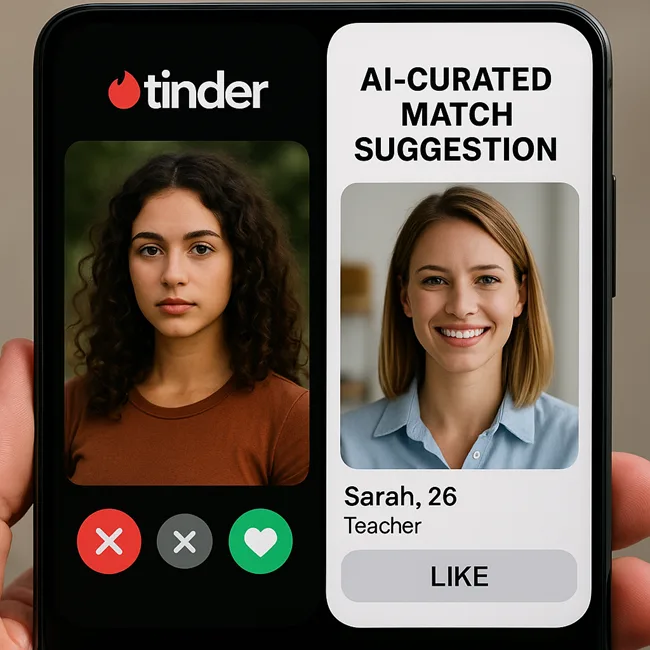
Tinder, once the undisputed leader in online dating, is facing one of its most challenging periods since its launch in 2012. Parent company Match Group Inc. (NASDAQ: MTCH) reported a 4% year-over-year decline in Tinder’s revenue for the second quarter of 2025, sliding to $461 million. The drop underscores a deeper problem: user churn, which has been accelerating since mid-2023, as swiping fatigue reshapes the digital dating landscape.
The decline comes at a time when Match Group’s new CEO, Spencer Rascoff, is refocusing investor attention on Hinge, which has seen 25% revenue growth over the same period. While Hinge’s success has offered the company a growth engine, it also casts a shadow over Tinder’s fading momentum. Rascoff’s strategy now hinges on whether lessons from Hinge’s “intentional dating” model and AI-powered match curation can breathe new life into Tinder without alienating its existing base.
Why is swiping fatigue eroding Tinder’s user base?
Since pioneering the swipe interface, Tinder’s rapid-fire matching system has become both its trademark and its liability. Over the past two years, user feedback and independent research have highlighted growing dissatisfaction with the “endless scroll” nature of the app. Internal estimates and third-party tracking suggest more than 500,000 users have left Tinder between May 2023 and late 2024.
Younger demographics, particularly Gen Z, are showing signs of burnout from superficial matching, preferring platforms that foster deeper connections. The rise of niche dating communities, event-driven apps, and competitors like Hinge—which encourage thoughtful profile prompts and slower, more deliberate interactions—has made Tinder’s model feel increasingly out of step with evolving preferences.
How does Rascoff plan to use AI and ‘intentionality’ to revitalize Tinder?
Rascoff’s turnaround roadmap for Tinder borrows directly from Hinge’s playbook. The plan involves introducing AI-driven discovery features designed to prioritize high-quality matches, personalized conversation starters, and better compatibility scoring. These tools aim to reduce the mental load of endless swiping and help users focus on connections with higher potential for engagement.
In parallel, Tinder is testing new modes of interaction that blend digital and physical touchpoints, such as live video events, location-based meetups, and themed interest groups. Match Group has earmarked part of its planned $50 million in second-half 2025 reinvestment for expanding AI capabilities and deploying advanced content moderation tools to combat bot activity and fake profiles.
The challenge, Rascoff acknowledged on the company’s latest earnings call, is striking the right balance between preserving Tinder’s brand identity as a fast, accessible dating platform and adapting to a market where users expect more authenticity and trust.
Can Tinder modernize without losing its core audience?
Tinder’s brand has long been associated with spontaneity and casual encounters, which helped fuel its rise to more than 10 million paying users at its peak. Shifting toward deeper, more curated interactions could risk alienating the segment of its audience that still values quick matching.
Industry analysts say the key will be a phased rollout of changes rather than an abrupt overhaul. “Tinder needs to introduce new features as optional experiences rather than replacing the existing flow overnight,” one sector analyst noted. “That way, they can test adoption rates and iterate without disrupting their most loyal user segments.”
This dual-path approach—offering both the traditional swipe model and a parallel intentional dating track—may help Tinder retain its base while attracting younger users who might otherwise drift toward Hinge or smaller competitors.
How do market pressures and competition shape Tinder’s urgency?
The broader online dating market is both lucrative and competitive. In 2025, the global industry is projected to generate over $7 billion in revenue, but the competitive set is expanding. Rivals like Bumble have also reported declining engagement, while niche apps catering to specific communities or interests are growing.
For Tinder, the urgency is compounded by investor comparisons with Hinge. The latter’s 1.7 million paying users and $32 average revenue per user show that growth can come from quality-focused models. If Tinder fails to adapt quickly enough, Match Group risks widening the performance gap between its flagship brands, making Hinge the company’s sole growth driver.
What could a successful turnaround look like?
A revitalized Tinder would likely combine its large-scale reach with new AI-led personalization, layered safety features, and more opportunities for authentic interaction. If executed well, these changes could slow churn, increase user satisfaction, and create upsell potential through premium tiers offering enhanced match insights or event access.
Rascoff has made it clear that safety will be a central pillar of Tinder’s evolution. Improved identity verification, AI moderation of profiles and messages, and tools for user control are all in development. In theory, these moves could reframe Tinder as a platform that delivers both excitement and trust—two factors that Gen Z and millennial daters increasingly demand.
Discover more from Business-News-Today.com
Subscribe to get the latest posts sent to your email.