




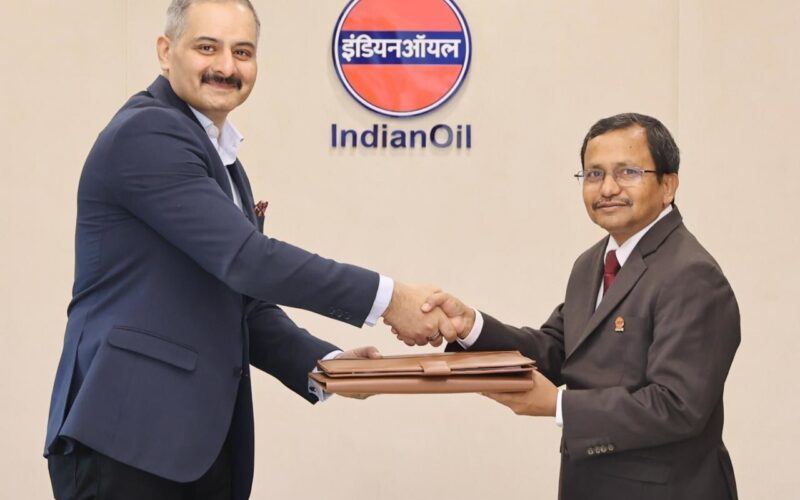
Re Sustainability Limited and Indian Oil Corporation Limited (IOCL) have signed an exclusive memorandum of understanding to establish what the partners describe as India’s first structured national platform for collecting and recycling used lubricating oil. The initiative combines Re Sustainability Limited’s environmental infrastructure and waste management expertise with Indian Oil Corporation Limited’s dominant lubricant distribution network to create a reverse logistics and re-refining ecosystem capable of recovering up to 100 thousand tonnes of used oil annually. The collaboration will operate through a dedicated special purpose vehicle responsible for developing collection infrastructure, traceability systems, and re-refining capacity that can produce Group I and Group II+ re-refined base oils. Strategically, the project represents an attempt to convert a fragmented waste stream into a structured industrial resource while supporting India’s push toward circular economy infrastructure and reduced dependence on imported crude-derived base oils.
The initiative highlights a structural gap that has existed in India’s energy and industrial ecosystem for years. India produces an estimated 1.3 million tonnes of used lubricating oil every year, generated by passenger vehicles, commercial fleets, manufacturing equipment, and heavy industrial machinery. Despite the scale of this waste stream, only around 200 thousand tonnes currently enters formal recycling channels. The remainder typically moves through informal recovery networks or is improperly disposed of, which reduces the potential value that could otherwise be recovered through industrial re-refining processes.
For policymakers and industry participants, the gap between generation and recovery represents both an environmental challenge and an economic opportunity. Used lubricating oil still retains much of its hydrocarbon structure, meaning it can be processed back into usable base oil through advanced refining techniques. If collected systematically and processed under controlled conditions, waste oil can become a secondary raw material capable of feeding lubricant manufacturing again. This principle sits at the core of the circular economy model that the partnership between Re Sustainability Limited and Indian Oil Corporation Limited aims to institutionalize.
Why does India generate large volumes of recoverable used lubricating oil that never enter formal recycling systems?
India’s rapid economic expansion over the past two decades has driven strong growth in lubricant consumption across transportation, construction, manufacturing, and power generation. Every vehicle engine, industrial gearbox, turbine, or compressor that relies on lubricants eventually produces used oil that must be replaced during routine maintenance cycles. In theory, this waste oil could be collected, transported, and re-refined into base oils suitable for reuse in new lubricant formulations.
In practice, however, the collection infrastructure required to capture these dispersed volumes has remained limited. Used oil is generated in thousands of small service garages, workshops, trucking depots, agricultural facilities, and industrial plants scattered across the country. Without an integrated logistics network capable of aggregating small quantities efficiently, recovery becomes expensive and operationally complicated. As a result, a significant portion of used oil flows through informal collectors who lack the infrastructure or regulatory oversight necessary for consistent industrial recycling.
The project proposed by Re Sustainability Limited and Indian Oil Corporation Limited attempts to address this bottleneck by building a nationwide aggregation platform. Rather than focusing solely on refining technology, the initiative targets the logistics layer that determines whether used oil can be recovered at scale.
How could a nationwide reverse logistics system change the economics of used lubricant recycling in India?
The planned special purpose vehicle will focus on creating a reverse logistics ecosystem dedicated to used lubricant collection and transportation. This system will include aggregation hubs, transportation routes, digital tracking mechanisms, and traceability systems designed to ensure that recovered oil remains suitable for re-refining. By consolidating fragmented collection efforts into a structured national platform, the partners aim to significantly increase the amount of used oil entering formal processing facilities.
Indian Oil Corporation Limited brings a major structural advantage to this effort. As India’s largest integrated energy company and a dominant participant in the lubricants market, Indian Oil Corporation Limited already maintains an extensive distribution network connecting lubricant distributors, automotive service centers, and industrial customers. Integrating used oil collection into this existing network could dramatically reduce the logistical costs that have historically constrained recovery rates.
Re Sustainability Limited contributes a complementary capability rooted in environmental services and waste management infrastructure. The company has extensive experience handling complex industrial waste streams and developing recycling systems capable of meeting regulatory and environmental standards. When combined with Indian Oil Corporation Limited’s distribution reach, this expertise may enable the creation of a vertically integrated recovery model that captures used oil at the point of generation and channels it into controlled re-refining facilities.
Why are re-refined base oils becoming strategically important for energy security and cost control?
Base oils form the primary component of finished lubricants and are traditionally produced through crude oil refining processes. For countries that import significant volumes of crude oil, this dependency can create both economic and supply vulnerabilities. India remains one of the world’s largest crude oil importers, meaning that any reduction in dependence on virgin base oil production can generate strategic benefits.
Re-refined base oils offer an alternative pathway. Through specialized processing methods such as vacuum distillation and hydrotreating, used lubricating oil can be converted into high-quality base oils that meet many of the same performance standards as freshly refined material. The planned re-refining facility under the partnership is expected to produce Group I and Group II+ base oils, which are widely used in automotive and industrial lubricant formulations.
Another advantage of re-refining is its comparatively lower energy intensity. Producing base oils from used lubricants typically requires less energy than refining crude oil into base stocks from scratch. This efficiency reduces both production costs and environmental impact, strengthening the economic rationale for building a circular supply chain.
What role do environmental regulations and extended producer responsibility rules play in shaping the initiative?
India’s regulatory environment has gradually evolved toward stronger accountability for waste management and environmental protection. Extended Producer Responsibility frameworks require manufacturers and distributors to assume greater responsibility for the lifecycle impact of the products they introduce into the market. In the lubricant sector, this includes both packaging waste and the management of used oil.
The collaboration between Re Sustainability Limited and Indian Oil Corporation Limited incorporates the recovery and recycling of plastic lubricant containers alongside used oil collection. This feature aligns the project with emerging regulatory requirements that encourage manufacturers to ensure responsible end-of-life management of their products.
Beyond compliance considerations, companies that establish large-scale recycling infrastructure early may influence the standards and operational frameworks that regulators eventually formalize across the sector. In that sense, the initiative could function as a model for future circular economy systems within India’s lubricants industry.
Could formalizing the used oil supply chain disrupt India’s long-standing informal recycling networks?
The used oil collection market in India has historically been served by informal collectors who gather waste oil from small garages, workshops, and industrial facilities. These networks have played a crucial role in recovering material that might otherwise be discarded, but they often operate without consistent environmental safeguards or traceability systems.
The creation of a nationwide collection platform backed by Indian Oil Corporation Limited introduces institutional scale into a market that has traditionally been decentralized. As formal infrastructure expands, some informal collectors may integrate into the system as logistics partners or aggregation agents, while others may face competitive pressure.
Managing this transition will require careful coordination between regulators, industry participants, and local collection networks. Ensuring that recovery rates increase rather than decline during the shift toward structured recycling will be essential to the project’s long-term success.
What operational challenges could influence the execution of a nationwide used lubricant recovery ecosystem?
While the strategic logic of the project is clear, the practical execution of a nationwide recovery network presents several challenges. The first is achieving consistent collection volumes. Even though India generates large quantities of used lubricating oil, capturing that material requires participation from thousands of service providers and industrial operators across the country.
Traceability and quality control represent additional operational hurdles. Used oil must be handled and transported in ways that prevent contamination with water, solvents, or other industrial waste. Maintaining standardized collection procedures across a large logistics network will be critical to ensuring that the recovered oil remains suitable for re-refining.
Infrastructure investment also plays a role. Building re-refining facilities capable of producing high-quality Group II+ base oils requires specialized processing equipment and reliable feedstock supply. The project’s target of collecting 100 thousand tonnes annually will therefore depend on the simultaneous development of both logistics infrastructure and processing capacity.
How might large-scale lubricant recycling reshape India’s lubricant manufacturing supply chain over time?
If the initiative succeeds in scaling collection and re-refining operations, it could gradually change the structure of India’s lubricant supply chain. Re-refined base oils could replace a portion of virgin base oil imports, reducing exposure to global crude price fluctuations and strengthening domestic supply stability.
Domestic lubricant manufacturers may also benefit from improved feedstock availability. Access to locally produced re-refined base oils could help stabilize input costs and reduce dependence on international refining markets.
Over time, the presence of a formal recycling ecosystem may influence how lubricant formulations are designed. Manufacturers could begin optimizing products for compatibility with re-refining processes, making it easier to recover value from lubricants once they reach the end of their service life.
What does this initiative signal about India’s broader industrial circular economy ambitions?
India has increasingly emphasized circular economy principles across several sectors, including plastics, electronics, construction materials, and metals. The lubricants industry represents another logical area for circular resource recovery because of the inherent recyclability of hydrocarbon oils.
The partnership between Re Sustainability Limited and Indian Oil Corporation Limited suggests that circular economy concepts are beginning to move beyond policy discussions and pilot projects toward large-scale industrial implementation. When major energy companies collaborate with environmental infrastructure specialists, the resulting systems have the potential to operate at national scale.
In this context, the lubricant recycling initiative may represent an early example of how India’s circular economy ambitions could translate into operational infrastructure capable of recovering valuable resources from industrial waste streams.
Key takeaways: What the Re Sustainability and Indian Oil Corporation Limited partnership signals for industry and energy policy
- India generates about 1.3 million tonnes of used lubricating oil annually but only a small fraction currently enters formal recycling channels.
- Re Sustainability Limited and Indian Oil Corporation Limited aim to institutionalize used oil recovery through a nationwide logistics and re-refining platform.
- The initiative targets annual collection of around 100 thousand tonnes of used lubricating oil.
- Re-refined base oils could reduce India’s dependence on crude-derived base oil imports.
- Circular recycling of lubricants may improve resource efficiency across the automotive and industrial sectors.
- Integration with Extended Producer Responsibility frameworks strengthens regulatory alignment.
- Formal infrastructure may gradually reshape informal used oil collection networks.
- Operational success will depend heavily on logistics execution and feedstock traceability.
- Domestic lubricant manufacturers could gain access to a more stable and potentially lower-cost base oil supply.
- The initiative reflects a broader shift toward industrial-scale circular economy systems in India’s resource-intensive industries.
Discover more from Business-News-Today.com
Subscribe to get the latest posts sent to your email.


