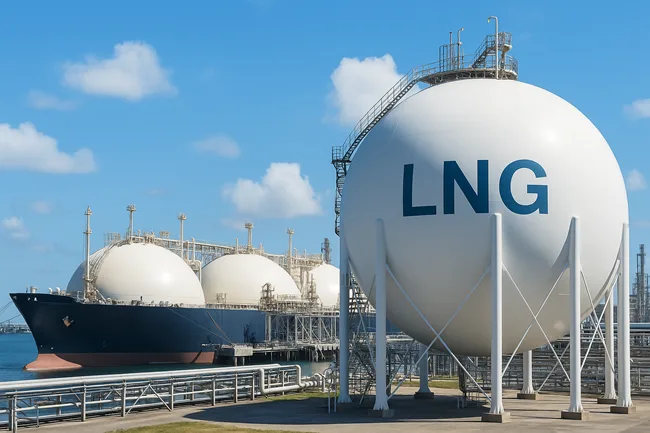




Artificial intelligence is rewriting the rules of energy demand. As AI workloads multiply, data centers are emerging as some of the most power-hungry assets in the modern economy. This surge is colliding with global climate goals and creating a paradox that investors, policymakers, and communities cannot ignore. The recent acquisition of the Hill Top Energy Center in Pennsylvania by Blackstone Inc. (NYSE: BX) illustrates the tension. Natural gas, long pitched as a bridge to cleaner energy, is increasingly being rebranded as a critical enabler of AI’s growth. The question now is whether this bridge fuel is becoming a permanent crutch in the digital era.
Why is artificial intelligence forcing a fundamental rethink of power infrastructure?
The acceleration of artificial intelligence applications has shifted electricity demand curves in a way that many utilities did not anticipate. Data centers running generative AI models consume far more power than conventional cloud facilities, and forecasts suggest that demand from this sector could more than double by 2030. In the United States, data centers are expected to account for nearly half of all new electricity demand growth over the next five years. Regions like Texas, Virginia, and Pennsylvania, which already host dense clusters of servers and computing facilities, are grappling with revised load forecasts that far exceed earlier projections.
This wave of demand has exposed weaknesses in existing grid planning. Renewable projects such as wind and solar are scaling quickly, but they face bottlenecks in permitting, land use, and interconnection. Battery storage is improving in both cost and duration but still struggles to provide the round-the-clock reliability that large data centers require. Nuclear plants, while zero-carbon, take years if not decades to build. That leaves natural gas as the fastest and most pragmatic option for meeting near-term demand. Modern combined cycle gas turbine plants can be constructed faster than nuclear or offshore wind projects, deliver high efficiency, and operate at capacity factors above 80 percent. This explains why natural gas, once viewed as a temporary solution, is again in the spotlight.

How does the Hill Top Energy Center illustrate the paradox?
The Hill Top Energy Center, a 620-megawatt natural gas-fired combined cycle plant in Greene County, Pennsylvania, embodies the tension between climate goals and immediate reliability needs. Commissioned in 2021, it is one of the newest and most efficient plants in the United States. In September 2025, Blackstone Energy Transition Partners acquired the facility from Ardian for nearly one billion dollars, highlighting its strategic value at a moment when power-hungry AI workloads are straining the PJM grid.
Blackstone executives described Hill Top as “best in class” in terms of efficiency and availability, positioning it as a cornerstone asset for Pennsylvania’s growing role as an AI infrastructure hub. Yet this very positioning exposes the paradox. Hill Top is branded as an energy transition asset because it emits less carbon than coal plants, but it still relies on fossil fuel combustion. While it supports AI growth in the short term, its long-term role within a decarbonizing grid remains contested.
What trade-offs define the use of natural gas as a transition fuel?
Natural gas generates about 45 percent fewer carbon dioxide emissions than coal when burned, making it a cleaner fossil option. It is also relatively abundant in the United States, with Pennsylvania’s Marcellus Shale providing one of the largest gas reserves in the world. These advantages make it attractive as a transitional resource. However, methane leaks during production and transport significantly undermine its climate profile, as methane is far more potent than carbon dioxide over short time horizons.
Policymakers are under pressure to balance these competing realities. Net-zero targets for 2030 and 2050 require rapid scaling of renewables and storage, yet electricity demand is growing faster than these clean resources can be deployed. In many jurisdictions, regulators have reluctantly permitted new gas plants as a safeguard against blackouts, even while emphasizing that the plants must be built with flexibility for future fuel switching or carbon capture.
From an economic perspective, gas remains cost-competitive, particularly when compared to renewables paired with long-duration storage. Investors appreciate the stable cash flows from gas-fired plants, especially when they operate in capacity markets like PJM that reward reliability. Yet there is growing risk of stranded assets if policy or technology advances render gas uneconomic within a decade. The balance between opportunity and risk is what makes the “transition fuel” label so contested.
How widespread is the natural gas resurgence linked to AI-driven demand?
The Hill Top transaction is not an isolated event. Across the United States, utilities and investors are revisiting natural gas capacity as AI accelerates load growth. In Texas, grid operator forecasts show electricity demand rising at double-digit annual rates, driven largely by data centers. Some states are even considering new gas plants specifically dedicated to hyperscale computing facilities. In PJM, load forecasts have been revised upward by tens of gigawatts through the end of the decade, with analysts warning that renewables alone cannot cover the gap.
Industry research suggests that natural gas could meet 60 percent or more of the incremental electricity demand from data centers and AI applications by 2030, with renewables and storage covering the remainder. This projection underscores how the AI revolution is reshaping not just technology, but also the energy mix. Investors are moving capital into gas-fired infrastructure at a pace not seen in over a decade, betting that demand pressures will outweigh policy headwinds in the medium term.
Can policy and technology resolve the paradox?
Several solutions are emerging to reduce the reliance on gas without compromising grid reliability. One option is to pair new gas plants with carbon capture and storage, ensuring that emissions are reduced at the source. Another is to design plants with future fuel flexibility, such as the ability to run on hydrogen blends as clean hydrogen scales. Some data center operators are exploring innovative demand-side management strategies, such as shifting non-critical computing loads to off-peak hours or to regions with cleaner grids.
On the policy side, reforms in permitting and interconnection are urgently needed to accelerate renewable deployment. Capacity market rules may need to be updated to better reflect long-term climate goals, ensuring that low-carbon assets are not disadvantaged relative to gas. There is also a growing recognition that transmission expansion must move faster to unlock renewable-rich regions and deliver power to load centers. These measures can help reduce the extent to which gas becomes entrenched as a permanent solution.
What does the paradox mean for investors, communities, and climate targets?
For investors, natural gas power plants like Hill Top represent both a hedge and a gamble. They provide dependable cash flows in the short to medium term and play into the high-conviction theme of AI-driven power demand. At the same time, they carry significant regulatory and technological risks. Carbon pricing, methane regulations, or a sudden breakthrough in storage could erode returns.
For communities, new gas infrastructure brings construction jobs, tax revenues, and energy security, but it also raises concerns about air quality and long-term environmental impacts. Public acceptance is likely to vary depending on how well investors and operators engage with local stakeholders and implement emissions controls.
For the climate, the stakes are high. If gas continues to expand beyond its role as a bridge, it could slow the decarbonization trajectory. The paradox is that AI, which itself is being deployed to optimize renewable integration and grid operations, may inadvertently extend fossil fuel dependence in the name of powering innovation.
Is natural gas still a bridge, or is it becoming the foundation of AI infrastructure?
The Hill Top Energy Center acquisition encapsulates this broader debate. It is an efficient plant serving an urgent market need, but it also locks in fossil-based infrastructure during a period when every ton of carbon matters. The AI-power paradox is not about whether gas is cleaner than coal—it is. It is about whether the bridge is being used wisely to buy time for renewables, or whether it is becoming a permanent foundation under the weight of AI’s insatiable power appetite.
The future will depend on execution. If investors like Blackstone use gas assets as transitional platforms—equipping them with carbon capture, integrating them with renewables, and preparing for fuel switching—then natural gas can legitimately retain its “transition” label. If, however, reliance deepens without parallel investment in clean capacity, then the bridge risks turning into a dead end.
The paradox will define energy policy and investment for years to come. Artificial intelligence has changed the timeline, and natural gas has returned to center stage. Whether it remains a bridge or becomes a crutch is the question that will shape both climate outcomes and investor returns.
Discover more from Business-News-Today.com
Subscribe to get the latest posts sent to your email.