Texas de Brazil, the Brazilian-American steakhouse brand, has opened its first location in Grand Rapids at Woodland Mall, marking its third restaurant in Michigan and continuing its U.S. expansion strategy. The opening extends the company’s regional footprint into West Michigan, a market known for its rising appetite for premium dining experiences amid a national surge in experiential, mall-anchored food destinations.
Why is Texas de Brazil choosing Grand Rapids and how does it fit into its Michigan growth strategy?
Texas de Brazil already operates in Detroit and Ann Arbor, two markets with strong ties to both corporate dining and university-driven demographics. By entering Grand Rapids, the steakhouse brand is tapping into one of the Midwest’s fastest-growing mid-tier cities, where the dining scene has become more competitive as local and national operators expand into the suburban-urban crossover market.
Grand Rapids has steadily transformed from an industrial hub into a diversified city with healthcare, education, and manufacturing drivers. This population shift, coupled with increased mall foot traffic at Woodland Mall—where retail anchors such as Von Maur, Apple, and Lululemon drive steady visitor numbers—makes the location ideal for a destination restaurant offering upscale group dining.
Industry observers note that Texas de Brazil’s decision aligns with broader patterns of dining expansion. Even as some mall operators face pressures from e-commerce, high-performing malls are repositioning themselves as entertainment and culinary hubs, and churrascaria dining fits into that high-engagement model.
What makes the Texas de Brazil dining model different from traditional steakhouses in the U.S.?
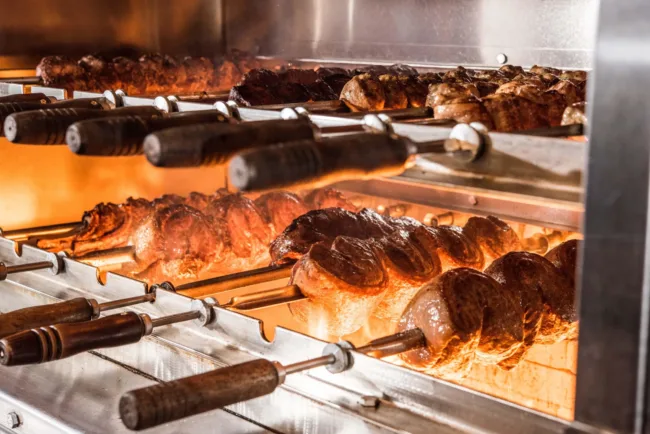
Texas de Brazil’s success is rooted in its rodizio-style service, an experience where gaucho chefs continuously circulate through the dining room, carving flame-grilled meats directly at the table. Guests can choose from an array of proteins including filet mignon, Brazilian picanha, lamb chops, and seasoned sausages.
This format creates an atmosphere of abundance and interaction, which is distinct from conventional steakhouse models such as Ruth’s Chris Steak House or Morton’s The Steakhouse, where dining is à la carte. The emphasis on experience, combined with its expansive salad bar featuring more than 50 seasonal items, appeals to diners seeking both variety and value.
Average dinner pricing at the new Grand Rapids restaurant is $56.99 per guest for the full churrasco and salad bar experience, with a $33.99 salad-only option. Tiered pricing for children enhances its family appeal, which is a crucial differentiator in mall-anchored locations where mixed groups frequent.
How does the Grand Rapids opening reflect broader U.S. consumer trends in experiential dining?
The rise of experiential dining has reshaped the U.S. restaurant industry since the pandemic, with consumers increasingly drawn to interactive formats that combine food with entertainment. Brands like Texas de Brazil are capitalizing on this by offering not just a meal but a performance—gauchos carving tableside, skewers sizzling over open flames, and curated wine pairings designed to enhance the ritual.
This trend parallels the growth of food halls, immersive dining theaters, and thematic restaurants across major cities. For malls like Woodland Mall, having an anchor tenant in the food and beverage segment strengthens foot traffic and positions the center as a community destination beyond retail shopping.
Restaurant analysts point out that concepts with higher average check sizes and group appeal, such as churrascarias, are increasingly favored by landlords seeking long-term stable tenants compared to fast-casual formats.

How has Texas de Brazil evolved from a family-owned concept into a global steakhouse chain?
Founded in 1998 in Dallas, Texas de Brazil began as a family-owned venture blending Brazilian churrasco tradition with Texas hospitality. Over the past 27 years, it has scaled into one of the world’s largest Brazilian-American steakhouse brands. The chain now operates 54 restaurants across 23 U.S. states, one in Puerto Rico, and 10 international locations spanning countries like South Korea, Saudi Arabia, and the United Arab Emirates.
Its growth strategy reflects the international appetite for churrasco dining, positioning it alongside other global operators such as Fogo de Chão. While Fogo has leaned into private equity-backed expansion and is exploring franchising pathways, Texas de Brazil has maintained a steady corporate-owned growth trajectory with selective international franchising.
What is the economic and employment impact of the Woodland Mall location?
The 7,500-square-foot Grand Rapids location is expected to generate close to 100 jobs, spanning culinary, hospitality, and management roles. At a time when restaurant labor shortages remain a sector-wide challenge, Texas de Brazil’s hiring reflects both its operational resilience and its positioning as an attractive employer in a tight labor market.
West Michigan’s hospitality sector has shown strong post-pandemic recovery, with rising demand for skilled restaurant staff. By creating opportunities in upscale dining, Texas de Brazil is contributing to regional employment diversification beyond fast food and casual dining.
How does Texas de Brazil position itself against competitors in the premium steakhouse segment?
Competition in the upscale steakhouse segment is intensifying, particularly as new players enter regional U.S. markets. Fogo de Chão, for example, has accelerated its expansion with new openings in suburban markets, while established American brands like LongHorn Steakhouse and The Capital Grille are adjusting their menus to appeal to younger diners.
Texas de Brazil distinguishes itself with a hybrid value-luxury model. At under $60 for unlimited churrasco and salad service, it undercuts many premium steakhouses on pricing while offering a more interactive dining style. This balance positions it as both aspirational and accessible, making it attractive for family gatherings, corporate events, and celebrations.
What do early market reactions and investor sentiment suggest about expansion?
Although Texas de Brazil is privately held and not publicly listed, sentiment around the brand’s expansion strategy remains positive among industry watchers. Privately owned chains in the steakhouse sector are increasingly seen as potential acquisition or IPO candidates given the strength of consumer demand and scalability.
Institutional investors tracking the hospitality sector note that concepts combining cultural authenticity with U.S. consumer adaptation, such as Brazilian churrascarias, are resilient in economic cycles. They tend to perform well during discretionary spending upturns and have lower volatility than fine-dining formats during downturns due to their family-friendly appeal.
Grand Rapids’ successful opening could strengthen the case for further Midwest expansion, particularly in second-tier markets with growing urban-suburban crossover demographics.
What should diners and industry stakeholders watch for next in Texas de Brazil’s strategy?
With more than 60 restaurants worldwide, Texas de Brazil is expected to continue expanding in both domestic suburban markets and international cities where premium experiential dining is in demand. Analysts anticipate further site announcements in secondary U.S. cities and possibly new franchise partnerships in Asia and the Middle East.
For diners, the Grand Rapids opening underscores the trend of malls becoming culinary destinations. For industry stakeholders, it highlights how cultural dining concepts are gaining traction in the American heartland, suggesting continued growth in both volume and profitability.
Discover more from Business-News-Today.com
Subscribe to get the latest posts sent to your email.