




In a quarter that showcased both exceptional headline profitability and a sobering recalibration of internal operations, TD Bank Group reported a massive CA$11.1 billion in reported net income for Q2 FY2025, boosted by the lucrative divestment of its 10.1% stake in The Charles Schwab Corporation. Yet, behind the profit surge lies a strategic pivot involving 2,000 job cuts and deep restructuring initiatives aimed at slashing annual expenses by up to CA$650 million.
The restructuring comes amid mounting regulatory obligations, rising operational costs, and a need to reposition the bank’s capital and business model toward high-return segments such as wealth management, insurance, and digitized retail banking. The contrast between the windfall-driven top line and structurally challenged core earnings marked a defining narrative of the quarter. The move also comes as Canadian banks broadly face higher compliance costs and asset quality pressures in their U.S. and domestic portfolios.
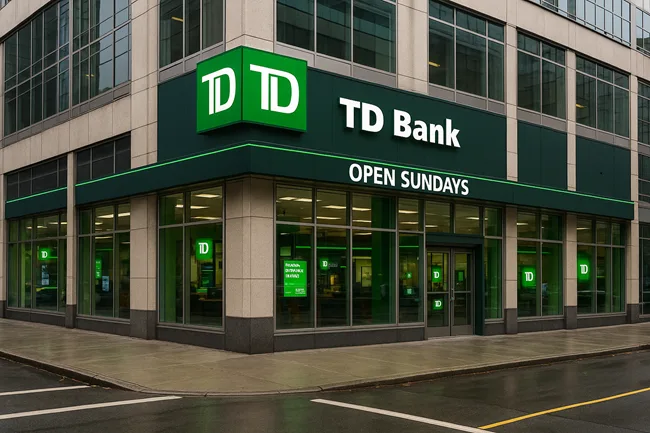
Why Did TD Bank Announce Job Cuts Despite Posting Record Profits?
TD’s Q2 2025 reported earnings included a CA$8.6 billion gain from the February sale of its entire remaining stake in Charles Schwab, resulting in an EPS spike to CA$6.27 from CA$1.35 a year earlier. However, adjusted EPS fell 3% year-over-year to CA$1.97, revealing the underlying stress points in the bank’s operating performance. Total adjusted net income declined to CA$3.63 billion from CA$3.79 billion last year.
The 2,000 job reductions—equating to approximately 2% of the bank’s global workforce—are part of a cost containment program designed to deliver CA$550–CA$650 million in pre-tax savings annually. In Q2 alone, TD incurred CA$163 million in pre-tax restructuring charges, including employee severance, real estate write-downs, and technology rationalizations. The layoffs are to be realized gradually over several quarters, combining attrition, redeployment, and targeted exits.
CEO Raymond Chun attributed the moves to a broader efficiency drive, stating the bank must “simplify how we operate to achieve greater speed and execution excellence.” Some market observers view the job cuts as a necessary recalibration given TD’s high spending on AML remediation and its shift away from lower-return U.S. portfolios.
How Is TD Bank Performing Across Core Segments?
Canadian Personal and Commercial Banking, a traditional pillar for TD, reported net income of CA$1.67 billion, down 4% year-over-year. Despite 4% loan growth and 5% deposit growth, higher credit loss provisions (CA$622 million) and technology-related costs weighed on profitability. Net interest margin for the segment held stable at 2.82%.
The Canadian division’s momentum was supported by record origination volumes in TD Auto Finance and improved cross-selling to wealth and business banking arms. The digital channel also saw a rise in activity, with MyInsurance sessions growing 54% year-over-year.
In the U.S., TD Retail Banking posted a 76% year-over-year plunge in reported net income to CA$120 million, heavily impacted by balance sheet restructuring losses and BSA/AML compliance costs. Adjusted U.S. Retail net income stood at CA$967 million, down 19% from the previous year. The segment also saw a 3% drop in loan volumes but registered double-digit growth in wealth assets. Net interest margin in the U.S. rose 14 basis points to 3.00%, aided by deposit repricing and lower liquidity buffers.
TD’s U.S. restructuring actions included the sale of CA$9 billion in correspondent loans, exit from its CA$3 billion point-of-sale financing business, and over CA$4 billion in debt repayment through asset sales and maturities. These measures contributed to a 10% reduction in U.S. assets, bringing total U.S. holdings closer to the regulator-imposed cap.
Wholesale Banking delivered strong results with CA$2.13 billion in revenue—up 10% year-over-year—driven by trading income and fee revenue from the Schwab transaction. Net income rose 16% to CA$419 million, underscoring the bank’s strength in capital markets. TD also acted as lead bookrunner on the Schwab deal, earning CA$184 million in underwriting fees.
Wealth Management and Insurance showed resilience with net income up 14% to CA$707 million, buoyed by higher fee-based income, rising insurance premiums, and CA$5.3 billion in new institutional asset inflows via TD Asset Management. Wealth AUM rose 11% year-over-year, while TD Insurance premiums climbed 10%, strengthening its leadership in the Canadian insurance market.
What Are Analysts Saying About TD Bank’s Strategic Direction?
While TD’s reported figures impressed the market, institutional sentiment remains mixed due to the decline in adjusted earnings and continued regulatory overhang. Some market watchers described the earnings quality as heavily reliant on one-time gains, emphasizing the need for clearer signals of organic growth momentum.
The Common Equity Tier 1 capital ratio climbed to 14.9%, boosted by the Schwab stake sale. However, expenses—excluding the Schwab transaction—rose 12% year-over-year, partly due to U.S. AML-related remediation investments, which are expected to cost around US$500 million in FY2025 alone.
As part of its multi-year consent agreements with FinCEN, the DOJ, and the OCC, TD is implementing enhanced transaction monitoring, AI-driven risk analytics, and upgraded data staging environments. These investments, while burdensome in the short run, aim to permanently elevate TD’s compliance framework.
Investor focus is now shifting to TD’s upcoming Investor Day on September 29, where revised financial targets and business mix strategies will be unveiled. The bank has already exited its CA$3 billion U.S. point-of-sale financing unit, sold CA$9 billion in correspondent loans, and initiated a CA$4 billion reduction in borrowings—all pointing to a tighter, ROE-focused balance sheet.
How Is TD Bank Positioning for Future Growth?
Executives signaled that the savings from restructuring will be redirected toward digital banking, wealth advisory expansion, and capabilities around AI and client analytics. The announcement of a new Layer 6 GenAI research center in New York City underscores this pivot toward technology-led financial services.
TD’s ambition to simplify its operating model and reallocate capital is also expected to benefit its mass-affluent and high-net-worth client verticals. The bank’s direct investing platform saw a 16% rise in trades per day, while TD Insurance gained market share with double-digit premium growth.
Beyond cost control, TD’s forward strategy includes further optimization of its U.S. footprint, internal automation upgrades, and a review of non-franchiseable businesses. Analysts expect further divestitures and cloud-native tech adoption in FY2026 as TD moves away from low-return, non-scalable assets.
Is TD Bank Stock a Buy Right Now?
As of May 24, 2025, TD Bank stock trades at CA$88.09 on the TSX, with a forward P/E ratio of 11.4 on adjusted earnings. The stock offers a 5% dividend yield and maintains a market capitalization of approximately CA$151.7 billion. Despite short-term margin headwinds, analysts see upside potential tied to operational leverage and redeployment of capital.
Institutional flows have been cautious but stable, with buy-side activity concentrated in Canadian pension and North American asset managers favoring defensive banking plays. However, further clarity on AML resolution timelines and the sustainability of cost savings is key to re-rating upside.
Discover more from Business-News-Today.com
Subscribe to get the latest posts sent to your email.