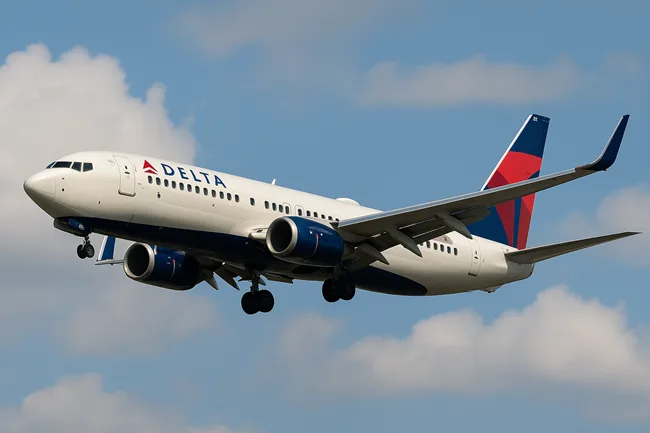




The largest U.S. railroad labor union, SMART-TD, shifted the balance of the nation’s most ambitious railroad merger on Monday, endorsing Union Pacific Corporation (NYSE: UNP) and Norfolk Southern Corporation’s (NYSE: NSC) proposed $85 billion consolidation. The union’s Transportation Division said it would support the deal after securing career-long job protections for members in train and yardmaster service. The commitment ensures that no workers in these roles will face involuntary furloughs tied to the merger, a concession that analysts suggest could reshape both the regulatory outlook and investor sentiment surrounding the transaction .
Why is SMART-TD’s endorsement of the Union Pacific–Norfolk Southern merger a turning point for U.S. rail labor?
Labor unions have historically wielded significant influence in railroad consolidation, where fears of job losses, reduced safety, and eroded service quality often clash with Wall Street’s enthusiasm for synergies. SMART-TD, representing tens of thousands of train crew and yardmaster employees, had previously opposed the merger citing risks to employment stability. Its endorsement signals not only labor buy-in but also a potential easing of one of the largest regulatory hurdles before the Surface Transportation Board (STB).
The agreement includes preferential rehiring policies for terminal staff impacted by restructuring, alongside a pledge from Union Pacific to collaborate with the union on how the merger is implemented. Industry observers note that lifetime job guarantees are unprecedented in modern freight rail mergers, making this deal distinct from earlier consolidations.
How does the $85 billion Union Pacific–Norfolk Southern deal compare with past rail mergers like Canadian Pacific–Kansas City Southern?
The U.S. rail industry has seen waves of consolidation since deregulation under the 1980 Staggers Rail Act. Mega-mergers in the 1990s, such as Burlington Northern with Santa Fe, transformed the competitive landscape. More recently, Canadian Pacific Railway’s $31 billion acquisition of Kansas City Southern in 2021 created the first rail line spanning Canada, the U.S., and Mexico.
Unlike that transaction, which was pitched as a trade-driven supply chain enabler, the Union Pacific–Norfolk Southern deal is primarily domestic in scope, aimed at building the first coast-to-coast freight carrier. Valued at $85 billion, it is nearly triple the size of CP-KCS and represents the largest rail merger in U.S. history.
In contrast to CSX’s 2021 acquisition of Pan Am Railways in New England—a smaller regional deal that attracted intense scrutiny over local competition—the Union Pacific–Norfolk Southern tie-up will be tested at a national level, raising broader questions about market dominance. SMART-TD’s support could insulate the deal from the kind of protracted labor disputes that delayed CSX’s approval.
What financial synergies and strategic advantages are Union Pacific and Norfolk Southern projecting?
Management teams at both companies have estimated annual synergies of approximately $2.75 billion, primarily through network efficiencies, reduced overhead, and expanded service offerings. By linking Union Pacific’s western footprint with Norfolk Southern’s eastern stronghold, the merged entity could rival BNSF Railway, owned by Berkshire Hathaway, as a national freight leader.
For shippers, the promise is fewer interchanges, faster coast-to-coast transit, and simplified logistics contracts. However, critics argue that consolidation could reduce competition in key corridors, potentially raising shipping rates for industries dependent on rail transport.
How are Union Pacific (NYSE: UNP) and Norfolk Southern (NYSE: NSC) stocks reacting to the merger and labor deal?
Union Pacific shares traded higher in early September after the announcement of job protection guarantees, climbing more than 2% in intraday sessions as institutional investors interpreted the development as reducing regulatory risk. Norfolk Southern shares showed a similar uptick, with analysts revising target prices upward by 3–5% on expectations that STB approval odds had improved.
Institutional flow data shows net buying by pension funds and infrastructure-focused ETFs, signaling a tilt toward “hold-to-accumulate” strategies. Foreign institutional investors (FIIs) have been cautiously adding exposure, while domestic institutional investors (DIIs) in the U.S. remain more selective, awaiting STB clarity.
Buy-side sentiment is leaning cautiously bullish. Sell-side brokerages have issued a mix of “buy” and “hold” calls, with very few outright “sell” recommendations, reflecting confidence in the merger’s long-term revenue upside but concern about near-term integration costs.
Could safety and service risks derail the regulatory approval process despite union support?
Safety remains a flashpoint. Critics cite Norfolk Southern’s high-profile derailments, most notably the East Palestine, Ohio incident in 2023, as evidence that larger systems do not always equate to safer operations. Regulators are expected to weigh whether consolidation might stretch maintenance and oversight resources.
Service reliability also looms large. Past rail consolidations, including Union Pacific’s 1996 takeover of Southern Pacific, were marred by operational snarls and congestion. The STB will likely demand guarantees that service disruptions will be minimized. SMART-TD’s endorsement removes one objection but does not resolve these broader systemic risks.
What does this labor deal signal about the balance of power between unions and railroads?
The promise of lifetime job protections could set a precedent for future rail negotiations. Unlike typical mergers where labor is forced to accept limited concessions, this deal reflects a proactive attempt by management to neutralize labor opposition ahead of regulatory review.
Analysts suggest this outcome reflects a broader shift in corporate-labor dynamics in the U.S., where companies across sectors—from airlines to automakers—are recognizing that labor opposition can derail billion-dollar strategies. By offering guarantees upfront, Union Pacific may have traded short-term flexibility for long-term labor peace.
What are the forward-looking implications for the U.S. rail industry and investors?
If approved, the Union Pacific–Norfolk Southern merger would create a coast-to-coast behemoth with revenues exceeding $50 billion annually, rivaling Class I peers BNSF and Canadian National. Analysts expect this could trigger a new wave of merger speculation among remaining Class I carriers, including CSX and Canadian National.
For investors, the merger offers both opportunity and risk. The upside lies in synergies and a stronger national network. The risks include integration complexity, regulatory conditions that could dilute benefits, and possible political pushback from states concerned about freight competition.
The broader transportation sector will watch closely, as success here could inspire similar consolidation in trucking and logistics. With freight volumes fluctuating and supply chains adapting to post-pandemic realignments, scale has become a strategic weapon.
What are the biggest lessons and unresolved questions from the $85 billion Union Pacific–Norfolk Southern merger?
SMART-TD’s endorsement transforms the narrative of the $85 billion Union Pacific–Norfolk Southern merger. What began as a controversial, labor-resisted proposal now looks more feasible, with unions and management presenting a rare united front. The STB still holds the final word, and regulators will be keenly attuned to issues of safety, service quality, and competition.
For Wall Street, the equation is shifting toward cautious optimism. With institutional inflows strengthening and labor headwinds reduced, the path to approval appears smoother, though not guaranteed. For Main Street, the stakes remain high—whether the nation’s largest coast-to-coast rail carrier can deliver on promises of efficiency without sacrificing safety or competition will define the next era of U.S. freight rail.
Discover more from Business-News-Today.com
Subscribe to get the latest posts sent to your email.