SK hynix Inc. (KRX: 000660) has officially become the first company to complete Intel Corporation’s Data Center Certified process for its 256GB DDR5 Registered Dual In-Line Memory Module (RDIMM), built on advanced 32Gb fifth-generation 10nm-class (1b) DRAM dies. The validation secures full compatibility with the Intel Xeon 6 processor platform and positions SK hynix at the forefront of high-capacity memory innovation for AI-era server workloads.
This certification is strategically significant not just for SK hynix’s DRAM product roadmap, but for the broader server infrastructure market, which is now under pressure to scale performance and reduce power consumption amid explosive growth in AI inference demands. The shift toward larger, faster memory modules is not just about capacity—it is increasingly about systemic efficiency, inference acceleration, and data throughput per watt.
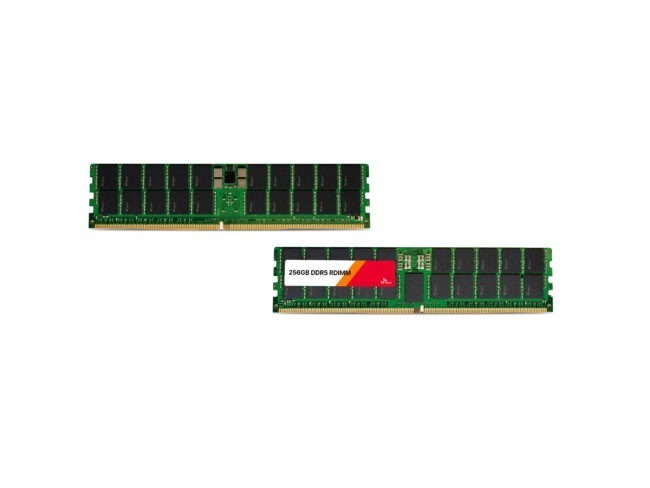
How does SK hynix’s 256GB 32Gb-based DDR5 module change the server memory landscape for AI infrastructure?
SK hynix’s announcement signals a maturation point in the race to supply high-capacity memory solutions that are optimized for AI-centric data center operations. By moving to a 32Gb die architecture, SK hynix not only doubles the per-die capacity compared to its 16Gb predecessors but also significantly improves performance-per-watt metrics. The new 256GB module reportedly consumes 18 percent less power compared to prior-generation 256GB RDIMMs built on 16Gb 1a DRAM dies.
Crucially, SK hynix’s RDIMM achieves this while delivering up to 16 percent higher inference performance over 128GB modules of the same die class. That delta matters in inference-heavy environments where response latency and data pipe saturation can make or break user-facing applications and internal model performance.
Intel’s formal validation of this module as part of its Data Center Certified program reflects joint alignment around server performance roadmaps. Intel’s Advanced Data Center Development Laboratory subjected the memory module to compatibility and reliability testing, thereby opening the door for large-scale deployment across hyperscaler, enterprise, and public sector server configurations using Intel Xeon 6 CPUs.
Why memory density and power efficiency are now top priorities in AI data center architecture
Memory was once the silent partner of CPUs and GPUs. That equation has shifted decisively in the era of generative AI and large language models. As inference operations become more compute and memory intensive, especially with growing token windows and model branching logic, system bottlenecks are often linked not to GPU performance but to memory bandwidth and availability.
What SK hynix has done with its 32Gb die-based 256GB RDIMM is directly address those chokepoints. This is not just about scaling DRAM density for the sake of packing more memory onto motherboards. It is about enabling entirely new workloads such as agentic AI, real-time document retrieval, multi-modal fusion, and longer sequence processing, without creating thermal, latency, or power overhead that cancels out the benefits.
The architectural shift also supports server-level consolidation. With 256GB modules, data centers can reduce the total number of DIMM slots populated for a given memory capacity target. This allows for simplified system design, improved airflow, and fewer overall failure points.
What competitive signal does this send to peers in the DDR5 and AI server memory market?
For competitors such as Micron Technology, Inc. and Samsung Electronics Co., Ltd., the bar has now been raised for high-capacity DDR5 memory solutions that meet both AI-era performance and power targets.
Micron Technology, Inc. and Samsung Electronics Co., Ltd. have made aggressive moves in high-bandwidth memory (HBM3) and low-power double data rate 5X (LPDDR5X), but validation on DDR5 RDIMM at the 256GB capacity level has proven more complex. Server customers want consistency, compatibility, and tight integration with CPUs. Intel’s stamp of approval gives SK hynix a substantial credibility advantage, particularly in memory-sensitive verticals like financial analytics, synthetic biology, and government-scale language model operations.
Moreover, this signals SK hynix’s readiness to move from component vendor to platform enabler—a shift the company has been telegraphing through its “full-stack AI memory creator” strategy. Unlike previous generations where DRAM innovation remained behind the scenes, today’s hyperscaler procurement teams evaluate memory performance on par with CPU and accelerator choices.
What execution risks and market timing factors could shape adoption?
Despite the validation milestone, real-world deployment depends on several factors. First, OEM and ODM integration timelines will dictate how quickly server manufacturers can bring 256GB DDR5 RDIMM-enabled systems to market. Delays in motherboard qualification or BIOS-level memory mapping could push volume adoption into late 2026 or beyond.
Second, while the power efficiency claims are notable, actual performance-per-watt gains in customer workloads will need to be independently verified. If those deltas do not translate to measurable TCO improvements, especially at scale, adoption may be limited to specific use cases or customers with specialized memory constraints.
Finally, competition from custom memory stacks, particularly high-bandwidth memory (HBM) modules used alongside AI accelerators, could reduce the total addressable market for high-density DDR5 in AI inference settings. However, for many workloads where HBM is overkill or cost-prohibitive, 256GB DDR5 RDIMMs offer a practical, plug-and-play upgrade path.
What this means for SK hynix’s position in the memory supply chain and investor sentiment
From a supply chain standpoint, SK hynix is leaning into vertical memory integration just as AI infrastructure buyers are rewriting their hardware procurement strategies. The company is now positioned to be more than just a DRAM supplier. It can act as a strategic partner to hyperscalers, OEMs, and chipmakers as they look to architect next-generation data centers around AI workloads.
Investor sentiment around SK hynix has been generally positive in the second half of 2025, bolstered by HBM3E shipments and tight DRAM supply in some markets. The Intel validation adds another layer of defensibility to the company’s AI narrative, even as NAND and legacy DRAM segments remain cyclical.
While stock price movements may not immediately reflect this development, the longer-term signal to institutional investors is that SK hynix is not merely reacting to AI infrastructure demand—it is shaping the ecosystem through upstream innovation and cross-platform alignment.
What are the key takeaways from SK hynix’s 256GB DDR5 RDIMM validation for Intel Xeon 6?
- SK hynix became the first company to complete Intel Data Center Certified validation for 256GB DDR5 RDIMM using 32Gb 1b DRAM dies.
- The module delivers up to 16% better inference performance and 18% lower power consumption compared to legacy 256GB products.
- This aligns SK hynix closely with Intel Xeon 6 adoption cycles and hyperscaler memory upgrade planning.
- Validation signals growing importance of memory performance per watt in AI inference infrastructure.
- Competing memory vendors face pressure to bring similarly validated high-density DDR5 modules to market quickly.
- Adoption risk depends on OEM integration timelines and whether performance claims translate into real-world cost savings.
- SK hynix’s full-stack AI memory strategy is increasingly positioning it as a platform enabler, not just a component supplier.
- Investor sentiment may be buoyed by continued evidence of AI-driven memory demand and strategic partnerships.
Discover more from Business-News-Today.com
Subscribe to get the latest posts sent to your email.