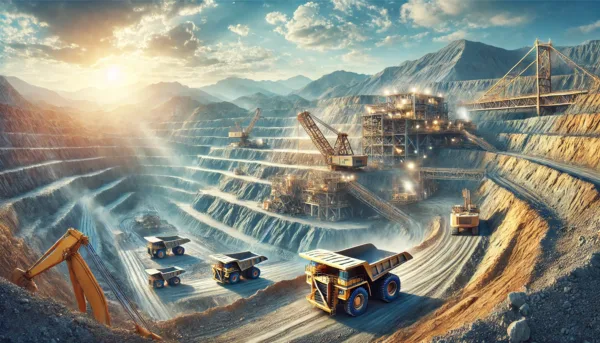




Silicon Metals Corp., trading on the OTC Markets under the symbol SLCNF, has entered into a definitive share purchase agreement to acquire full ownership of the Crystal Hills Project, a high-purity quartzite property located in Clarkson Township, Ontario. The transaction positions the company to deepen its exposure to the high-purity silica market at a time when industrial demand is being reshaped by solar glass, advanced manufacturing, and specialty materials. Under the terms of the agreement, Silicon Metals Corp. will issue two million common shares at a deemed price of approximately US$0.065 per share and make a cash payment of US$85,000 to the vendors. Upon completion, the company’s fully diluted share count is expected to approach just under 50 million shares, underscoring a modest but meaningful equity impact for a strategic asset addition.
The Crystal Hills Project spans roughly 400 hectares across five mineral claims comprising eighteen cells. The property is characterized by surface-expressed crystalline quartzite that forms pronounced topographic hills with an estimated three kilometers of strike length. Historical sampling has indicated silica grades exceeding 98 percent silicon dioxide, placing the project within the high-purity category sought by industries that require tight chemical specifications. The site also benefits from favorable logistics, including year-round road access, nearby rail infrastructure, and proximity to a regional highway, which together reduce the infrastructure burden typically faced by early-stage industrial minerals projects.
Management has framed the acquisition as a strategic extension of Silicon Metals Corp.’s growing portfolio of silica-focused assets across Ontario and British Columbia. The company already controls the fully permitted Maple-Birch Project near Sudbury along with several exploration-stage silica projects in western Canada. The addition of Crystal Hills not only broadens geographic diversification but also strengthens the company’s exposure to high-purity quartzite rather than lower-grade industrial sand, a distinction that could prove important as global buyers increasingly prioritize quality and traceability in supply chains.
Why the crystal hills quartzite geology stands out among high-purity silica prospects in Ontario and Canada
The geological profile of the Crystal Hills Project gives it distinctive technical appeal within the Canadian silica landscape. Unlike many buried or partially covered silica occurrences, the quartzite formations at Crystal Hills are widely exposed at surface and expressed as elongate ridges. This surface expression is more than a cartographic curiosity; it allows for efficient early-stage exploration through mapping, channel sampling, and shallow trenching without the immediate need for costly drilling campaigns. The reported strike length of approximately three kilometers provides scale, while the hill-forming nature of the quartzite suggests mechanical strength and continuity, characteristics often associated with commercial-grade hard-rock silica deposits.
The reported silica purity of greater than 98 percent silicon dioxide elevates Crystal Hills into a higher-value bracket of the market. High-purity silica is not interchangeable with ordinary construction sand. It is used in solar photovoltaic glass, semiconductor manufacturing, specialty optics, and advanced ceramics, all of which require strict control over iron, aluminum, and other deleterious impurities. Even small differences in chemistry can shift a deposit from commodity pricing to premium pricing. For Silicon Metals Corp., this chemical profile potentially opens access not only to domestic industrial customers but also to international buyers seeking secure, politically stable sources of high-grade material.
Logistics further enhance the project’s appeal. The presence of nearby rail and highway access in northeastern Ontario provides optionality for bulk transport, whether to domestic processing facilities or export hubs. In industrial minerals, transport economics often rival geology in determining project viability. The ability to move high-volume, low-unit-value material efficiently can define whether a project ever advances beyond the exploration stage. By contrast, high-purity silica commands higher unit pricing, allowing transportation costs to be amortized more effectively. The convergence of surface exposure, chemical quality, and infrastructure thus places Crystal Hills in a strategically favorable position relative to many early-stage silica projects in Canada.
How the acquisition structure and related-party elements shape regulatory and shareholder considerations
While the geological narrative is compelling, the transaction structure introduces a layer of corporate governance complexity that investors will be watching closely. The acquisition has been classified as a related-party transaction under applicable Canadian securities regulations because one of the vendors also serves as a director of Silicon Metals Corp. Such transactions require heightened scrutiny to ensure fair dealing and the protection of minority shareholders. To address this, the company has relied on available regulatory exemptions tied to the size of the transaction relative to its market capitalization, and the interested director did not participate in the board’s deliberations or approval vote.
The two million shares issued as consideration will be subject to a staged resale restriction over a twenty-four-month period. This restriction limits the immediate liquidity impact of the new equity and helps mitigate the risk of short-term selling pressure following completion. However, it also means that a portion of the shareholder base will effectively be locked in for an extended period, aligning their financial outcomes with the longer-term success of the Crystal Hills Project. For existing shareholders, this structure reduces near-term dilution risk from secondary market selling but incrementally increases the outstanding share count.
Final closing remains subject to approval by the Canadian Securities Exchange and the satisfaction of customary closing conditions. Until regulatory clearance is formally received, the acquisition remains conditional. This introduces modest execution risk, particularly in the context of related-party review processes. For Silicon Metals Corp., successfully navigating this stage will reinforce management’s credibility in handling governance-sensitive transactions, an increasingly important factor for institutional and semi-institutional investors evaluating micro- and small-cap resource companies.
How crystal hills fits into Silicon Metals Corp.’s multi-project silica strategy and industrial demand trends
The Crystal Hills acquisition must be viewed within the broader strategic framework Silicon Metals Corp. has been assembling over the past several years. The company has steadily evolved from a single-asset junior into a diversified silica-focused developer with projects at varying stages of maturity. The Maple-Birch Project near Sudbury offers a permitted pathway toward earlier development, while exploration-stage properties in British Columbia and now northeastern Ontario provide longer-term growth optionality. By distributing project risk across jurisdictions and geological settings, the company reduces its dependence on the success of any single asset.
Market dynamics are increasingly supportive of such a portfolio strategy. High-purity silica is experiencing structurally rising demand driven by the global expansion of solar energy, the electrification of transport, and the digitalization of industrial systems. Solar glass alone represents one of the fastest-growing end markets for high-purity silica, as photovoltaic installations scale across North America, Europe, and Asia. At the same time, geopolitical tensions and supply-chain disruptions have amplified buyer interest in secure, transparent sources of critical industrial inputs. Canada, with its established mining ecosystem and regulatory framework, is positioned as a preferred supplier for many downstream manufacturers.
For Silicon Metals Corp., Crystal Hills provides geological diversity within the high-purity segment. Quartzite-hosted silica deposits tend to differ from unconsolidated sand deposits in mining method, processing requirements, and impurity profiles. This diversity could prove advantageous if customer demand shifts toward specific feedstock characteristics for specialized applications. It also enhances the company’s potential negotiating position in future offtake or joint venture discussions by offering multiple supply options under a single corporate umbrella.
What recent trading trends and sentiment indicate about investor expectations for the acquisition
Investor sentiment surrounding Silicon Metals Corp. has remained cautiously constructive in recent months, reflecting the typical risk-reward calculus applied to early-stage industrial minerals developers. Trading activity in SLCNF remains relatively thin, consistent with its OTC-listed status, but periodic volume increases have coincided with corporate milestones such as warrant lock-ups, project updates, and now the Crystal Hills acquisition. The company’s earlier decision to implement a voluntary full lock-up on over eight million outstanding warrants was interpreted by some market observers as a signal of internal confidence and alignment between management and long-term shareholders.
From a valuation perspective, Silicon Metals Corp. continues to trade in micro-cap territory, implying that equity markets are still heavily discounting both execution risk and development timelines. The Crystal Hills transaction introduces a tangible, near-term catalyst that could begin to shift that perception if follow-up exploration confirms scale and consistency. However, markets have not yet priced in a full development trajectory, reflecting the capital intensity, permitting pathways, and processing requirements that remain ahead.
Sentiment analysis among retail and small-cap resource investors suggests guarded optimism rather than exuberance. The high-purity silica narrative resonates with thematic investors focused on renewable energy supply chains and advanced manufacturing inputs, but these same investors are mindful of the long lead times typical for industrial minerals projects. The related-party nature of the acquisition also tempers near-term enthusiasm, even as the staged share resale restrictions provide some reassurance regarding dilution discipline.
What operational milestones and strategic catalysts could drive value at Crystal Hills over the next development phases
The immediate next phase for the Crystal Hills Project is expected to focus on systematic surface exploration designed to validate historical sampling results and define consistent high-purity zones across the strike length. Detailed geological mapping, expanded channel sampling, and preliminary metallurgical testing are likely to precede any drilling program. For hard-rock silica projects, early metallurgical work is particularly important because physical properties such as crush strength, grain size distribution, and impurity liberation characteristics directly influence processing economics.
If early results confirm lateral continuity of high-purity quartzite, the project could progress toward a maiden mineral resource estimate, a milestone that typically represents the first formal valuation inflection point for industrial minerals assets. Such an estimate would provide quantitative volume and grade benchmarks that downstream customers and potential strategic partners require for due diligence. At that stage, discussions around offtake agreements, toll-processing options, or joint venture development could begin to crystallize.
Beyond technical work, corporate catalysts may also influence valuation. These include regulatory approvals for transaction closing, potential non-dilutive funding arrangements, and broader policy developments linked to clean energy supply chains. Canadian and North American industrial policy continues to emphasize supply security for critical inputs tied to renewable energy and advanced manufacturing. While high-purity silica is not always classified alongside traditional critical minerals, its functional role in solar and semiconductor supply chains positions it indirectly within the same strategic framework.
Over the medium term, the key determinant of Crystal Hills’ contribution to shareholder value will be the company’s ability to translate geological promise into commercially viable tonnage supported by infrastructure and customer alignment. The presence of nearby road and rail is a structural advantage, but processing routes, product specification, and long-term customer demand will ultimately decide whether the project advances into development. For Silicon Metals Corp., disciplined capital allocation across its multi-project portfolio will remain central to sustaining investor confidence as exploration spending accelerates.
Discover more from Business-News-Today.com
Subscribe to get the latest posts sent to your email.