



Why is Siemens Energy expanding its Nuremberg factory with a €220 million investment in transformers?
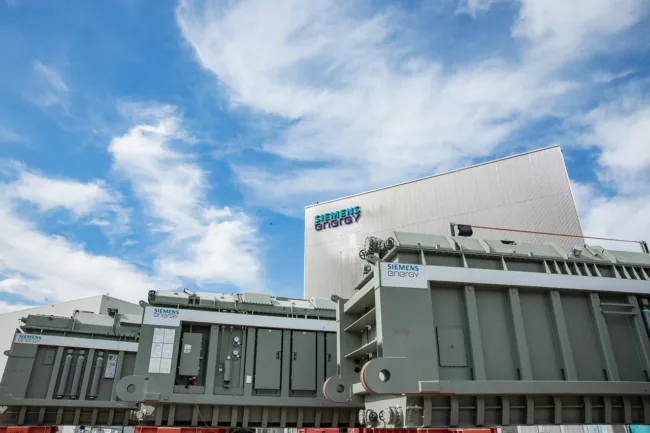
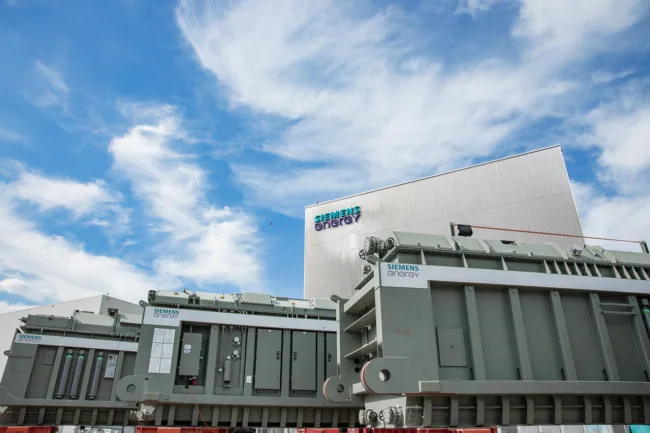
Siemens Energy AG (ETR: ENR), one of Europe’s most closely watched energy infrastructure companies, is committing €220 million to expand its transformer factory in Nuremberg, Germany. The decision, framed as a response to surging global demand for large-scale transformers, comes with a promise of 350 new jobs, a 50 percent boost in production capacity, and a tangible bet on Europe’s ability to retain manufacturing competitiveness in a strategically sensitive sector.
The Nuremberg plant, which has been in operation since 1912, already employs nearly 1,000 people. With this expansion, it will add approximately 16,000 square meters of new floor space, keeping operations running throughout construction. New production areas are expected to come online by 2028. The Free State of Bavaria will contribute up to €20 million in research and development funding to support the project. For local leaders such as Bavarian Minister President Dr. Markus Söder, the plant represents more than a factory — it represents an anchor for Germany’s industrial identity in the age of the energy transition.
Why are transformers so critical to the energy transition and grid resilience worldwide?
Transformers, often overlooked compared to wind turbines or solar panels, are the backbone of global electricity transmission. They sit at virtually every node of a power system, stepping voltage up for long-distance transmission or stepping it down for distribution to homes, businesses, and increasingly, electric vehicle charging corridors. Without transformers, offshore wind farms remain isolated, cross-border energy trade cannot function, and grids buckle under the strain of renewable intermittency.
Siemens Energy’s Nuremberg facility has long supplied transformers used in critical projects around the world. These include interconnectors between European countries, stabilization systems for Asian power grids, and components supporting offshore wind farm integration. In short, the company is not just producing equipment; it is manufacturing strategic assets for global energy security.
The timing is telling. With electrification surging and data centers consuming vast amounts of energy, demand for robust grid hardware is accelerating. According to the International Energy Agency, transformer demand is forecast to grow at nearly double the pace of global GDP through 2030. Siemens Energy’s expansion is both a recognition of this reality and an attempt to ensure supply chain resilience in Europe.
How does this investment fit into Germany’s industrial and political landscape?
Germany’s manufacturing sector has been under pressure to prove it can remain globally competitive as supply chains fragment and industrial policies in the U.S., China, and India tilt toward protectionism. Against this backdrop, Siemens Energy’s decision to keep investing in Nuremberg is a signal of confidence in local infrastructure, skills, and political backing.
The Free State of Bavaria’s €20 million contribution underscores how regional governments are aligning with private industry to preserve industrial sovereignty. Political leaders see transformers and converters as enabling technologies for the energy transition, comparable in strategic importance to semiconductors.
The expansion also builds on Siemens Energy’s wider commitments in Germany. Over the past three years, the company has invested close to €1 billion across the country, including a €90 million investment in a converter facility in Nuremberg in 2024. In the same period, Siemens Energy created 1,300 jobs in Germany, with up to 1,500 more expected by the end of 2026.
What does investor sentiment around Siemens Energy stock suggest about the expansion?
Shares of Siemens Energy AG (ETR: ENR) have been closely watched by institutional investors after a turbulent two years marked by profitability concerns in its wind division. Despite those challenges, the company’s grid technology and transmission segment has been viewed as a stabilizing force in its portfolio.
Investor sentiment following the Nuremberg expansion announcement leaned cautiously positive. Analysts framed the move as a long-term capacity play, designed to secure Siemens Energy’s positioning in a high-demand, high-margin sector. While not immediately accretive to earnings, the expansion reassures markets that the company is doubling down on segments insulated from renewable project volatility.
Market watchers also noted a shift in institutional flows. European utilities and infrastructure-focused funds appear to be building exposure to Siemens Energy, while foreign institutional investors (FIIs) have remained selective, balancing the company’s grid upside against risks from its offshore wind portfolio. Domestic institutional investors (DIIs), particularly German pension funds, have been more consistent buyers, seeing the stock as a long-term energy transition proxy.
As of early September 2025, Siemens Energy stock trades around €23, recovering from lows below €15 in late 2023. The expansion has been described by analysts as a “hold-plus” catalyst: supportive for valuation but unlikely to deliver immediate share price spikes until capacity actually scales in 2028.
How does the Nuremberg expansion reflect Siemens Energy’s global strategy?
Siemens Energy is not betting on Germany alone. Earlier this year, the company confirmed plans to begin producing large power transformers in Charlotte, North Carolina, by 2027 — a move designed to tap into U.S. infrastructure subsidies and reduce reliance on imports.
This dual-track approach reflects the fragmented geopolitics of grid equipment. The U.S. Department of Energy has identified transformer bottlenecks as a national security issue, while India is aggressively incentivizing domestic manufacturers. China, meanwhile, controls much of the global supply of electrical steel, a critical input for transformers.
Against this backdrop, Siemens Energy’s decision to keep investing in Nuremberg is as much about hedging geopolitical risk as it is about meeting raw demand. Having production bases in both Europe and the U.S. ensures the company can supply major markets even if trade tensions intensify.
What challenges could slow Siemens Energy’s Nuremberg expansion?
The expansion is ambitious, but not without risks.
Material supply remains a key bottleneck. Transformers rely heavily on specialized copper, electrical steel, and insulating oils. Global shortages, price volatility, or trade disruptions could complicate Siemens Energy’s build-out. Labor is another challenge. Recruiting and training 350 additional skilled employees in Germany’s tightening labor market will require strong partnerships with local technical universities and vocational schools.
Regulatory compliance and environmental permitting could also slow progress. Large industrial expansions in Germany face intense scrutiny under EU climate and environmental rules. Meeting 2028 operational targets will require seamless coordination between Siemens Energy, Bavarian authorities, and community stakeholders.
Finally, technology itself is evolving. As digitalization spreads across the power sector, demand is rising for “smart transformers” equipped with real-time monitoring and predictive maintenance capabilities. Ensuring that Nuremberg’s new lines can adapt to these trends will determine whether Siemens Energy retains its technological edge.
How does this expansion shape the future outlook for Siemens Energy and Europe’s grid?
Looking ahead, the Nuremberg expansion positions Siemens Energy to capture long-term growth in global transmission infrastructure. Analysts expect grid upgrades and renewable integration projects to dominate capital spending by utilities over the next decade. By boosting capacity in Nuremberg, Siemens Energy strengthens its bid to be the supplier of choice for these high-value projects.
For Europe, the expansion is a reminder that the energy transition depends on more than ambitious policy targets. It requires hard infrastructure, skilled labor, and industrial capacity. Nuremberg’s factory, with over a century of history, is being retooled to anchor Europe’s contribution to the global grid race.
For investors, Siemens Energy remains a complex story: wind turbine challenges weigh on earnings, but grid technology provides stability and long-term upside. Many analysts continue to rate the stock as a hold with selective buy opportunities on weakness, viewing the Nuremberg expansion as an insurance policy against global supply chain shocks.
As the foundation stone laid in 2025 gives way to new production floors by 2028, Siemens Energy’s Bavarian bet will stand as both a test of Germany’s industrial resilience and a marker of how central transformers have become to the global energy transition.
Discover more from Business-News-Today.com
Subscribe to get the latest posts sent to your email.