Shell plc reported adjusted earnings of $3.3 billion and cash flow from operations (CFFO) of $9.4 billion in the fourth quarter of 2025, bolstered by strong performance in its upstream and integrated gas segments. The company announced a 4 percent increase in its dividend to $0.372 per share and launched a new $3.5 billion share buyback program. This marks the seventeenth consecutive quarter of repurchases exceeding $3 billion, reflecting Shell plc’s continued commitment to shareholder returns despite the challenging commodity environment and underperformance in downstream chemicals.
On a full-year basis, Shell generated adjusted earnings of $18.5 billion and free cash flow of $26.1 billion. While these figures were lower than the previous year’s totals of $23.7 billion and $39.5 billion respectively, the company maintained a disciplined capital allocation framework, delivering shareholder distributions of over $22 billion, equivalent to 52 percent of CFFO. The company’s balance sheet remained robust with net debt of $45.7 billion and gearing at 20.7 percent, well within Shell’s investment-grade target range.
How Shell’s upstream and integrated gas businesses are powering financial stability in a softer macro
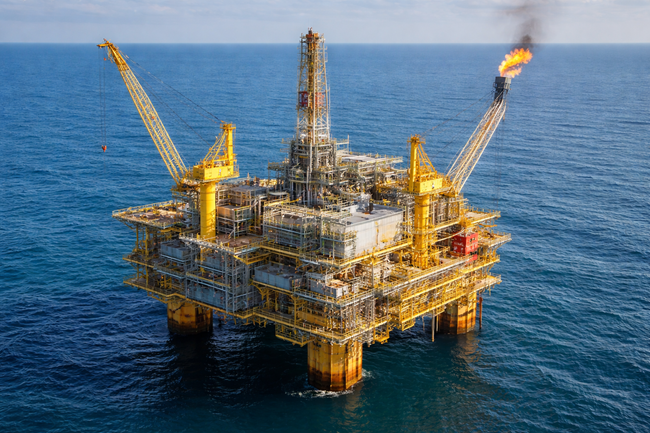
Shell’s upstream division delivered $7.4 billion in adjusted earnings and $19.6 billion in CFFO for the year, supported by increased production volumes in high-margin regions such as the Gulf of Mexico and Brazil. Controllable availability across these assets was cited as a key operational lever, with new start-ups like Mero-4 and Whale beginning to contribute volumes. Integrated gas earnings totaled $8 billion for the full year, with $14.1 billion in associated CFFO. The segment’s adjusted EBITDA reached $17 billion despite softer average LNG pricing.
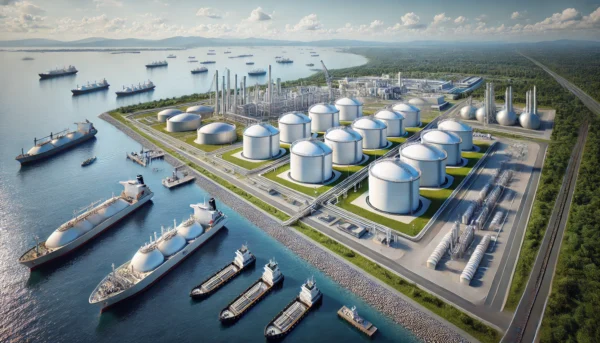
Chief Executive Officer Wael Sawan emphasized that integrated gas and upstream remain the anchors of Shell’s capital return strategy, particularly as downstream and renewables performance fluctuates. Shell’s liquefied natural gas (LNG) sales rose 11 percent in 2025, exceeding its long-term 4 to 5 percent growth ambition and setting a record for cargo deliveries in a single year. The ramp-up of LNG Canada played a central role in this expansion, while the acquisition of Pavilion Energy deepened Shell’s commercial portfolio in Asia and the Atlantic basin.
This operational momentum in integrated gas and upstream allowed Shell to navigate through a lower Brent crude price environment, which averaged $69 per barrel in 2025, down from $81 in 2024. The Henry Hub and European TTF benchmarks, in contrast, posted modest gains year over year, creating a more favorable environment for Shell’s LNG-linked contracts.
What’s dragging on downstream performance and how Shell is repositioning the chemicals business
Shell’s downstream operations, particularly its chemicals and products business, continued to face headwinds in 2025. The chemicals segment delivered just $1.1 billion in adjusted earnings for the year, a steep decline from $2.9 billion in 2024. Fourth quarter performance was negative, weighed down by persistently low chemical margins, seasonally weaker demand, and reduced trading contributions. Utilization at chemical manufacturing sites dropped to 76 percent in Q4, while indicative chemical margins narrowed to $140 per ton.
The company responded with decisive structural changes. Shell exited its Singapore refining and petrochemical operations and halted construction of the HEFA biofuels plant in Rotterdam. Chief Financial Officer Sinead Gorman confirmed that repositioning the chemicals portfolio will remain a top strategic priority in 2026. The focus now lies in fixing underperforming assets, divesting non-core sites, and aligning the segment with Shell’s overarching value-driven approach.
In the broader downstream space, marketing earnings also declined, falling to $0.6 billion in Q4 2025 from $1.3 billion in Q3. Non-cash deferred tax adjustments in joint ventures and seasonally lower volumes impacted the results. Shell took steps to high-grade its mobility portfolio by divesting or closing 800 lower-performing branded retail stations globally. However, the company reported that both its mobility and lubricants businesses posted their best-ever financial results in 2025, driven by increased sales of premium products and tighter cost control.
How Shell’s portfolio strategy is shifting toward high-return, low-carbon assets
Throughout 2025, Shell undertook a series of bold portfolio actions aimed at simplifying its asset base and enhancing capital returns. The most significant of these was the divestment of Shell Petroleum Development Company (SPDC) in Nigeria, concluding a long-running divestment process from its onshore oil and gas operations in the country. This move reduces financial exposure to legacy liabilities and operational risk.
In the United Kingdom, Shell completed the formation of the Adura joint venture in the North Sea, creating what is now the largest independent producer in that basin. Shell also increased its equity interest in several deep-water projects in the Gulf of Mexico, Brazil, and Nigeria. Two Final Investment Decisions were taken in 2025: the Kaikias waterflood project in the Gulf of America and the Orca project in Brazil, formerly known as Gato do Mato.
Shell’s exploration footprint expanded as well, with new acreage acquisitions in Angola, South Africa, and the Gulf of America. These additions signal the company’s continued belief in the long-term value of deep-water and conventional oil and gas, even as it concurrently advances its energy transition agenda.
In the low-carbon space, Shell continued to reshape its strategy. The company exited certain offshore wind developments, including Atlantic Shores and ScotWind, while diluting its position in the Savion solar portfolio. At the same time, it reinforced its focus on flexible power generation and trading, acquiring a combined-cycle gas turbine asset in Rhode Island, United States.
What structural cost reductions and capital discipline say about Shell’s operational maturity
Shell’s success in delivering $5.1 billion in structural cost reductions by the end of 2025—three years ahead of its Capital Markets Day 2025 target—was one of the most notable operational achievements of the year. Approximately 60 percent of the savings came from non-portfolio levers such as leaner corporate structures, supply chain efficiencies, and decision-making streamlining.
Capital expenditure for 2025 was held to $20.9 billion, placing it firmly within the guided range of $20 to $22 billion. Shell reaffirmed this range for 2026, signaling a cautious approach to reinvestment. Notably, the company has moved away from growth-for-growth’s-sake narratives and is emphasizing return on capital employed (ROACE) as the primary filter for project selection. Shareholder distributions, including dividends and buybacks, were funded without compromising balance sheet strength, highlighting the effectiveness of Shell’s cash generation engine.
The normalized free cash flow per share metric—a key target introduced at Shell’s Capital Markets Day—is also tracking well, with a stated aim of achieving over 10 percent annual growth through 2030. Shell has emphasized that delivering this growth will depend on turning around underperforming capital and continuing to enhance asset productivity across segments.
What 2026 may hold and how Shell is preparing for a higher-return portfolio future
Shell enters 2026 with momentum in its operational performance and confidence in its balance sheet flexibility. Despite the macro headwinds of lower oil prices and downstream volatility, the company’s upstream and integrated gas units continue to generate strong margins and production growth. The mix shift toward high-return assets, combined with simplification of the chemicals and power portfolios, sets the stage for a more focused energy value chain.
Shell also remains committed to its emissions targets. In 2025, the company achieved 70 percent of its goal to halve Scope 1 and 2 emissions by 2030 (from a 2016 baseline) and reached an 18 percent reduction in customer emissions intensity for oil product use, surpassing its 15 to 20 percent 2030 ambition. Routine flaring from upstream operations was eliminated by the end of the year, a milestone that aligns with both regulatory and investor expectations.
Artificial intelligence and digital transformation were also referenced by executives as emerging enablers of performance, particularly in operational efficiency and portfolio optimization. While specific details remain limited, the 2026 narrative may feature increased visibility on Shell’s AI integration efforts across business units.
Shell’s management continues to send a clear message to shareholders: the company is becoming leaner, more selective, and increasingly focused on capital discipline and energy transition-ready returns. Whether that formula delivers outperformance in a volatile commodity landscape remains to be seen, but the company’s execution in 2025 suggests the foundations are in place.
Key takeaways on what Shell plc’s Q4 2025 results signal for strategy, capital discipline, and investor returns
- Shell plc delivered adjusted earnings of $3.3 billion and cash flow from operations of $9.4 billion in the fourth quarter of 2025, underscoring the resilience of its upstream and integrated gas businesses in a lower oil price environment.
- The company increased its quarterly dividend by 4 percent to $0.372 per share and announced a $3.5 billion share buyback, extending its streak to 17 consecutive quarters of buybacks above $3 billion and reinforcing its commitment to shareholder returns.
- Full-year 2025 adjusted earnings of $18.5 billion and free cash flow of $26.1 billion were lower year on year, but Shell plc still returned more than $22 billion to shareholders, equivalent to 52 percent of cash flow from operations.
- Upstream and integrated gas remained the financial backbone of the group, with strong production in the Gulf of Mexico and Brazil and an 11 percent increase in liquefied natural gas sales driven by LNG Canada and the Pavilion Energy acquisition.
- Downstream performance continued to lag, particularly in chemicals, where weak margins and lower utilization prompted asset exits in Singapore and a renewed focus on repositioning the portfolio in 2026.
- Shell plc accelerated portfolio simplification in 2025 through major divestments, including its Nigeria onshore business and hundreds of lower-performing mobility sites, while increasing exposure to high-return deep-water projects.
- Structural cost reductions of $5.1 billion have already been achieved since 2022, meeting the lower end of Shell’s Capital Markets Day 2025 target three years early and highlighting improving operational discipline.
- Capital expenditure was tightly controlled at $20.9 billion in 2025, with the company maintaining its $20 to $22 billion annual guidance for 2026 as it prioritizes return on capital over volume growth.
- The balance sheet remains strong, with net debt of $45.7 billion and gearing of 20.7 percent, giving Shell plc flexibility to sustain dividends, fund buybacks, and selectively invest through the cycle.
- Heading into 2026, Shell plc is positioning itself as a leaner and more focused energy company, relying on upstream and liquefied natural gas cash generation to fund shareholder returns while it continues to rationalize lower-return downstream and power assets.
Discover more from Business-News-Today.com
Subscribe to get the latest posts sent to your email.