




Why did Saipem shareholders approve the Subsea7 merger and what does it mean for offshore energy?
Shareholders of Italy’s Saipem delivered their verdict on September 25, voting decisively in favor of a transformational merger with Norway’s Subsea7. The approval clears the way for the creation of Saipem7, a combined offshore energy services group that promises to reshape the competitive dynamics of subsea engineering and construction. The decision, backed by 62.15 percent of Saipem’s voting share capital, signals investor confidence in the vision of building a scaled, more resilient contractor at a time when oilfield services face cyclical swings and the challenges of the global energy transition.
The financial contours of the transaction point to significant scale. The combined group is expected to command a €43 billion order backlog, report annual revenues of about €21 billion, and generate over €2 billion in core earnings. This elevated profile immediately places Saipem7 among the largest offshore contractors globally, not just in oil and gas but also in related segments such as offshore wind, carbon capture, and decommissioning.
The share structure underscores the balance of power. Subsea7 shareholders will exchange each of their holdings for 6.688 shares in Saipem, with the new entity equally split between existing Saipem and Subsea7 investors. Before the deal closes, Subsea7 has committed to distribute a €450 million special dividend, ensuring that value is returned even as ownership transitions into the new structure.
What strategic advantages are driving Saipem and Subsea7 toward consolidation?
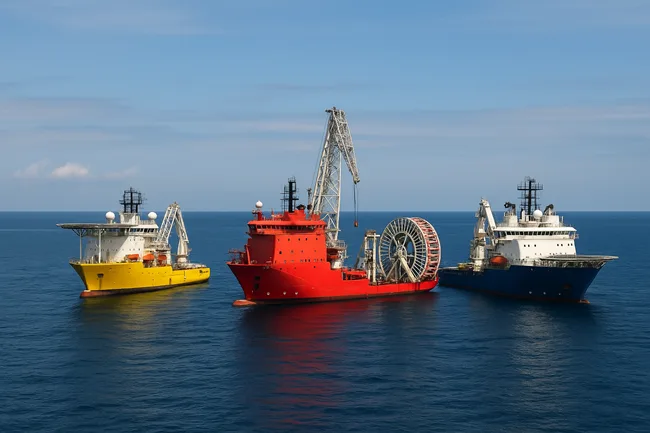
The merger reflects a strategic calculation that the offshore services industry requires consolidation to navigate volatile demand cycles. Saipem brings decades of expertise in deepwater engineering and construction, while Subsea7 is renowned for subsea installation and its dominance in the umbilicals, risers, and flowlines segment. By combining capabilities, the two firms expect to operate a fleet of over 60 specialized vessels, optimize procurement and logistics, and integrate project management functions across geographies.
Management projects that synergies could reach €300 million annually within three years. These efficiencies will come from overlapping procurement streams, reduced administrative duplication, improved vessel utilization, and more efficient deployment of engineering talent. In a sector where margins remain thin and project risks can escalate rapidly, such cost savings could make the difference between delivering sustainable returns and struggling to cover debt.
The transaction also reflects a shift in strategy from pure oil and gas servicing toward a diversified offshore portfolio. Saipem7 will be positioned not only for conventional energy projects but also to compete aggressively in offshore wind, hydrogen transport, and carbon capture infrastructure. The scale advantage will allow the company to take on complex integrated projects that smaller competitors cannot execute, providing resilience as the energy transition accelerates.
How are governments and regulators responding to the proposed merger?
Shareholder approval represents only one stage of the process. Regulatory clearance is now the central hurdle, and the early signals show that the road may be complicated. The Italian government, which retains a strong influence in Saipem through Eni’s 21.2 percent stake and the state-controlled Cassa Depositi e Prestiti’s 12.8 percent holding, gave its conditional approval earlier in September. Rome has required Saipem7 to maintain significant strategic operations on Italian soil, including its energy infrastructure engineering base and its investment in underwater drone technology. These stipulations are designed to protect national interests while still allowing the merger to proceed.
In Brazil, however, the mood is less supportive. Major oil companies including ExxonMobil, Petrobras, and TechnipFMC have formally petitioned the Brazilian antitrust regulator, Cade, to block or impose strict conditions on the merger. Their concern is that the combined entity would dominate subsea supply chains, particularly in the lucrative SURF market that underpins deepwater field development. Brazil is one of the world’s largest offshore oil provinces, and Petrobras relies heavily on external contractors for subsea installation. If competition is reduced, costs could rise and project timelines could be distorted.
These regulatory headwinds highlight the risks that could delay or alter the final structure of the merger. Jurisdictions outside Europe and South America may also open reviews, particularly given the global importance of subsea contracting. Any mandated divestitures or restrictions could dilute expected synergies and extend the timeline to full integration.
How have markets and investors reacted to Saipem’s approval of the merger?
The market’s immediate response was cautiously optimistic. Saipem’s share price climbed just over three percent after the shareholder vote, reflecting relief that investors had aligned behind the board’s recommendation. Analysts highlighted the potential for revenue stability through backlog visibility and efficiency gains, while acknowledging the significant regulatory uncertainty that still hangs over the deal.
Investor sentiment is being shaped by two competing narratives. On the bullish side, Saipem7 represents a scaled competitor that can rival TechnipFMC, McDermott, and other integrated contractors. The depth of its backlog, the breadth of its fleet, and the anticipated synergies all point to stronger financial footing. On the cautious side, skeptics argue that integration risk is high. Harmonizing different corporate cultures, standardizing vessel maintenance regimes, and aligning engineering processes across continents could prove far more difficult than the spreadsheets suggest.
Institutional investors are also weighing the implications for competition. While consolidation can create efficiency, it may also reduce client choice and drive up project costs. Oil majors lobbying regulators signal that buyers of subsea services are already nervous about reduced options.
What risks could undermine the creation of Saipem7 despite shareholder support?
The most immediate risk is regulatory intervention, particularly in Brazil where Cade’s antitrust review could significantly reshape the merger terms. If regulators demand asset sales or place limits on participation in certain tenders, the projected synergies may not materialize in full.
Integration is another looming challenge. Saipem and Subsea7 have historically operated with different corporate cultures, governance structures, and project management approaches. Aligning these into a single, agile organization will require careful leadership. Failure to integrate systems or harmonize processes could erode the expected €300 million in cost savings and delay the realization of benefits for shareholders.
The broader risk comes from the global energy transition. While Saipem7 will be one of the largest offshore contractors, demand for oil and gas infrastructure is inherently exposed to climate policy, investment flows into renewables, and geopolitical shocks. Unless the company rapidly expands into offshore wind, hydrogen pipelines, and carbon capture projects, it risks being overly dependent on fossil fuel-linked revenues at a time when energy systems are changing.
What are the long-term implications of the Saipem and Subsea7 merger for global offshore energy?
If the merger clears regulatory hurdles and delivers on its efficiency promises, Saipem7 will stand at the forefront of a reshaped offshore energy services industry. Its €43 billion backlog offers visibility into revenues for the next several years, while its expanded fleet and integrated expertise allow it to compete for multi-billion-euro turnkey projects across oil, gas, and renewables.
The deal also sets a precedent for consolidation in oilfield services. Other mid-tier players may now face pressure to pursue mergers or strategic alliances to maintain competitiveness. As subsea projects grow more complex and capital-intensive, scale is becoming a prerequisite rather than a luxury. The creation of Saipem7 could accelerate this trend, pushing the industry into an era of fewer but larger contractors with the capacity to deliver integrated solutions worldwide.
For Italy, the merger represents both a risk and an opportunity. Saipem’s Italian heritage and the government’s golden share mean that strategic decisions will continue to be scrutinized domestically. Maintaining strong operations in Italy while pursuing global growth will test management’s ability to balance national and international priorities.
The final word rests with regulators across multiple jurisdictions. Brazil’s decision will be particularly pivotal, but the overall trajectory suggests that the merger is more likely to proceed with conditions rather than collapse outright. For shareholders, the bet is clear: if Saipem7 can clear the regulatory maze and execute integration effectively, it could become the dominant force in offshore energy contracting. If it stumbles, however, the promised synergies may dissolve into a complex web of costs and delays.
Discover more from Business-News-Today.com
Subscribe to get the latest posts sent to your email.
