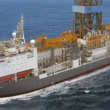




Seadrill Limited (NYSE: SDRL) has secured a major contract extension in Angola through its 50:50 joint venture, Sonadrill Holding, deepening its commitment to one of sub-Saharan Africa’s most active ultra-deepwater markets. A seven-well priced option for the drillship Sonangol Quenguela has been exercised, extending operations by approximately 480 days and committing the rig through June 2028. The extension builds directly on a prior five-well option exercised in December 2025, which had stretched the rig’s contract through February 2027. Together, the two exercises represent a sustained multi-year endorsement of Sonadrill’s operational performance in Angolan waters. For Seadrill, the deal adds revenue visibility to a 2026 outlook already backed by a $2.5 billion contract backlog and reinforces the strategic value of the Sonadrill joint venture as a fee-generating anchor in West Africa.
How does the Sonadrill joint venture structure shape Seadrill’s financial exposure in Angola?
The Sonadrill structure is unusual among offshore drilling arrangements and worth understanding clearly. Sonadrill is a 50:50 joint venture between Seadrill and an affiliate of Sonangol E.P., Angola’s state-owned national oil company. Seadrill does not own the Sonangol Quenguela outright. The drillship is owned by Sonangol and bareboat chartered into the Sonadrill vehicle, alongside the West Gemini, which is a Seadrill-owned unit, and the Sonangol Libongos, another Sonangol-owned asset.
Seadrill’s role is to provide management, operational, and technical support to Sonadrill, for which it earns a management fee. This fee structure means that Seadrill does not capture the full dayrate economics of the Sonangol Quenguela, but it also means Seadrill carries limited capital exposure relative to a fully owned asset. The trade-off is strategic: the arrangement gives Seadrill a durable, low-risk presence in Angola that would otherwise be difficult to establish without a state partnership. Sonadrill holds the position of the leading rig operator in Angola, a market where national content requirements and sovereign relationships carry considerable weight.
The financial terms of the latest seven-well extension have not been disclosed. Investors seeking to model fee income should note that disclosure around Sonadrill economics has historically been limited, though management has described the JV as generating significant free cash flow that flows to both shareholders.
Why is the Sonangol Quenguela extension commercially significant for Seadrill’s 2026 and 2027 outlook?
The timing and scale of this extension matter in the context of Seadrill’s broader fleet calendar. At the time of the company’s full-year 2025 results, published in late February 2026, Seadrill reported a contract backlog of approximately $2.5 billion and provided 2026 revenue guidance of $1.40 billion to $1.45 billion (excluding reimbursables). The company also flagged that contract repricing for legacy agreements would be a key driver of incremental earnings improvement in 2027, when several older contracts are expected to roll off at higher dayrates.
Securing the Sonangol Quenguela through June 2028 effectively eliminates white space risk for that asset across the next two years and beyond. For a rig operator, idle time between contracts is one of the most damaging financial events: dayrate income stops, but fixed operating costs do not. Seadrill has consistently framed its commercial strategy around direct contract continuations as a mechanism to preserve utilization and avoid the cost drag of repositioning or warm-stacking rigs. This extension is consistent with that approach.
The prior December 2025 extension, which committed the rig to February 2027, already represented a meaningful improvement in Angola fleet visibility. The March 2026 exercise of the seven-well option stretches that horizon by a further 16 months. Taken together, Sonadrill has now locked in continuous operations for the Sonangol Quenguela from its current work through mid-2028, a run of sustained utilization that is increasingly uncommon in the offshore drilling market.
What does Angola’s deepwater market outlook mean for the longevity of Seadrill’s West African strategy?
Angola presents both a structural opportunity and a structural challenge for offshore drillers. The country is the second-largest oil producer in sub-Saharan Africa, but its crude output has been in structural decline for over a decade, falling from a peak of approximately 1.9 million barrels per day in 2010 to below 1 million barrels per day at points during 2025. The government and its national regulator, the National Agency of Petroleum, Gas and Biofuels, have responded with a series of fiscal and licensing reforms designed to incentivize new investment and stabilize production.
This backdrop creates sustained demand for deepwater drilling services. International oil companies including TotalEnergies, Chevron, ExxonMobil, and the Azule Energy joint venture (the combined Angola operations of BP and Eni) continue to pursue infill drilling, field redevelopment, and selective greenfield programs across major blocks. TotalEnergies, for instance, sanctioned a large deepwater project on Block 20 and has ongoing subsea tie-back work across its portfolio, including the Begonia project and the Sanha Lean Gas Connection scheme that expanded Angola LNG capacity in late 2024.
For Seadrill, this operating environment is broadly supportive. The Sonadrill fleet serves Angola’s ultra-deepwater requirements, and the JV’s position as the leading rig operator in the country gives it a preferential standing in contract discussions. The risk, however, lies in Angola’s production profile: as output from mature assets on Blocks 17, 18, and 32 continues to decline at rates estimated at 12 to 15 percent per year, operators face increasingly complex trade-offs between sustaining brownfield output and committing capital to new developments. Drilling budgets can shrink or shift quickly if oil prices weaken, a dynamic that Angolan-focused contractors know well.
How does this Angola extension fit within Seadrill’s wider contract backlog and fleet strategy?
Seadrill has been executing a deliberate backlog-building campaign across multiple geographies. In the months preceding this announcement, the company secured a 440-day contract for West Capella with PTTEP in Malaysia commencing in the second quarter of 2026, a one-year Equinor extension for West Saturn in Brazil adding $114 million to backlog, a 120-day contract for West Neptune in the U.S. Gulf with LLOG, and an accommodation contract for West Elara with Equinor in Norway. These awards span four regions and four distinct customer types, reflecting a deliberate effort to avoid over-concentration in any single market.
The Sonangol Quenguela extension does not contribute directly to Seadrill’s reported dayrate backlog in the conventional sense, given the management fee structure of the Sonadrill JV. It nonetheless reinforces the breadth of Seadrill’s operational footprint and underlines the commercial durability of the Angola relationship. The fact that the client has now exercised two successive priced options, first five wells then seven wells, signals a high degree of satisfaction with Sonadrill’s execution and the operational capability of the drillship.
It is also worth noting the prior context. In 2025, Seadrill recorded an unfavorable legal judgment connected to the Sonadrill JV, for which it made a $43 million payment in the fourth quarter of 2025. That overhang has now been cleared, and the subsequent contract extensions represent a clean commercial relationship going forward, without the complication of unresolved litigation affecting commercial discussions.
What is the SDRL stock market context and how should investors interpret the Angola news?
Seadrill shares (NYSE: SDRL) have traded in a wide range over the past twelve months, with a 52-week low of $17.74 and a 52-week high of $45.90. The stock was trading around $42 to $43 in early March 2026, having pulled back from levels near the 52-week high reached in the weeks following the fourth-quarter 2025 earnings release. The post-earnings reaction was mixed: Seadrill reported a full-year net loss of $77 million and a Q4 earnings per share figure of negative $0.16, which fell well short of consensus expectations, while revenue of $362 million for the quarter exceeded estimates by approximately 7.5 percent.
The Angola contract extension is unlikely to move the stock materially on its own given the management fee nature of Seadrill’s economic interest, but it contributes to the broader narrative of a company that is progressively eliminating fleet idle risk and building multi-year revenue visibility. The analyst consensus as of early March 2026 sits at a buy rating with an average price target of approximately $50 to $52, implying meaningful upside from current levels if the company executes on its 2026 guidance of $350 million to $400 million in adjusted EBITDA.
The stock’s near-term technical picture has been cautious, with selling pressure following the Q4 earnings publication and mixed signals from moving averages. For long-term investors, the fundamental thesis rests on a combination of tightening deepwater rig supply, improving dayrate repricing opportunities as legacy contracts expire, and a balance sheet that carried net debt of $260 million at year-end 2025 against $365 million in cash. The Sonadrill Angola extension does not change the investment calculus significantly but it removes one source of potential concern regarding fleet utilization continuity in West Africa.
Key takeaways on what Seadrill’s Angola contract extension means for the company, its competitors, and the offshore drilling industry
- Seadrill has extended the Sonangol Quenguela’s operations in Angola by approximately 480 days through a seven-well option exercise within the Sonadrill joint venture, committing the rig through June 2028 and eliminating white space risk for this asset across the next two-plus years.
- The Sonadrill JV structure means Seadrill earns a management fee rather than the full dayrate, limiting direct revenue impact but also limiting capital risk; the fee income is incremental and the reputational value of maintaining Angola’s top rig operator position is strategically significant.
- This is the second successive option exercise on the Sonangol Quenguela in quick succession, following a five-well extension in December 2025 that stretched the rig through February 2027; repeat exercises of priced options are a reliable indicator of client satisfaction and operational execution quality.
- Angola’s deepwater market remains structurally active as major operators including TotalEnergies, Chevron, ExxonMobil, and Azule Energy pursue infill drilling and field redevelopment programs to offset production decline from mature blocks, sustaining demand for ultra-deepwater drilling capacity through at least 2027 and 2028.
- The extension reinforces Seadrill’s multi-region contract backlog strategy, which already spans Malaysia, Brazil, Norway, the U.S. Gulf, and Angola, reducing single-market exposure and providing earnings stability across different commodity cycles and regulatory environments.
- The $43 million legal judgment related to Sonadrill, settled in Q4 2025, has been cleared, allowing the Angola commercial relationship to proceed without the overhang of unresolved litigation; subsequent contract awards suggest the JV relationship with Sonangol has remained strong throughout.
- With SDRL shares trading approximately 8 to 10 percent below the 52-week high and analysts maintaining a buy consensus at average price targets of $50 to $52, the market is pricing in execution risk around Seadrill’s 2026 guidance of $350 million to $400 million adjusted EBITDA; Angola visibility is a modest positive in that context.
- For competitors such as Transocean, Valaris, and Noble Corporation operating or seeking to operate in West Africa, the sustained Sonadrill dominance in Angola and Seadrill’s JV positioning with the national oil company represent a durable structural advantage that is difficult to replicate without equivalent sovereign partnerships.
- Angola’s state-driven urgency to reverse production decline, reinforced by government reform packages and new licensing incentives, is likely to sustain multi-year deepwater drilling programs and support contract tenors longer than the market norm, benefiting incumbent operators with proven track records in-country.
- The 2028 commitment horizon for the Sonangol Quenguela provides Seadrill with an anchored West Africa presence through a period when, per broader offshore market commentary, deepwater rig demand in the region is expected to exceed available supply, creating the potential for stronger dayrate outcomes on contract renewals.
Discover more from Business-News-Today.com
Subscribe to get the latest posts sent to your email.