



Why are Sasol’s FY25 results seen as a turning point for the South African energy and chemicals producer?
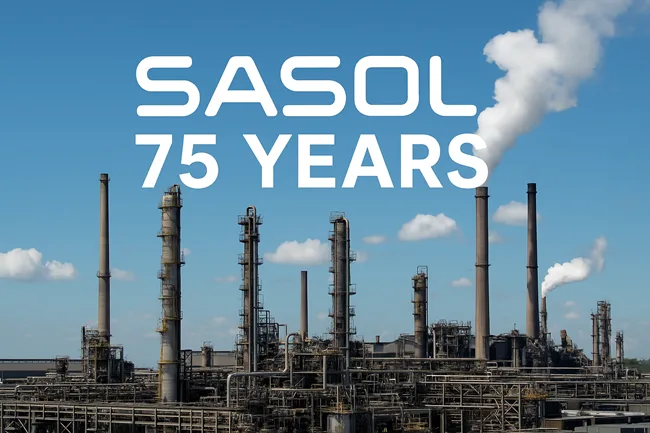
Sasol Limited (JSE: SOL; NYSE: SSL) has posted its financial results for the year ended 30 June 2025, positioning the milestone as both a 75th anniversary marker and an inflection point for its turnaround strategy. The Johannesburg-headquartered energy and chemicals company reported a 75% increase in free cash flow to R12.6 billion, strengthening its balance sheet despite weaker crude oil prices, lower refining margins, and persistent challenges in coal quality.
The results, signed off on August 25, 2025, showed net debt excluding leases reduced by 11% to US$3.7 billion, alongside liquidity of over US$4 billion. Basic earnings per share swung back into positive territory at R10.60, compared with a loss of R69.94 a year earlier. Headline earnings per share improved 93% to R35.13.
Chief Executive Officer Simon Baloyi framed the year as proof of “disciplined execution” following commitments made during Sasol’s Capital Markets Day in May 2025. He emphasised progress in restoring the Southern Africa value chain, boosting international chemical margins, and advancing emission reduction projects, even at lower capital outlay than originally projected.
How did the Southern Africa energy business perform amid coal quality challenges and refinery bottlenecks?
The group’s Southern Africa business, historically its earnings backbone, remained under pressure. Secunda Operations produced 6.7 million tonnes in FY25, down from earlier guidance due to coal quality constraints that impacted gasifier availability. While Sasol has completed construction of its Destoning plant—expected to improve feedstock quality and support a production uplift to 7.0–7.2 million tonnes by FY26—the operational shortfall weighed on liquid fuels output.
Natref refinery volumes dropped 17% year-on-year due to planned and unplanned outages, though the commissioning of a first low-carbon boiler was seen as an important compliance step toward Clean Fuels 2 regulation. A second unit is scheduled for commissioning by the end of August 2025.
Despite these headwinds, Sasol achieved an oil breakeven of US$59/bbl for its integrated Southern Africa value chain, in line with its stated target. Analysts noted that maintaining breakeven levels below US$60/bbl provides critical resilience in a volatile oil market, though sustaining volumes remains a concern for institutional investors tracking cash flow predictability.
What is driving Sasol’s International Chemicals business recovery after a prolonged downturn?
Sasol’s International Chemicals business delivered an adjusted EBITDA of US$411 million in FY25, a more than US$120 million uplift from FY24, with margins improving from 6% to 9%.
This improvement came despite a “lower-for-longer” chemicals market outlook, supported by reset initiatives that included mothballing or closing four assets, including plants in Germany and the United States. The business also implemented a streamlined organisational structure and rolled out a new enterprise resource planning system in Italy, with further regional rollouts planned.
Institutional investors viewed the turnaround in international chemicals as evidence of disciplined portfolio management. Analysts commented that Sasol’s decision to exit non-core or underperforming assets was likely to reduce volatility and improve cash flow conversion across its chemicals platform.
How significant was the improvement in free cash flow and debt reduction for Sasol’s financial resilience?
The standout figure in FY25 was Sasol’s 75% increase in free cash flow to R12.6 billion, aided by disciplined cost control and a one-off R4.3 billion settlement received from Transnet. Cash fixed costs rose by just 1%, below inflation, while capital expenditure fell 16% to R25.4 billion as the group optimised investment allocation.
The reduction in net debt to US$3.7 billion strengthens Sasol’s deleveraging narrative. Group Chief Financial Officer Walt Bruns reiterated the company’s commitment to reducing net debt below US$3 billion between FY27 and FY28, which would trigger dividend reinstatement under the revised capital allocation framework.
Market sentiment toward Sasol’s debt trajectory was cautiously positive, with investors recognising improved balance sheet resilience but remaining attentive to macro risks, including oil price sensitivity, rand volatility, and structural challenges at Secunda.
What role is Sasol’s emissions reduction roadmap playing in reshaping investor sentiment?
Sasol’s Emission Reduction Roadmap (ERR) remains a central pillar of its long-term transition story. The company secured over 900 MW of renewable energy power purchase agreements in South Africa by FY25, an increase from 750 MW at its May Capital Markets Day, while its third renewable energy facility—Damlaagte solar PV—added 97.5 MW to its generation capacity in August 2025. Total operational renewable energy now stands at 169.5 MW.
The roadmap targets 2 GW of renewable capacity by 2030, with Sasol leveraging joint ventures such as Ampli Energy to expand supply. The group also concluded a virtual power purchase agreement for its Lake Charles operations in the United States, extending the decarbonisation footprint beyond South Africa.
Analysts broadly welcomed Sasol’s progress, though some flagged that the group’s emissions profile remains among the highest of global peers. Institutional investors highlighted that aligning renewable procurement with debt reduction is key to maintaining access to international capital, especially as climate-linked financing standards tighten.
How do Sasol’s FY25 results affect investor sentiment and outlook on the JSE and NYSE?
On the Johannesburg Stock Exchange, Sasol’s shares (SOL) have traded with volatility throughout 2025, reflecting macro headwinds and company-specific risks. Institutional sentiment post-results was split between recognition of strong free cash flow delivery and concerns around the sustainability of production volumes at Secunda and Natref.
In New York, where Sasol trades via its American Depositary Receipts (SSL), analysts noted that improved earnings visibility and deleveraging progress could re-attract North American institutional flows. However, the absence of a final dividend for FY25—due to net debt levels remaining above the US$3 billion trigger—remains a sticking point for yield-seeking investors.
Overall, the stock has been framed as a “hold” by market participants, with upside tied to coal quality stabilisation, further chemicals margin recovery, and consistent delivery against emissions reduction milestones.
What is the forward-looking strategy and institutional outlook for Sasol through FY28?
Looking ahead, Sasol has reaffirmed its FY28 deliverables: restoring reliability of its Southern Africa value chain, achieving over 15% adjusted EBITDA margins in International Chemicals, and progressing its growth and transformation agenda in a “value accretive manner”.
Planned capital expenditure for FY26 is R24–26 billion, with management committing to maintain costs below inflation and complete its FY27 hedging program to manage oil and currency volatility. Net debt is expected to remain under US$3.7 billion in FY26, with the dividend reinstatement trigger firmly tied to achieving the sub-US$3 billion mark by FY27–FY28.
Institutional investors suggested Sasol’s long-term ambition of balancing energy resilience with decarbonisation credibility will define whether it can narrow its valuation gap to global peers. Analysts noted that successful execution of the destoning project, coupled with steady renewable integration, could meaningfully alter investor perception over the medium term.
Discover more from Business-News-Today.com
Subscribe to get the latest posts sent to your email.
