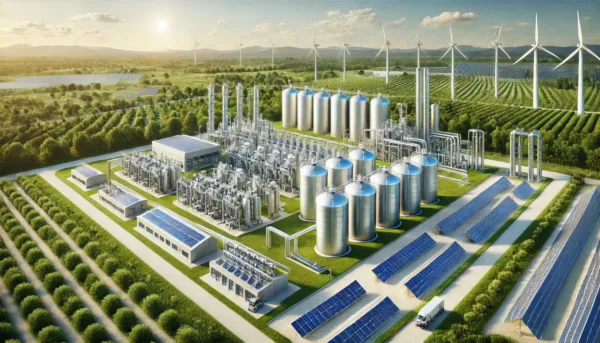
Prostarm Info Systems Limited (NSE: PROSTARM, BSE: 544410) saw its stock touch the upper circuit at ₹206.30 on July 10, 2025, surging 4.79% from the previous close of ₹196.87. This sharp rally came as investors responded positively to the company’s announcement of a 1.2 GWh Battery Energy Storage System (BESS) manufacturing facility in Reliance MET City, Jhajjar, Haryana. The planned capex of ₹25 crore and large-scale project rollout appear to signal a strategic pivot for the newly listed power electronics manufacturer.
This expansion marks Prostarm’s most ambitious foray into the battery storage domain since its June 3, 2025 IPO listing. The proposed BESS plant is designed to supply high-demand commercial and industrial users as well as utility-scale clients, creating a fresh revenue vertical for the firm.
Why is Prostarm investing in battery energy storage manufacturing now, and what does it signal for India’s grid future?
According to Prostarm’s regulatory filing and press release dated July 8, 2025, the company has secured a 9-year lease on 3,912.15 sq. meters of industrial space at Reliance MET, including a covered shed of 34,000 sq. ft. The plant will be outfitted with advanced HVAC systems, anti-static flooring, warehousing, and other critical infrastructure to support high-capacity assembly and integration of battery modules.
Prostarm aims to commission the facility by the end of FY26. Once operational, the unit will manufacture up to 1.2 GWh of energy storage capacity annually, which could be deployed across both grid-connected and standalone applications.
This announcement coincides with India’s ambitious push for energy storage integration. As the nation marches toward its 2030 renewable energy goals, BESS is set to play a pivotal role in stabilizing an increasingly renewable-heavy grid. Industry projections suggest India’s BESS capacity could scale from less than 0.2 GW today to 66 GW by 2032, led by demand from utilities, commercial rooftops, and distributed storage.
What kind of early traction has Prostarm already achieved in the BESS segment?
The Indian power infrastructure developer appears to have already laid the groundwork for market credibility in the battery segment. Prostarm has secured a 22 MWh turnkey order from Adani Electricity Mumbai for design, supply, installation, and commissioning, worth approximately ₹52 crore. Additionally, it has bagged a Letter of Intent (LOI) from Bihar State Power Generation Company Limited to deliver a 120 MWh BESS installation on a Build-Own-Operate-Transfer (BOOT) model. Under this agreement, Prostarm will receive ₹4.44 lakh per MW per month in rental income over a 12-year term.
The Adani and Bihar contracts offer more than just topline value—they serve as a signal to institutional investors that the battery storage play isn’t speculative. Instead, it reflects early execution capability and buyer interest across both private and public sector utilities.
Analysts view these early wins as critical validation points for the company’s forward integration strategy. While the BESS space in India remains under-penetrated, first movers with captive manufacturing capacity are likely to benefit from tailwinds created by government mandates and DISCOM-level tenders.
What makes battery energy storage systems a viable business expansion for Prostarm Info Systems?
Prostarm is leveraging its existing power electronics DNA—such as UPS systems, inverters, lithium-ion battery packs, and solar hybrid units—to build a manufacturing-first BESS platform. By developing an in-house facility, the firm can reduce supply chain dependencies, scale custom integration capabilities, and target both product sales and EPC contracts.
Battery energy storage solutions are increasingly replacing diesel gensets for backup power, especially in the commercial and industrial (C&I) segment. Grid-level integration is also rising, driven by the need for ancillary services like peak load shaving, frequency regulation, and black-start capabilities.
Institutional sentiment suggests that falling lithium-ion battery prices, policy support for domestic manufacturing, and the rise of hybrid renewable + storage projects will continue to create tailwinds for BESS adoption across India. By entering this space early, Prostarm is positioning itself not merely as a supplier, but potentially as one of India’s few OEMs with large-scale capacity.
How does the stock’s technical setup reflect investor sentiment following the BESS announcement?
Prostarm’s share price movement on July 10, 2025, offers early signals of bullish momentum. The stock surged to ₹206.30 in pre-open session and appeared locked at its 10% upper price band of ₹216.55. Notably, the scrip has already doubled since its 52-week low of ₹108.00 on June 13, 2025, reflecting aggressive accumulation post-listing. The scrip’s adjusted P/E stands at a lofty 142.50, placing it well above sector averages—though this may also reflect forward expectations for revenue diversification.
With zero intraday traded volume as of 09:00 IST and a pre-open Indicative Equilibrium Quantity (IEQ) of 32,884, market watchers believe the demand for the stock is significantly outpacing available supply. This could be indicative of sustained interest following the press release and expectation of further strategic disclosures.
What are the next potential catalysts for Prostarm investors and institutional stakeholders?
Prostarm’s roadmap suggests multiple upcoming triggers. These include physical commencement of BESS plant construction, updates on further public-sector contracts, and quarterly financials that incorporate revenues from the Adani and Bihar orders. Analysts are also watching for potential announcements around private sector partnerships, state-wise EPC project allocations, and international collaborations for lithium cell procurement or battery management systems.
If successfully executed, this battery manufacturing pivot could dramatically increase Prostarm’s addressable market—moving it from a niche electronics player to a core participant in India’s energy transition. However, execution risks remain, including timelines for plant readiness, supply chain disruptions, and policy uncertainties in India’s energy storage regulatory framework.
Investors are likely to continue tracking operational progress and order book conversions closely. Given that the firm was listed barely a month ago, visibility into execution will be crucial in sustaining the stock’s current momentum.
Discover more from Business-News-Today.com
Subscribe to get the latest posts sent to your email.