Power Minerals Limited (ASX: PNN) has entered into a binding Letter of Intent to acquire the Morro do Ferro Rare Earth Elements project, a high-grade deposit in Minas Gerais state, Brazil, from private company Mineracao Terras Raras S/A. The deal, structured across initial and deferred cash and scrip consideration totalling up to approximately A$22 million, is subject to a 30-day due diligence period already underway. Power Minerals has simultaneously secured firm commitments for a A$10.25 million equity placement at A$0.105 per share, priced at a 2.1% premium to the 15-day volume-weighted average price, with the majority of Tranche 2 anchored by three institutional cornerstone investors alongside S3 Consortium Holdings. The announcement repositions Power Minerals as a Brazil-focused critical minerals platform at a moment when Western supply chain anxiety around rare earth elements has rarely been more acute.
What makes the Morro do Ferro deposit stand apart from other rare earths projects in the Pocos de Caldas region of Brazil?
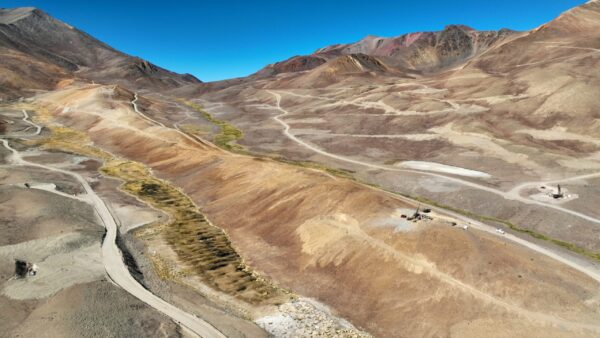
The Morro do Ferro project sits within the Pocos de Caldas alkaline complex in southern Minas Gerais, approximately 13 kilometres southeast of the mining city of Pocos de Caldas and around 200 kilometres north of Sao Paulo. The complex is widely regarded as one of the world’s most significant concentrations of rare earth mineralisation, and the Morro do Ferro deposit occupies what the company describes as its geographic centre.
What separates Morro do Ferro from the ionic adsorption clay deposits being developed by its immediate neighbours, Meteoric Resources (ASX: MEI) and Viridis Mining and Minerals (ASX: VMM), is both grade and mineralogy. The project’s rare earth endowment is hosted primarily in bastnäsite, the same mineral that dominates Mountain Pass in California, one of the few Western producing rare earths operations of scale outside China. Bastnäsite-hosted systems tend to carry higher grades and are associated with more conventional processing pathways than ionic adsorption clay, though they also demand more metallurgical development work.
The deposit has been drilled over two systematic programs by the previous owners, totalling 50 diamond core holes for 4,157.59 metres and 106 auger holes for 846.5 metres.
The headline figures from that dataset are extraordinary by any standard. Drillhole MFSR-35 returned a weighted average of 60.85 metres at 89,177 parts per million Total Rare Earth Oxides from surface to end of hole, equivalent to 8.92% TREO. Drillhole MFSR-44 returned 70.9 metres at 79,997ppm TREO, and MFSR-20 returned 60.6 metres at 70,217ppm TREO. These are not cherry-picked intercepts from isolated high-grade lenses; they are weighted averages across the entire downhole interval from surface, a considerably more conservative and commercially meaningful reporting convention than the selective interval reporting common in early-stage exploration announcements.
The upper-end point samples are more extraordinary still. Sample 1156 from MFSR-44 returned 2 metres at 241,301ppm TREO, or 24.13%, at 14 to 16 metres downhole. For context, a TREO grade above 5% is already exceptional in the rare earths sector, and grades above 10% are rare enough to be noteworthy at the individual sample level, let alone as weighted downhole averages.
Why do the magnet rare earth oxide grades matter for the commercial case Power Minerals is building?
Beyond raw TREO, the more commercially consequential metric is the Magnet Rare Earth Oxide content, or MREO, which captures neodymium, praseodymium, terbium, and dysprosium. These are the elements that go into the permanent magnets used in electric vehicle motors, wind turbines, and defence electronics, and they command a significant price premium over the cerium and lanthanum that typically dominate bulk TREO tonnage.
Power Minerals notes that drillhole MFSR-35 carried a weighted average of 60.85 metres at 14,672ppm MREO from surface to end of hole, equivalent to 1.47%. The company makes the pointed observation that this MREO average is higher than the total TREO grades reported by many other rare earths deposits, which speaks to both the unusual richness of the system and the composition of the mineralisation in favour of commercially valued heavy and magnet rare earths.
Individual MREO samples exceeded 3% at multiple intervals, with sample 558 from MFSR-47 returning 2 metres at 34,835ppm MREO. These values are consistent with a deposit that has meaningful exposure to what the market most wants, rather than simply a large volume of low-value cerium and lanthanum oxide. That distinction is critical for the eventual offtake and financing narrative Power Minerals will need to construct at the pre-feasibility stage.
How does the Manifesto mining title and project location affect execution risk and the regulatory timeline?
One of the structural advantages the Morro do Ferro project carries, and one that is easy to underestimate, is the nature of its underlying mineral title. The project sits on a Manifesto de Mina permit, a category of Brazilian mining rights that is classified as real property rather than a mining concession. The title holder has direct land ownership, and no third-party approvals are required for exploration activities, including drilling, beyond standard environmental sign-off. Drilling approvals are already in place.
This matters because Brazil’s mining regulatory framework has historically been a source of delays for exploration-stage companies. The absence of community consultation requirements or native title equivalents for ground-disturbing work in the near term substantially compresses the timeline between deal completion and the first drill turning under Power Minerals’ ownership. The permit covers 300.72 hectares, has no expiration date provided taxes are paid, and is currently in good standing with the relevant government authorities. Power Minerals notes there are no known impediments to the transfer.
The project’s location also provides infrastructure optionality that many earlier-stage assets in Brazil lack. Pocos de Caldas has a commercial domestic airport, all-season road and rail access, and proximity to Atlantic coast port facilities that would be required for any future concentrate or intermediate product export. The electrical distribution network serving the region is described as strong, which matters at the mine development stage when power supply negotiations become a key cost variable.
What does the A$22 million deal structure and A$10.25 million placement reveal about capital discipline and dilution risk?
The acquisition structure is milestone-linked and deliberately staged, which limits upfront capital commitment while preserving vendor alignment across the project lifecycle. The initial consideration at completion totals A$6 million, split equally between cash and Power Minerals shares at an indicative issue price of A$0.09, subject to shareholder approval. Four deferred tranches follow at 12, 24, 36, and 60 months after execution of the definitive agreement, each paid half in cash and half in equity, with each tranche triggered by either the calendar date or a project milestone including mining licence grant, pre-feasibility completion, and bankable feasibility study. A resource milestone payment of A$1.5 million cash activates upon the project reaching a JORC Mineral Resource of 20 million tonnes at 4% TREO.
The vendor also retains a 2.5% net smelter royalty on any ore extracted from the project area, which will weigh on project economics at the mine development stage. A facilitation fee of 13% of all cash and share consideration for each completed milestone is payable to Sagrada Familia Participacoes Ltda, subject to shareholder approval, adding a layer of transaction cost that investors will need to model carefully against the project’s future valuation.
The A$10.25 million placement, priced at A$0.105 with attaching options exercisable at A$0.10 and expiring December 2029, funds the immediate due diligence field program, acquisition completion costs, repayment of a US$1.1 million Navigate Energy facility tied to the Rincon Lithium Project joint venture, and general working capital. Oakley Capital Partners and GBA Capital acted as joint lead managers.
How is Power Minerals stock trading and what does market sentiment suggest about the announcement’s reception?
Power Minerals Limited (ASX: PNN) was trading at A$0.12 at the most recent close, down 7.69% on the day, against a 52-week range of A$0.055 to A$0.305. The placement price of A$0.105 sits below the current trading level but represents a structure the company positioned as a premium to the 15-day VWAP of A$0.1028, highlighting the compressed price action of recent weeks against the stock’s earlier-year highs.
The stock has risen approximately 39.5% over the past year, with prior-week performance showing a 14.29% gain, suggesting the announcement may have already moved some price action in advance of the formal release. The 52-week trough of A$0.055, reached in mid-2025, and the A$0.305 peak illustrate the volatility inherent in a micro-cap explorer with a market capitalisation of approximately A$33 million. At that valuation, and against the mineralised grades now on the table, the market is effectively pricing in substantial execution and due diligence risk, which is appropriate given the project remains subject to a 30-day feasibility review and no JORC Mineral Resource has yet been declared.
The institutional support in Tranche 2, including three cornerstone investors, provides some signal that the investment case for the acquisition is credible at current prices, but the participation of S3 Consortium Holdings, a vehicle associated with active investor marketing, will be noted by sophisticated investors as a factor worth monitoring.
What are the competitive dynamics and strategic consequences for Meteoric Resources and Viridis Mining and Minerals in the Pocos de Caldas precinct?
The Pocos de Caldas rare earths precinct is rapidly acquiring the character of a contested district. Viridis Mining and Minerals holds an Indicated Mineral Resource of 157 million tonnes at 2,947ppm TREO at its South Complex, which shares its western boundary with Morro do Ferro. Meteoric Resources has made substantial commitments to ionic adsorption clay exploration in the region. Both are more advanced in the formal resource estimation process than Power Minerals.
What the Morro do Ferro announcement establishes is a differentiated position within the same geography. The bastnäsite-hosted mineralisation at Morro do Ferro carries grades that are multiples of what the ionic adsorption clay projects in the precinct report, albeit across a smaller footprint and with more metallurgical uncertainty. Critically, Power Minerals notes it has not yet determined whether the shallow ionic adsorption clay being explored by Viridis Mining and Minerals and Meteoric Resources extends into the Morro do Ferro tenure, and will investigate this potential during the drill campaign. If it does, the project carries both a high-grade hard rock component and a potentially lower-cost, lower-complexity clay component on the same title.
The adjacency to two listed competitors with established market narratives is both an advantage and a complication. Power Minerals inherits a precinct story that institutional investors and mining analysts already follow, which reduces the discovery marketing burden. But it also invites direct comparison with more de-risked assets, and Power Minerals will need to progress rapidly from the current letter of intent to a formal JORC resource to sustain investor engagement beyond the initial announcement cycle.
What strategic, financial, and industry implications does this deal carry for Power Minerals and the broader rare earths sector?
- Power Minerals Limited (ASX: PNN) has entered a binding LOI to acquire the Morro do Ferro REE project in Minas Gerais, Brazil, from Mineracao Terras Raras S/A, subject to 30-day due diligence already underway.
- Drill intercepts at Morro do Ferro are among the highest-grade bastnäsite-hosted REE results reported in recent years, with multiple weighted average downhole intervals above 5% TREO from surface to end of hole.
- The MREO component is particularly significant for commercial value, with some drillholes carrying higher weighted average magnet rare earth concentrations than the total TREO of many competing deposits.
- The Manifesto de Mina title structure removes third-party exploration approvals and provides direct land ownership, materially reducing the regulatory risk profile compared with conventional Brazilian mining concessions.
- The milestone-linked deal structure totalling up to approximately A$22 million in cash and scrip limits upfront dilution but imposes a 2.5% net smelter royalty and a 13% facilitation fee that will require careful project economics modelling at feasibility stage.
- A A$10.25 million placement at A$0.105 per share, backed by institutional cornerstone investors, funds immediate due diligence fieldwork, acquisition completion, and debt retirement.
- No JORC Mineral Resource has been declared for Morro do Ferro; the first resource estimate is a key de-risking catalyst and will be a prerequisite for serious capital markets engagement at the project financing stage.
- The deposit sits adjacent to Viridis Mining and Minerals and Meteoric Resources projects in the Pocos de Caldas precinct, creating both competitive pressure and a ready-made peer comparison framework for investors.
- Power Minerals is entering the REE race at a moment of strong Western government interest in non-Chinese supply chains, but execution against an aggressive multi-rig drill campaign in 2026 will define whether the geological promise translates to shareholder value.
- With PNN trading near A$0.12 against a 52-week range of A$0.055 to A$0.305, the stock remains in the early stages of repricing against what is now a materially upgraded asset portfolio.
Discover more from Business-News-Today.com
Subscribe to get the latest posts sent to your email.