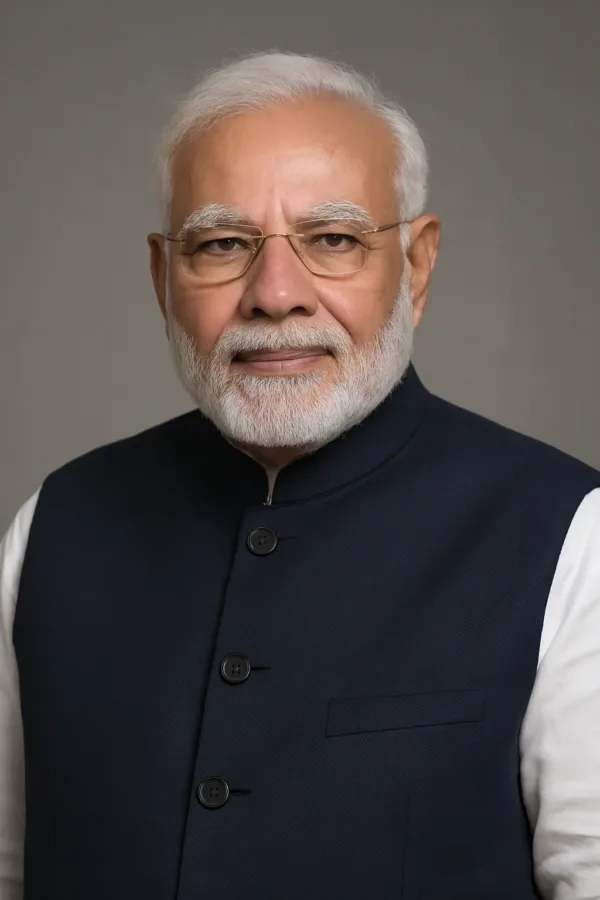
Prime Minister Narendra Modi inaugurated, laid the foundation stone, and dedicated development projects worth ₹5,400 crore in Ahmedabad, Gujarat today, signaling another major investment push across infrastructure, manufacturing, housing, and connectivity. From transport corridors to slum redevelopment, and from green energy to semiconductors, the new initiatives showcase the depth and breadth of Gujarat’s industrial transformation narrative.
The event, which coincided with Ganeshotsav celebrations, was also a platform for the Prime Minister to deliver a wide-ranging speech that blended socio-political rhetoric with sectoral priorities, highlighting Gujarat’s rise as a manufacturing and logistics powerhouse.
What are the major infrastructure and connectivity upgrades being implemented across Gujarat?
Among the flagship announcements were railway projects worth over ₹1,400 crore, including the doubling of the Mahesana–Palanpur rail line and gauge conversions for other routes. These upgrades aim to ease commuter congestion and improve freight logistics. Notably, a car-loaded freight train service from Bechraji is expected to enhance industrial supply chains.
In the road sector, the Prime Minister inaugurated the widening of the Viramgam–Khudad–Rampura road and laid the foundation stone for six-lane vehicle underpasses and railway overbridges. The development of the Sardar Patel Ring Road into a six-lane corridor will relieve traffic bottlenecks and support growing commercial volumes around Ahmedabad.
These projects underscore the broader regional integration and last-mile connectivity focus of the Union Government’s infrastructure playbook—especially in high-growth states like Gujarat.
How is Gujarat positioning itself as a hub for future-ready manufacturing sectors like EVs and semiconductors?
Prime Minister Modi stressed Gujarat’s transition from traditional industry toward cutting-edge sectors. Hansalpur is emerging as a new node for electric vehicle manufacturing, while Vadodara has already begun producing transport aircraft, building on Gujarat’s established strength in aircraft components.
Significantly, the Prime Minister stated that Gujarat is now poised to enter the global semiconductor race. With electronics and EVs requiring a secure domestic chip supply, this shift could reshape India’s strategic manufacturing footprint. Analysts view this as a potential cornerstone of India’s Aatmanirbhar Bharat mission.
Gujarat also continues to be a leader in pharmaceutical production, accounting for nearly one-third of the country’s medicine and vaccine exports, and maintains its dominance in textiles, gems, and jewellery.
What is the expected impact of recent energy and utility projects on Gujarat’s development outlook?
The Prime Minister inaugurated power distribution projects worth over ₹1,000 crore under the Uttar Gujarat Vij Company Limited (UGVCL), focusing on modernizing the grid and reducing outages. These fall under the Revamped Distribution Sector Scheme and are designed to increase system reliability during peak loads and adverse weather events.
Gujarat is also playing a leading role in India’s renewable energy transition, contributing significantly to solar, wind, and nuclear capacities. The petrochemical and plastics sector—vital for everything from fertilizers to cosmetics—is also expanding in the state, further cementing Gujarat’s role in supporting national industrial demand.
From an investor perspective, these utility upgrades reduce operational risk for manufacturers and enable industrial users to scale more efficiently, reinforcing Gujarat’s appeal as a destination for capital-intensive sectors.
How is the Modi government framing Gujarat’s socio-economic transformation for political messaging?
Framing the state’s trajectory as a model of inclusive development, Prime Minister Modi repeatedly invoked themes of self-reliance, employment generation, and urban renewal. Citing historical references to Mahatma Gandhi and Lord Krishna—described as “Charkhadhari Mohan” and “Sudarshan Chakradhari Mohan”—he positioned Gujarat as both spiritually rooted and economically forward-looking.
He emphasized the government’s protection of small entrepreneurs, dairy farmers, shopkeepers, and street vendors, referencing schemes like PM SVANidhi which has supported 70 lakh beneficiaries nationwide. The message was clear: welfare and wealth creation are being pursued in tandem, with Gujarat as a showcase of both.
The inauguration of 1,500 new permanent houses under the PMAY(U) scheme, along with slum redevelopment initiatives in areas like Ramapir No Tekro, were highlighted as emblematic of the government’s commitment to the urban poor.
How are institutional investors likely to interpret Gujarat’s role in India’s industrial and logistics future?
With industrial corridors, electrified rail networks, and last-mile road upgrades continuing at pace, institutional investors may view Gujarat as a relatively low-risk, high-output zone for capital deployment. The electrification of nearly 3,000 km of rail over 11 years and the rapid metro expansion in Ahmedabad reflect sustained policy focus and execution capacity.
Projects such as the State-Level Data Storage Centre in Gandhinagar and the new Stamps and Registration building in Ahmedabad West also point to increased digitization and governance modernization—factors increasingly relevant for ESG-focused investment filters.
While foreign direct investment numbers were not disclosed during the address, analysts expect Gujarat to remain a key node for both export-oriented industries and domestic supply chain resilience—especially in strategic sectors like EVs, pharma, and semiconductors.
How is the Prime Minister leveraging Gujarat’s cultural legacy to promote “Made in India” consumer behavior?
In a calibrated nod to both culture and commerce, Prime Minister Modi urged citizens to treat upcoming festivals—Navratri, Dussehra, and Diwali—as celebrations of self-reliance. He called for all gifts, purchases, and decorations to be Made in India, appealing to both sentiment and strategy.
This rhetoric mirrors recent government campaigns encouraging domestic consumption and MSME support. The Prime Minister also announced reforms in the GST regime and reiterated that annual incomes up to ₹12 lakh have been made tax-free—measures targeted at expanding purchasing power across India’s growing middle class.
By linking consumer behavior to national pride and economic resilience, the government is attempting to embed Swadeshi values into festive spending—particularly critical in an election-adjacent year.
What does Ahmedabad’s transformation tell us about India’s urban evolution strategy?
The speech repeatedly emphasized Ahmedabad’s metamorphosis—from “Gardabad,” a dusty and polluted city, to a clean, modern hub. The transformation of Sabarmati Riverfront, Kankaria Lake, and introduction of metro rail and AC-electric buses were positioned as proof of Gujarat’s urban renaissance.
Ahmedabad’s recognition as a UNESCO World Heritage City and its emergence as a hotspot for the “concert economy”—highlighted by recent global events like the Coldplay concert—further illustrate the city’s shift into a culturally significant urban destination.
The PM’s assertion that Sabarmati Ashram will become the “foremost global inspiration for peace” post-renovation shows a broader intent: to blend heritage with tourism and economic utility in India’s urban planning narrative.
Discover more from Business-News-Today.com
Subscribe to get the latest posts sent to your email.