





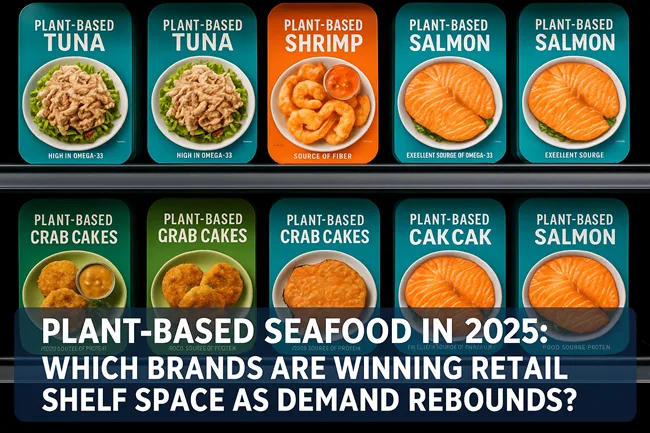
Why is plant-based seafood demand rebounding in 2025 and how are retailers responding?
After a sluggish 2024, plant-based seafood is regaining momentum in 2025, with supermarkets allocating more shelf space to alternative tuna, shrimp, salmon, and crab products. Retail analysts attribute the rebound to improved product taste, more competitive pricing, and heightened consumer focus on sustainable proteins and omega‑3-rich foods.
Supermarkets in the U.S., UK, and parts of Europe are adding frozen and chilled SKUs in premium and mainstream aisles, reflecting a shift from niche vegan positioning to a flexitarian-friendly strategy. According to category trackers, repeat purchase rates are climbing for plant-based seafood faster than for plant-based beef or pork, suggesting shoppers view these alternatives as healthier, lighter protein sources.
Which brands are gaining the most retail visibility in 2025 and what is driving their success?
Good Catch Foods remains the category leader in U.S. and UK supermarkets. Its fish-free tuna and salmon pouches are praised for clean-label ingredients and realistic flaky texture, making them a staple in health-focused aisles.
New Wave Foods is expanding its plant-based shrimp distribution in major U.S. chains such as Sprouts Farmers Market and regional supermarket groups. Its pea protein and seaweed-based shrimp alternatives are also gaining foodservice placements, which are translating into grocery demand.
Impossible Foods, after debuting its plant-based fish fillet in late 2024, is gaining visibility through cross-category promotions bundled with its well-established burger and chicken products. Retailers are positioning Impossible as a one-stop alternative protein brand, boosting foot traffic across multiple categories.
Ocean Hugger Foods, known for its tomato-based “Ahimi” tuna and carrot-based “Sakana” salmon, has re-entered retail after restructuring, regaining visibility in Asian and North American specialty stores. Its products cater strongly to sushi and poke bowl enthusiasts, offering retailers a premium gourmet positioning.
Current Foods (formerly Kuleana) is securing new European retail listings with its plant-based tuna and smoked salmon alternatives made from algae and radish. Analysts credit its rapid growth to strong sustainability marketing and its alignment with clean-label European retail trends.
The ISH Company is focusing on shrimp alternatives with its flagship “Shrimpish,” now available in select U.S. and Canadian retail chains. Its allergen-friendly formulation and high omega‑3 content are key selling points for health-conscious buyers.
Private-label lines are also expanding aggressively. Tesco’s own-brand plant-based fish fingers and Whole Foods’ plant-based crab cakes are capturing budget-conscious consumers, priced 10–15% below specialist brands. Analysts expect private labels to claim a significant share of the European market by the end of 2025.
How are supermarkets adjusting product placement and marketing for plant-based seafood in 2025?
Supermarkets are increasingly integrating plant-based seafood into mainstream frozen and chilled seafood aisles instead of isolating them in vegan or specialty sections. This shift targets flexitarian shoppers, encouraging impulse purchases from customers already buying conventional fish.
Digital promotions are focusing on sustainability certifications, mercury-free claims, and heart-health benefits rather than overt vegan messaging. Retailers are also using loyalty app data and repeat purchase analytics to determine which SKUs deserve premium placement. Social media—while still generating curiosity on Reddit and TikTok—has become a secondary driver compared to hard sales data, signaling that the category is maturing into a repeat-purchase retail segment (GFI).
What do analysts see behind this retail rebound?
Retail analysts believe the rebound shows consumers are shifting from novelty-driven purchases to functional, trusted alternatives. Taste, nutrient equivalence to traditional seafood, and verified sustainability claims are now critical for brand loyalty.
The global plant-based seafood market, valued at approximately USD 106 million in 2024, is projected to grow at a compound annual growth rate (CAGR) of nearly 28% through 2033, according to the IMARC Group. Analysts expect private labels to accelerate this growth by lowering price barriers, especially in Europe, where budget-friendly sustainable options are resonating with mainstream shoppers.
Discover more from Business-News-Today.com
Subscribe to get the latest posts sent to your email.
