


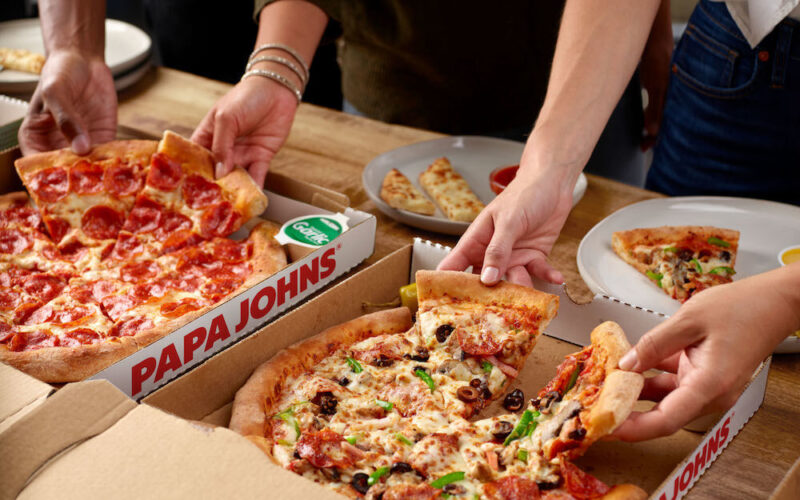
Papa John’s International (Nasdaq: PZZA), the world’s third-largest pizza delivery chain, has entered a strategic partnership with Belgian restaurant technology company Deliverect to deploy Deliverect’s Smart Dispatch and Delivery Management platform across every Papa Johns restaurant in the United States by the end of 2027. The deal positions Deliverect as the central orchestration layer for Papa Johns’ entire domestic delivery infrastructure, connecting first-party digital channels, point-of-sale systems, in-house driver fleets, and third-party delivery partners into a single unified platform. For Papa Johns, which has been navigating persistent pressure on North American comparable sales and a market capitalisation that has fallen to approximately $1.1 billion from a 2021 peak above $4 billion, the technology investment signals a deliberate pivot toward operational efficiency as a source of recovery. The announcement arrives as PZZA shares trade around $36, roughly 35% below their 52-week high of $55.74, and against a backdrop of sustained earnings scrutiny from investors following a 5% North American comparable sales decline in the fourth quarter of 2025.
Why is Papa Johns investing in delivery orchestration technology at this particular moment in its turnaround?
Papa Johns’ decision to overhaul its delivery infrastructure is as much about operational credibility as it is about technology. The company reported full-year 2025 revenues of $2.05 billion, essentially flat year-over-year, with net income of $32.1 million and adjusted EBITDA of $201.1 million. Management has committed to at least $25 million in corporate cost savings by 2027 and at least $60 million in supply-chain savings by 2028, making efficiency initiatives the core of its investment thesis rather than aggressive unit expansion. Delivery, which remains the primary fulfillment channel for a pizza brand at Papa Johns’ scale, is an obvious lever. Fragmented delivery operations, with separate workflows for in-house drivers and third-party platform orders, create labour inefficiency, order-error risk, and inconsistent guest experiences that are difficult to diagnose and correct at scale.
The Deliverect platform addresses this by consolidating every inbound order, regardless of its origin channel, into a single operational hub. From there, machine learning logic determines the most efficient dispatch route, whether to an in-house driver, a third-party fleet, or a hybrid of both, based on real-time conditions including driver availability, order volume, and estimated delivery times. For franchisees managing thin unit economics, the reduction of manual dispatch decisions is not a minor efficiency gain. It is a meaningful reduction in the cognitive load on in-store staff during peak periods, which directly affects throughput, order accuracy, and customer satisfaction scores.
How does Deliverect’s platform architecture compare to alternatives like Olo and what does the Papa Johns win signal about market positioning?
The competitive context for this deal is significant. Deliverect’s primary rivals in the enterprise restaurant technology space include Olo, Otter, Ordermark, and ItsaCheckmate. Olo, long regarded as the dominant platform for large restaurant chains’ digital ordering infrastructure, completed a sale to private-equity firm Thoma Bravo in mid-2025 for approximately $2 billion, taking it private after years of public-market underperformance. That transition introduced a period of strategic uncertainty for Olo’s enterprise customer base. Deliverect’s timing in securing the Papa Johns partnership shortly after Olo’s ownership change is unlikely to be coincidental. The Belgium-headquartered company, which now serves more than 80,000 restaurant locations globally and processes approximately 30 million API calls daily, has been systematically targeting large-chain clients in North America where Olo historically held the strongest relationships.
Deliverect’s differentiation rests on the depth of its integration catalogue, which spans more than 1,000 certified connections to POS systems, third-party delivery marketplaces, and digital ordering platforms. An API-first architecture means the platform can be layered on top of existing technology stacks rather than requiring wholesale replacement, which materially reduces implementation friction for enterprise chains operating across thousands of franchise locations with heterogeneous technology environments. For Papa Johns, which operates more than 6,000 restaurants across approximately 50 countries and territories, the ability to configure and deploy at scale without disrupting existing franchisee POS infrastructure is a practical prerequisite for adoption.
What are the execution risks of a phased technology rollout across thousands of franchise locations by end of 2027?
The partnership’s phased deployment timeline, targeting completion across all participating U.S. locations by the end of 2027, is realistic given the complexity of a franchise-heavy estate, but it is not without risk. Technology rollouts at enterprise restaurant scale routinely encounter delays driven by franchisee compliance rates, POS version inconsistencies, and the training demands placed on in-store teams. Papa Johns operates a predominantly franchised model in the United States, which means that adoption velocity depends not solely on the corporate technology team’s execution but also on the willingness of individual franchise operators to prioritise the transition amidst competing operational demands.
A further execution consideration is the hybrid dispatch model itself. The promise of intelligent routing between in-house drivers and third-party fleets is compelling in theory, but its real-world performance depends heavily on the quality of real-time data flowing from both driver management systems and third-party platform APIs. Any degradation in data fidelity, whether from a third-party platform’s API reliability or from connectivity issues at individual restaurant locations, reduces the machine learning model’s decision accuracy and undermines the efficiency gains the system is designed to deliver. Deliverect’s track record of processing one billion or more orders to date provides some confidence in its operational resilience, but Papa Johns will need to establish robust performance benchmarks and escalation protocols as part of the deployment framework.
How does delivery technology investment fit into Papa Johns’ broader digital and competitive strategy against Domino’s and other pizza chains?
Papa Johns is not the only major pizza chain investing aggressively in delivery and digital infrastructure. Domino’s Pizza (Nasdaq: DPZ), the category leader in pizza delivery technology, has spent the better part of a decade building proprietary delivery management systems and owns the Domino’s Delivery Expert programme as a competitive differentiator. Pizza Hut, operating under Yum! Brands (Nasdaq: YUM), has pursued a similar direction through technology partnerships and digital investment. Against this backdrop, Papa Johns’ move to standardise delivery orchestration across its domestic estate through a third-party platform rather than a proprietary build reflects a pragmatic capital allocation decision. Developing an equivalent system in-house would require materially greater investment, longer timelines, and sustained engineering resources that the company’s current earnings profile makes difficult to justify.
The Deliverect partnership also fits into a broader digital transformation narrative that Papa Johns has been communicating to investors. The company’s Chief Digital and Technology Officer, Kevin Vasconi, framed the partnership explicitly around simplifying the delivery process as part of a technology evolution. That language tracks with other announced initiatives, including a loyalty and digital ordering overhaul targeting more than 150 million customers globally, which includes features like an Intelligent Deal Wizard and voice-based group ordering. The accumulation of these digital initiatives suggests a coherent strategy, but execution risk compounds with each additional technology project running in parallel across a franchise estate that was already recording a 5% North American comparable sales decline through the final quarter of 2025.
What does the PZZA market position signal about investor appetite for Papa Johns’ technology-led recovery narrative?
PZZA’s current trading range tells a complicated story. At approximately $36 per share, the stock sits near the lower end of a 52-week range of $30.16 to $55.74, and carries a market capitalisation of roughly $1.1 billion. The consensus analyst price target of around $38 implies limited upside from current levels on a fundamental basis, though the emergence of takeover speculation in mid-March 2026, reportedly involving an approach from Irth Capital, temporarily pushed the stock up approximately 18% before settling back. That episode is instructive: investor interest in Papa Johns at current valuations is as much about private-equity optionality as it is about organic operational recovery.
For investors evaluating the Deliverect announcement in isolation, the market’s initial indifference is appropriate. A technology deployment partnership, even one of this scale, does not move same-store sales or EBITDA in the near term. The value creation, if it materialises, will show up in delivery speed metrics, order error rates, driver retention, and ultimately in comparable sales recovery over a multi-year horizon. The 2027 completion target means that meaningful financial evidence of the Deliverect partnership’s impact is unlikely to appear in public results before 2028 at the earliest. In the meantime, the announcement reinforces the investment thesis that Papa Johns is executing a structured operational turnaround rather than simply waiting for the category to recover.
Key takeaways: what the Papa Johns and Deliverect delivery technology partnership means for investors, competitors, and the restaurant tech sector
- Papa Johns (PZZA) has selected Deliverect’s Smart Dispatch and Delivery Management platform to unify in-house and third-party delivery operations across all U.S. restaurants, with full deployment targeted by end of 2027.
- The partnership is a capital-efficient alternative to building proprietary delivery orchestration in-house, consistent with Papa Johns’ stated focus on at least $25 million in corporate cost savings by 2027 and at least $60 million in supply-chain savings by 2028.
- Deliverect’s machine learning-driven dispatch logic and 1,000-plus certified integrations give Papa Johns enterprise-grade delivery intelligence without replacing existing franchisee POS infrastructure.
- The deal represents a significant enterprise win for Deliverect as it competes for large-chain contracts against Olo, which is now private under Thoma Bravo, and against Otter, ItsaCheckmate, and other delivery management platforms.
- Execution risk is material: Papa Johns operates a predominantly franchised estate in the United States, and deployment velocity will depend on franchisee compliance rates, POS compatibility across locations, and staff training throughput.
- PZZA trades near the lower end of its 52-week range at approximately $36 per share, with a market capitalisation of roughly $1.1 billion, reflecting investor caution following a 5% North American comparable sales decline in Q4 2025.
- The Deliverect partnership is part of a broader digital overhaul that also includes a loyalty and digital ordering initiative targeting over 150 million customers, pointing to a coherent but execution-intensive multi-year technology transformation.
- Financial evidence of delivery technology improvements in Papa Johns’ operating metrics is unlikely to be visible in public results before 2028, making this a medium-term operational investment rather than a near-term earnings catalyst.
- Domino’s and Pizza Hut have spent years building or buying proprietary delivery infrastructure. Papa Johns’ platform-partnership approach reflects a different capital allocation philosophy, one that trades long-term ownership of technology for speed and cost efficiency.
- Takeover speculation involving Irth Capital has added a private-equity optionality dimension to PZZA’s investment case, suggesting that the stock’s floor is partially supported by acquisition interest rather than purely by operational recovery prospects.
Discover more from Business-News-Today.com
Subscribe to get the latest posts sent to your email.