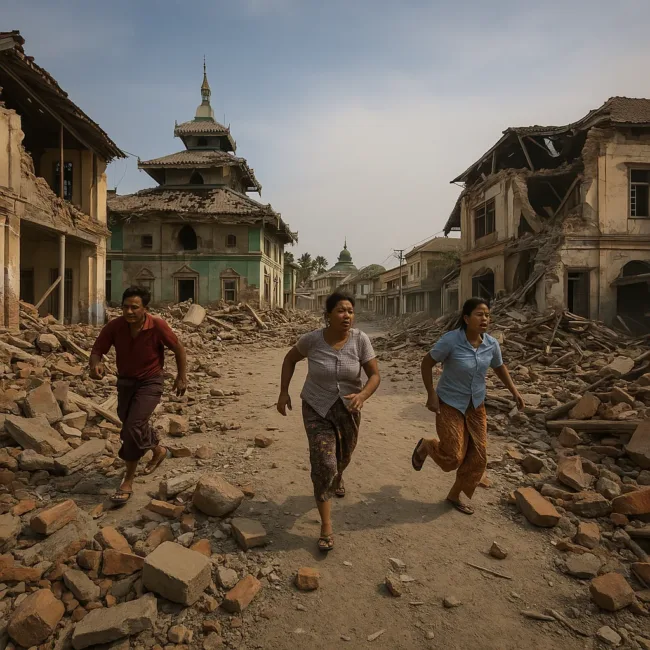





A devastating fire swept through a coastal neighbourhood in Ōita City on the island of Kyushu in southwestern Japan, destroying at least 170 homes and forcing over 170 residents to evacuate as strong winds rapidly intensified the blaze. The fire broke out Tuesday evening near a fishing port and spread overnight into surrounding residential and forested areas, prompting a major emergency response.
Japan’s Fire and Disaster Management Agency confirmed on Wednesday morning that the fire remained partially out of control. Local authorities reported that a man in his seventies remained missing, and the full extent of the damage was still being assessed as firefighters continued battling lingering flames.
How did strong winds cause the fire to spread so fast across coastal Ōita City?
The blaze’s rapid expansion was attributed to intense coastal winds that pushed flames from the initial ignition point near the port into nearby forests and back into densely packed neighbourhoods. One local resident told the Kyodo News Agency that the fire “spread in the blink of an eye,” leaving little time to gather personal belongings before fleeing.
Ōita City is located on the southern main island of Kyushu, a region known for its coastal weather patterns and proximity to forested terrain. This geographic intersection has now proven to be a risk factor as windborne embers ignited trees and nearby homes, overwhelming fire response teams working into the night.
What has been the scale of damage to homes and public infrastructure so far?
By Wednesday afternoon, over 170 homes had been confirmed damaged or destroyed, with thousands of square metres of residential land reduced to ash. Television footage and aerial imagery showed entire blocks of charred structures and emergency crews stationed across narrow neighbourhood lanes.
Evacuation centres were set up across the city, and local authorities coordinated with Ōita Prefecture and national agencies to secure temporary housing, medical care, food, and supplies. The missing resident’s whereabouts remain unknown, and rescue teams were still combing through the debris in high-risk zones near the original ignition area.
Why is this incident raising new alarms about urban wildfire risk in Japan?
This fire adds a troubling new chapter to Japan’s ongoing challenges with extreme weather and natural disasters. While Japan has long been recognised for its robust earthquake, tsunami, and typhoon preparedness systems, the country is increasingly facing climate-related events such as wildfires in suburban areas. The pattern of this fire, beginning at the coastal edge and jumping rapidly into residential zones, is a growing concern in areas where urban development borders forested land.
Although large-scale urban fires are not as common in Japan as in other wildfire-prone countries, this incident echoes similar patterns observed globally. Recent urban-wildfire interface disasters in countries like the United States and Australia have triggered major changes in fire zoning laws, land-use regulations, and emergency response strategies. For Japan, the fire in Ōita may now prompt a review of how communities near combustible vegetation are protected.
How does the Ōita fire compare to previous large-scale fires in Japan’s history?
Historical comparisons suggest that Japan has rarely faced fires of this scale outside of post-earthquake firestorms. However, in March 2021, a forest fire in the Ashikaga area of Tochigi Prefecture required over a week to control and damaged over 100 hectares of land. That incident sparked early debates around Japan’s preparedness for non-seismic fire events. The Ōita fire, with its direct damage to hundreds of homes and urgent evacuations, now stands out as one of the most severe residential fire emergencies in recent memory.
What are the estimated economic costs and insurance implications of the disaster?
The economic implications are also mounting. Rebuilding costs, insurance claims, and municipal spending on shelter, firefighting infrastructure, and cleanup will likely exceed billions of yen. While many homeowners in Japan hold fire insurance, industry analysts note that traditional coverage often focuses on earthquake and typhoon damage, not rapid wildfires originating from forested or coastal zones.
In addition to personal property losses, the fire could impact the region’s real estate market, local businesses, and urban development plans. Residential neighbourhoods located near forest perimeters may now be viewed as higher-risk, prompting developers and local governments to revisit construction materials, buffer zones, and evacuation route designs. Prefectural authorities have already begun mapping fire-prone areas in Kyushu to assess vulnerability beyond Ōita.
How have Japan’s government agencies and relief organisations responded?
Prime Minister Fumio Kishida addressed the situation, stating that the national government would support relief efforts and assist Ōita in recovery planning. The Ministry of Internal Affairs and Communications, which oversees the Fire and Disaster Management Agency, is reportedly initiating a comprehensive review of municipal readiness protocols for fast-moving fires in mixed urban–rural areas.
Public sentiment across the country reflected a mix of concern and frustration, particularly from residents in similarly vulnerable regions. Social media platforms carried messages of solidarity for displaced families and calls for stronger municipal infrastructure and advance warning systems. While Japan is renowned for community-based disaster drills and neighborhood evacuation planning, critics pointed out that fire scenarios involving wind and wildland interfaces have been largely underrepresented in such exercises.
Institutional responses were swift. Ōita Prefecture’s emergency task force was mobilised within hours of the first reports of the fire. The Japanese Red Cross deployed medical and psychological aid units to shelters and has launched a donation campaign to support the victims. Local police and fire departments, in collaboration with volunteers, were coordinating rescue, debris removal, and safety inspections across affected zones.
What role does satellite data and modern fire detection play in the current response?
Satellite imagery from the Japan Meteorological Agency and the Japan Aerospace Exploration Agency provided real-time updates to guide firefighting aircraft and identify heat pockets for suppression. Despite improvements in wind conditions by Wednesday evening, risk of reignition remained high due to residual dry vegetation and structural instability in the hardest-hit areas.
In terms of recovery, experts suggest that rebuilding efforts in Ōita will take several months, with full restoration of utilities and municipal services potentially extending into 2026. Some homes may be relocated away from high-risk zones, and retrofitting of others with fire-resistant designs may be required under revised building codes.
What does the future look like for urban fire prevention and zoning in Japan?
Looking forward, Japan faces critical decisions regarding how to adapt its urban planning frameworks to accommodate wildfire risk. Fire-resistant building materials, mandatory vegetation setbacks, and upgraded water access for firefighting are now part of the national discussion. Disaster management experts have proposed that Japan expand its partnership with countries such as Australia, the United States, and Canada to strengthen its knowledge base and training programs for wildland-urban fire scenarios.
Insurance companies are also recalibrating. Early estimates from the General Insurance Association of Japan indicate that insurers will be evaluating exposure models to incorporate climate-amplified wildfire behaviour in previously low-risk residential corridors. With global reinsurers raising alerts about underpriced fire risk, the Ōita event may become a data point in premium revisions across the country.
How are affected residents coping and what long-term support will they need?
For the people of Ōita, however, the immediate focus remains on safety, accountability, and rebuilding. The psychological trauma of rapid displacement, loss of homes, and uncertain futures is already prompting requests for long-term mental health support. Municipal officials have confirmed that displaced families will receive government assistance for temporary housing, with additional support available through national disaster-relief schemes.
As night fell on Wednesday, teams continued searching for the missing resident and hosing down embers in charred alleyways. The haunting silence that replaced the once-bustling fishing neighbourhood is a reminder of how quickly a fire, once ignited, can dismantle entire communities in a matter of hours.
This fire, which began at the edge of a port in southwestern Japan, may ultimately reshape how the country understands and prepares for wildfire risk. As the climate changes and weather patterns become more erratic, the hard-earned lessons from Ōita may soon inform national resilience policies, insurance models, and the very way Japan builds its future neighbourhoods.
What are the key takeaways from the Ōita wildfire and why does this fast-moving disaster matter for Japan?
- The fire destroyed more than 170 homes in Ōita City after strong coastal winds pushed flames from a fishing port into nearby residential and forested areas.
- The rapid spread overwhelmed response teams and left neighbourhoods devastated within hours.
- More than 170 residents were evacuated and one man in his seventies remains missing as search and rescue teams continue combing through debris.
- Local shelters remain active as authorities stabilise essential services.
- The wind-driven spread exposed vulnerabilities in Japan’s urban–wildland interface, where homes sit close to combustible vegetation and coastal wind corridors.
- Experts warn that climate‑exposed suburbs may now face rising wildfire risk.
- Institutional responses from local authorities, Ōita Prefecture, and national agencies highlight the scale of emergency support required for displaced residents.
- The Japanese Red Cross and municipal teams are providing housing, medical aid, and counselling.
- Insurance and rebuilding costs are expected to run into billions of yen as property losses, infrastructure repairs, and debris removal unfold over coming months.
- Analysts believe insurers will revise risk models for forest‑adjacent residential zones.
- The fire may accelerate changes in Japan’s zoning laws, building codes, and fire-management strategies, including vegetation setbacks and fire-resistant construction.
- National ministries are already reviewing protocols for wind-driven fires in mixed-use regions.
- Public sentiment is focused on accountability and readiness, with calls for stronger warning systems and community drills tailored to fast‑moving wildfire events.
- Urban resilience and climate preparedness have moved to the forefront of national debate.
Discover more from Business-News-Today.com
Subscribe to get the latest posts sent to your email.