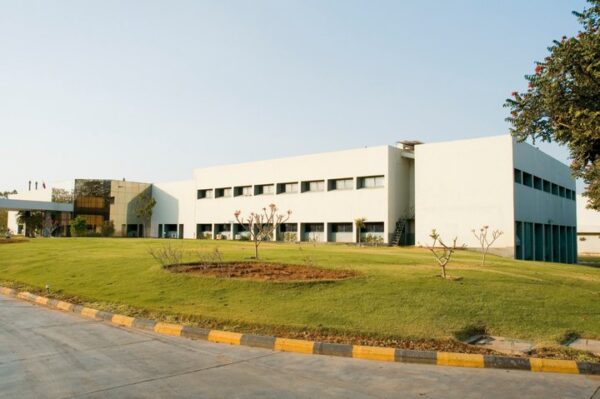


In a move that signals a shift in strategic priorities, Novavax, Inc. has agreed to assign its flagship Gaithersburg, Maryland facility to AstraZeneca plc for a combined consideration of approximately $59.8 million. The transaction, formalized through multiple agreements, encompasses a full transfer of lease rights at Novavax’s 700 Quince Orchard Road headquarters, the sale of an adjacent 9.7-acre land parcel, and the disposal of fixed assets including manufacturing and laboratory equipment.
According to Novavax’s regulatory disclosures, the deal comprises three financial components. AstraZeneca will pay $15 million for the lease assignment, $20 million for the land acquisition, and $24.8 million for fixed assets. This total includes $4 million held in escrow. Novavax expects to receive $20 million during the fourth quarter of 2025, with the balance of $39.8 million due in the first quarter of 2026. The asset handover represents a decisive retreat from physical infrastructure that had once formed the backbone of Novavax’s pandemic-era expansion.
The Gaithersburg facility was previously positioned as a critical node in Novavax’s U.S.-based vaccine production infrastructure. It served not only as the company’s corporate headquarters but also played a vital role in its efforts to manufacture NVX-CoV2373, its protein-based COVID-19 vaccine. The asset transfer is the latest in a string of divestitures aimed at reshaping Novavax’s capital structure and operational footprint.
What are the financial consequences for Novavax following this real estate and asset disposal?
Although the cash inflow will support Novavax’s short-term liquidity, the company will simultaneously absorb a substantial accounting loss. Novavax has disclosed that it will incur a non-cash impairment charge ranging between $96 million and $98 million in the third quarter of FY2025. This write-down reflects the gap between the asset’s historical book value and its current market valuation under the terms of the AstraZeneca deal.
The impairment is emblematic of a broader industry trend where COVID-era infrastructure investments have failed to retain long-term value in the absence of sustained vaccine demand. While the loss does not affect Novavax’s cash position, it will negatively impact its GAAP earnings for the quarter and will likely draw investor scrutiny.
This financial adjustment also signals that Novavax is willing to take near-term hits in exchange for long-term flexibility. By eliminating underutilized fixed assets and generating roughly $60 million in proceeds, the company aims to concentrate its resources on pipeline development, licensing deals, and regulatory progression in other vaccine categories such as influenza and RSV.
How does this deal align with Novavax’s post-pandemic business model?
For Novavax, the sale of the Gaithersburg site is not an isolated decision but part of a broader strategic evolution. The company has been navigating a challenging post-pandemic market environment, where demand for its COVID-19 vaccine has declined significantly amid rising competition and supply oversaturation. In response, Novavax has shifted its focus toward a more asset-light model that emphasizes clinical advancement and capital efficiency.
The transfer of the Maryland facility follows earlier moves, including the sale of Novavax’s Czech Republic plant and workforce reductions across multiple geographies. Together, these steps point to a deliberate restructuring strategy. Novavax is positioning itself less as a vertically integrated vaccine manufacturer and more as a focused R&D company capable of monetizing its assets through external partnerships and licensing arrangements.
Management has previously indicated that its near-term priorities include advancing its COVID-19 and influenza combination vaccine, its standalone influenza program, and its RSV vaccine platform. By freeing up approximately $60 million from this facility transaction, Novavax may be better positioned to execute those development plans without needing to raise additional capital in dilutive ways.
Why is AstraZeneca acquiring Novavax’s Maryland site—and how does this fit into its broader U.S. strategy?
AstraZeneca plc has been actively expanding its U.S. presence across both R&D and manufacturing. The acquisition of Novavax’s Gaithersburg facility aligns with the British-Swedish pharmaceutical giant’s commitment to bolstering domestic infrastructure. Earlier this year, AstraZeneca announced a pledge to invest up to $50 billion in U.S. operations through 2030, including biologics, gene therapy platforms, and supply chain resilience.
The Maryland site is strategically located within the life sciences corridor of Montgomery County and provides immediate access to skilled biotech talent, proximity to federal regulators such as the U.S. Food and Drug Administration, and logistical advantages near Washington, D.C. The site’s history as a Good Manufacturing Practice (GMP) compliant facility could make it a plug-and-play addition to AstraZeneca’s growing manufacturing ecosystem in North America.
While AstraZeneca has not yet disclosed the specific use-case for the facility, analysts speculate that it could serve as a platform for biologics fill-finish operations, clinical trial material production, or expansion of its antibody and vaccine programs. The company already has roots in Maryland via its MedImmune division, and this deal may represent a consolidation of assets under a more streamlined local footprint.
How are investors interpreting the Novavax–AstraZeneca deal and what does current sentiment suggest about each company’s strategic direction?
Market reaction to the deal has been relatively muted, reflecting a nuanced interpretation of its implications. Shares of Novavax have shown little immediate movement, as investors weigh the benefits of a modest liquidity boost against the downside of a significant impairment charge. The transaction may be viewed as a tactical win, but not necessarily a catalyst for a sustained recovery in valuation.
For Novavax shareholders, the key question remains whether the proceeds from the asset sale will be reinvested productively in pipeline assets or reserved as a cash buffer. Given the company’s ongoing need to demonstrate clinical and commercial progress, the efficient deployment of these funds will be critical in determining institutional confidence moving forward.
For AstraZeneca, the financial outlay of under $60 million is marginal relative to its global operations and cash flow. However, the acquisition reinforces AstraZeneca’s strategic narrative around U.S. expansion and manufacturing self-sufficiency. With increasing geopolitical scrutiny on pharma supply chains and growing demand for localized production, the Maryland acquisition is seen as a proactive move to secure operational capacity in a politically and economically favorable jurisdiction.
What does this deal reveal about broader trends in the biomanufacturing sector?
The Novavax–AstraZeneca transaction reflects the ongoing recalibration of the biomanufacturing landscape in the aftermath of the COVID-19 pandemic. During the peak of the vaccine rollout, companies raced to build capacity and secure domestic manufacturing sites. However, with demand normalizing, many of these facilities are now being underutilized or rendered obsolete. As a result, several biotech firms are offloading assets in order to reduce overhead and streamline operations.
Conversely, larger pharmaceutical companies are capitalizing on this shift by acquiring strategically located facilities at attractive valuations. These acquisitions serve to enhance operational redundancy, support emerging platforms such as mRNA and cell therapy, and mitigate future supply disruptions. The reallocation of assets from companies like Novavax to players like AstraZeneca signals a redistribution of industrial capability from specialized developers to multinational conglomerates with broader product pipelines and deeper commercialization muscle.
This realignment also speaks to the changing nature of pharmaceutical business models. Companies that once aimed to control every step of production are now opting for hybrid models that blend in-house capacity with outsourced manufacturing. The sale of Novavax’s Gaithersburg facility to AstraZeneca is emblematic of this new equilibrium.
What developments should investors track over the next 12 months as Novavax pivots and AstraZeneca expands U.S. operations?
Over the next 12 months, several key developments will shape investor perception of this transaction. For Novavax, attention will be focused on how effectively it reallocates the $59.8 million in proceeds. If the company channels these funds into accelerating its combination COVID-19 and influenza vaccine or expanding into new markets with its RSV program, investor sentiment could improve.
The upcoming quarters will also reveal whether Novavax plans additional asset divestitures or strategic partnerships that further support its transition into a leaner, more agile operation. Analysts will also be tracking its burn rate and liquidity runway to assess the sustainability of its current operating model.
AstraZeneca, on the other hand, will face questions regarding how quickly and effectively it integrates the Gaithersburg site into its broader manufacturing network. Any announcements regarding product-specific plans, capacity expansions, or collaborations associated with the site will be closely scrutinized. The company’s broader U.S. investment plan is likely to benefit from the operational leverage and geographic reach provided by this acquisition.
What does the Novavax–AstraZeneca deal reveal about post-pandemic biomanufacturing shifts and strategic priorities?
This deal is less about headline-grabbing figures and more about what it symbolizes. For Novavax, it represents a disciplined shedding of non-core assets and a renewed focus on pipeline execution. For AstraZeneca, it marks another step in its deliberate march toward expanded U.S. infrastructure and biomanufacturing self-reliance.
The $59.8 million transaction might not move markets on its own, but it offers a window into the post-pandemic realities of biotech asset management. As the pharmaceutical industry transitions into a new normal, deals like this one will continue to redefine who owns the means of production and why.
What are the key takeaways from Novavax’s Gaithersburg facility sale to AstraZeneca?
- Novavax, Inc. is transferring its Gaithersburg, Maryland facility and related assets to AstraZeneca plc for approximately $59.8 million, comprising lease rights, land, and fixed assets.
- The biotech firm will receive $20 million in Q4 2025 and the remaining $39.8 million in Q1 2026 as part of the structured payment timeline.
- Novavax expects to record a non-cash impairment charge between $96 million and $98 million in Q3 FY2025 tied to asset write-downs.
- The deal marks a continuation of Novavax’s asset-light strategic pivot post-COVID, following earlier divestitures and cost-reduction efforts.
- AstraZeneca gains a strategically located facility in a key U.S. biotech corridor, aligning with its broader $50 billion U.S. expansion and manufacturing commitment through 2030.
- Investor sentiment has remained cautious, with Novavax shares trading flat and the market waiting to see how proceeds are reinvested.
- The transaction reflects broader biomanufacturing shifts, as smaller firms exit infrastructure-heavy operations while large pharma consolidates U.S. capacity.
- The site may enhance AstraZeneca’s supply chain resilience and biologics production flexibility, although specific operational plans have not been disclosed.
- Analysts will be watching how Novavax deploys the capital toward its pipeline and whether AstraZeneca integrates the facility into its near-term manufacturing roadmap.
Discover more from Business-News-Today.com
Subscribe to get the latest posts sent to your email.